Lumo Powerall1.5-Portable 3000VA Peak Solar Inverter Power Lithium Backup
Original price was: R17,500.00.R11,500.00Current price is: R11,500.00.
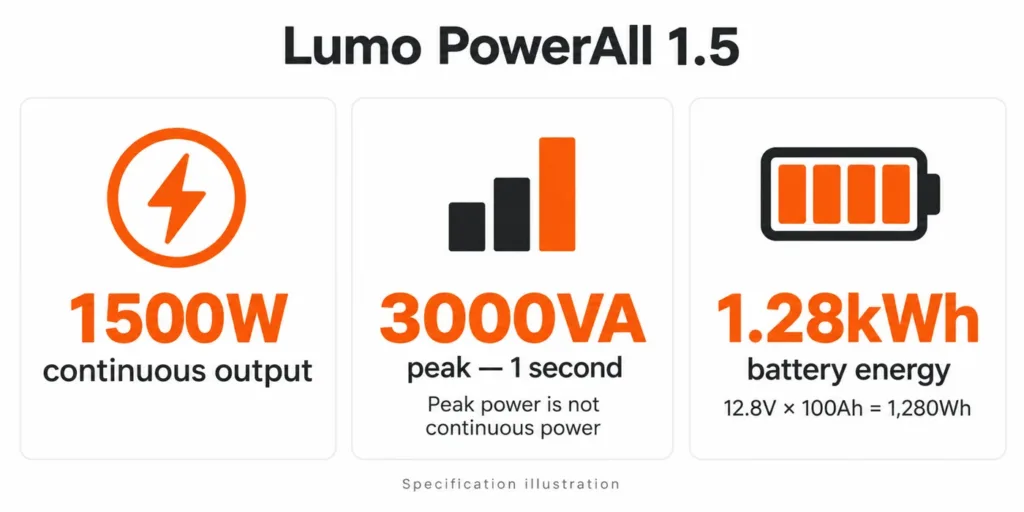
The Lumo PowerAll 1.5 combines a 1500W pure-sine-wave inverter with a 12.8V, 100Ah LiFePO4 battery containing 1.28kWh of nominal energy. It is an integrated indoor backup unit with AC charging, an MPPT solar charger and USB charging outlets. Its 3000VA peak rating lasts one second; it is not a 3000W continuous supply. Assess the unit against both the devices you want to operate and the energy needed for the duration of an interruption.
Lumo PowerAll 1.5: 1500W UPS with 1.28kWh LiFePO4 Battery
The Lumo PowerAll 1.5 combines a 1500W pure-sine-wave inverter with a 12.8V, 100Ah LiFePO4 battery containing 1.28kWh of nominal energy. It is an integrated indoor backup unit with AC charging, an MPPT solar charger and USB charging outlets. Its 3000VA peak rating lasts one second; it is not a 3000W continuous supply. Assess the unit against both the devices you want to operate and the energy needed for the duration of an interruption.
Read the continuous and peak ratings separately
The POWERALL 1.5 datasheet gives 1500W rated output and 3000VA peak for one second. Watts and volt-amperes describe different electrical quantities, and the duration matters. The peak figure should not be used as permission to run a 3000W appliance. For equipment with a motor or compressor, have its starting requirement checked against the unit’s documented capability as well as its normal running demand.
A 1.28kWh battery is an energy store, not a runtime promise
Multiplying 12.8V by 100Ah gives 1280Wh, or 1.28kWh, of nominal stored energy. The energy available to AC appliances is lower after the usable operating window, reserve and conversion losses are considered. This is why an appliance list needs measured demand rather than a fixed statement that every office or refrigerator will run for the same number of hours. Higher output capability does not increase the amount of stored energy.
Build a focused home-office load list
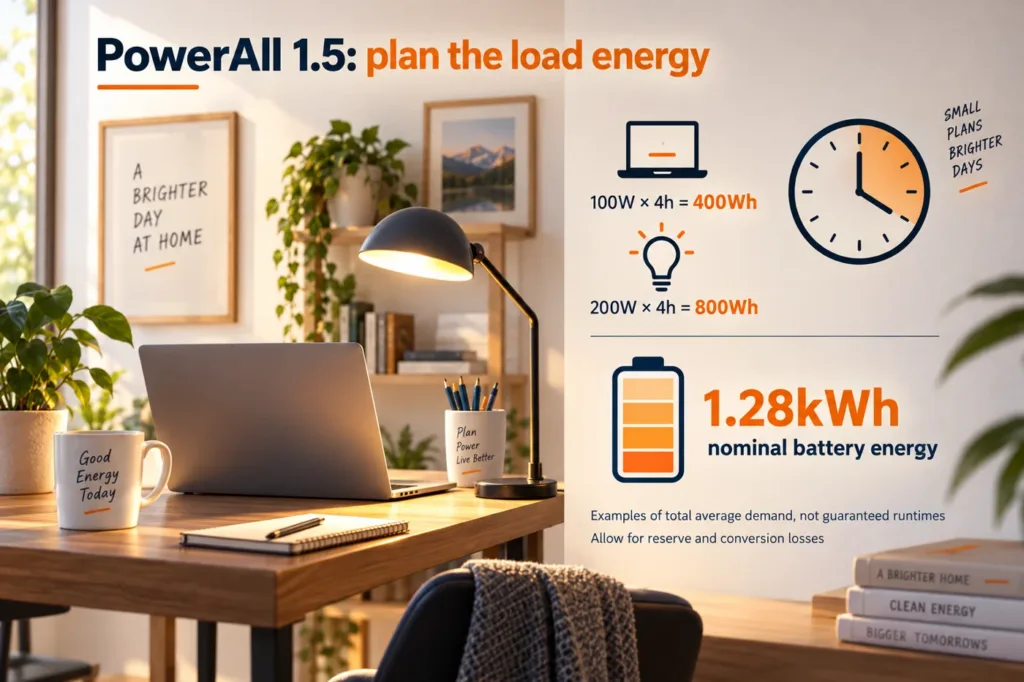
A useful starting point is the combined demand of the computer, display, router and essential lighting you actually need. A laptop workstation and a desktop performing intensive work can draw very different amounts. A total average demand of 100W over four hours needs 400Wh; 200W over four hours needs 800Wh. The illustration explains these energy requirements, not guaranteed PowerAll runtime or the consumption of the pictured appliances.
Keep larger intermittent loads in the calculation
An appliance that operates only briefly can still raise the simultaneous demand above the permitted output. Review equipment such as printers, pumps and heating appliances separately from the steady office load. The unit’s 1500W rating is an operating limit, not a target that has to be used continuously. Selecting a smaller essential-load group can leave more of the battery’s energy available for the tasks that matter during an interruption.
Pure-sine-wave output and the UPS transition
The manufacturer specifies 230V pure-sine-wave output and a typical changeover below 10ms. These are useful references when evaluating backup for compatible equipment. They do not guarantee that every sensitive device will tolerate the transition or operate under every condition. If continuity for a particular device is important, check its supply requirements and test the intended arrangement rather than relying on the UPS description alone.
AC charging needs time to restore the energy used
The matched datasheet lists a maximum AC charging power of 750W and maximum charging current of 60A. These are charger limits, not a fixed rate maintained throughout the charging cycle. Battery condition, remaining charge and operating conditions affect recovery. A blanket one-hour full-charge promise is therefore inappropriate for every starting state. Plan for the energy removed during an interruption and the available charging interval before the next one.
Solar charging has its own input limits
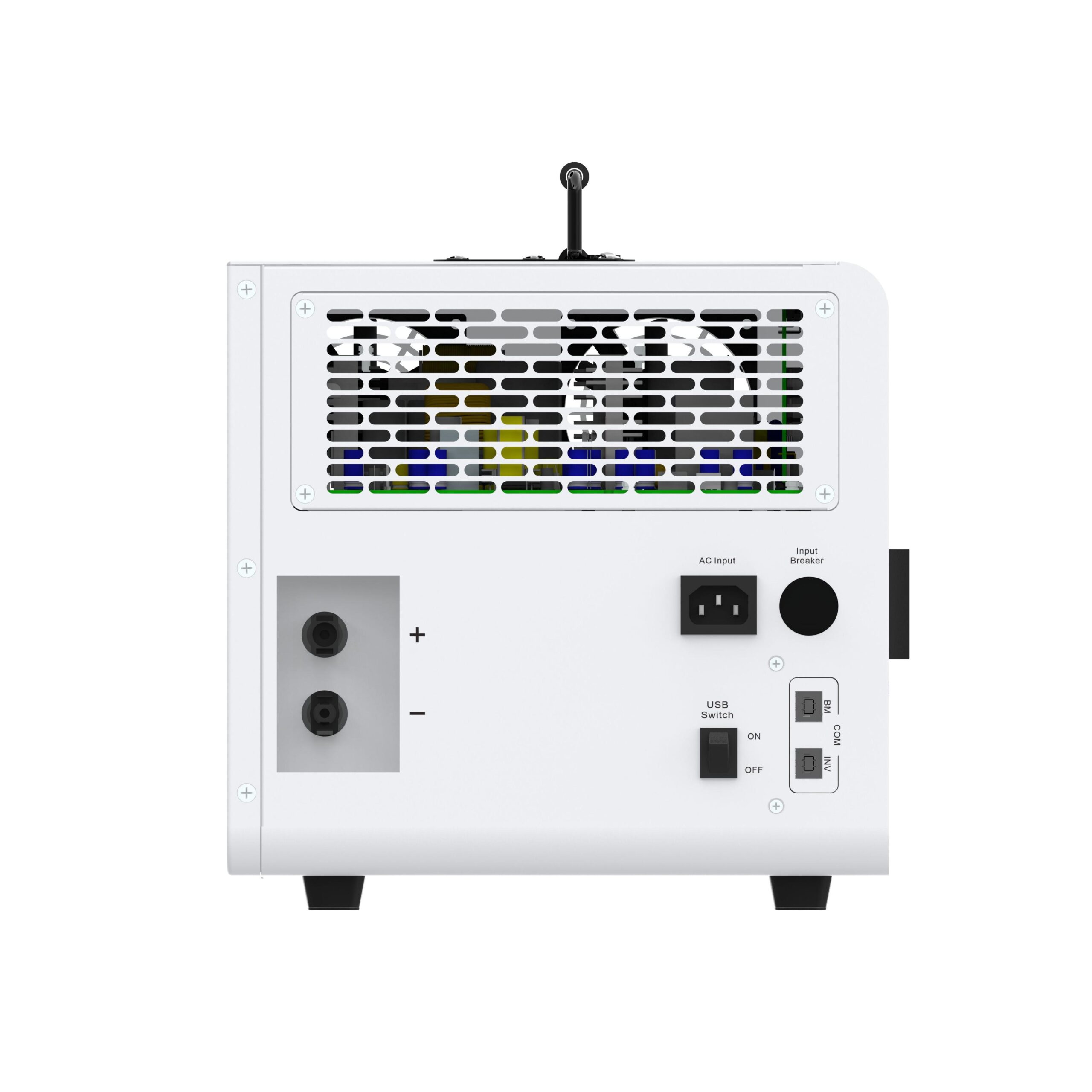
POWERALL 1.5 includes an MPPT charger with a listed 900W maximum output and 50A maximum charging current. The manufacturer separately lists a 25A PV input-current limit and 30A short-circuit-current reference. These input-side values are not the same as battery-side charging current. A suitable panel arrangement must meet all applicable limits; choosing panels by wattage alone does not establish compatibility.
Confirm the PV voltage specification before adding panels
The linked specification sheet contains inconsistent PV voltage entries for POWERALL 1.5, while older product copy stated another range. This page therefore does not present a guessed voltage window as an installation limit. Obtain the manufacturer-confirmed input specification for the supplied unit before a panel arrangement is selected. This check is particularly important when comparing the unit with a different PowerAll model or a conventional wall-mounted inverter.
Use the product views to understand access
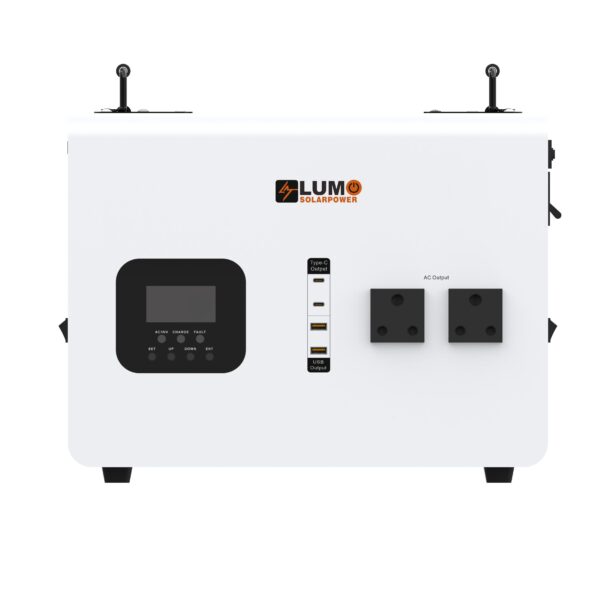
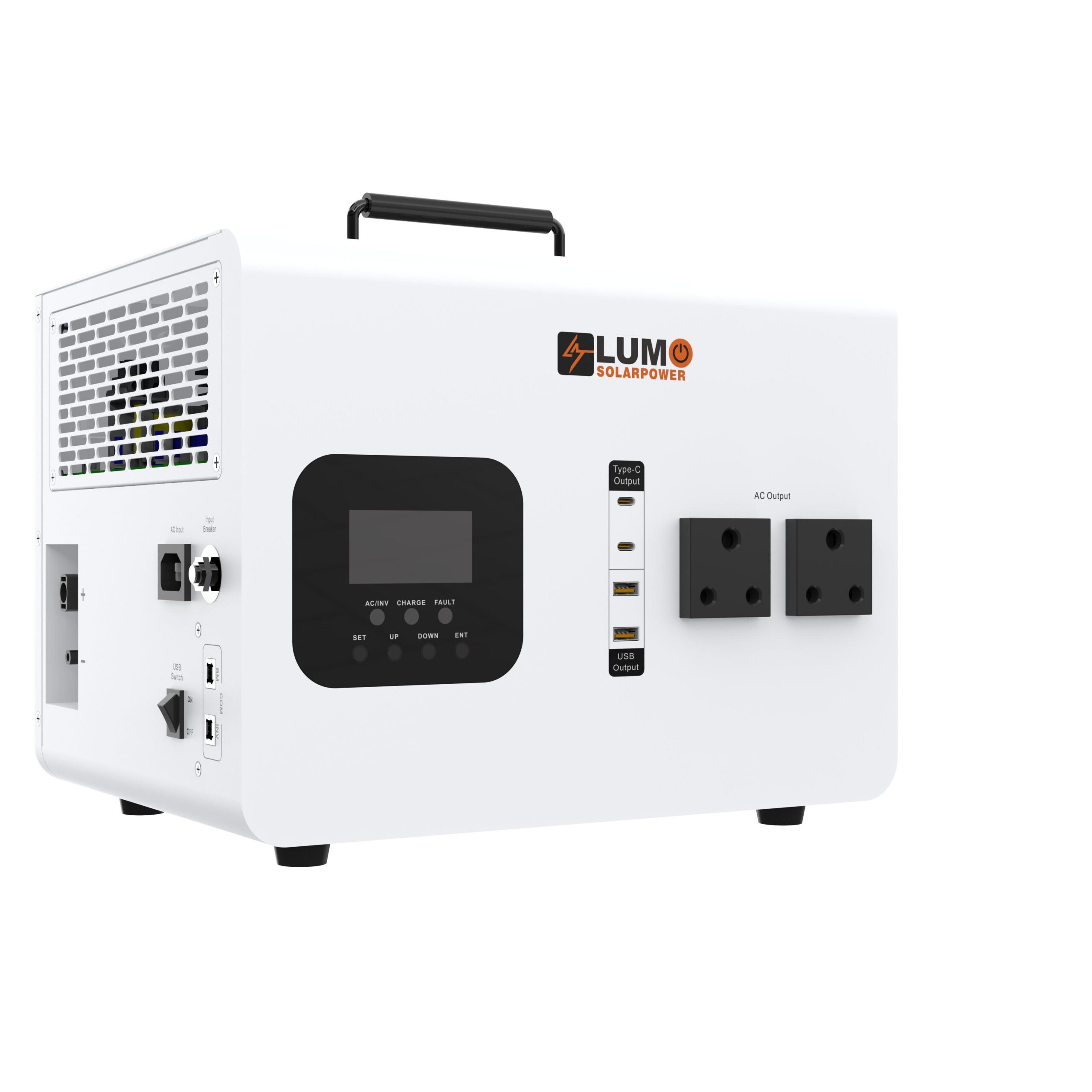
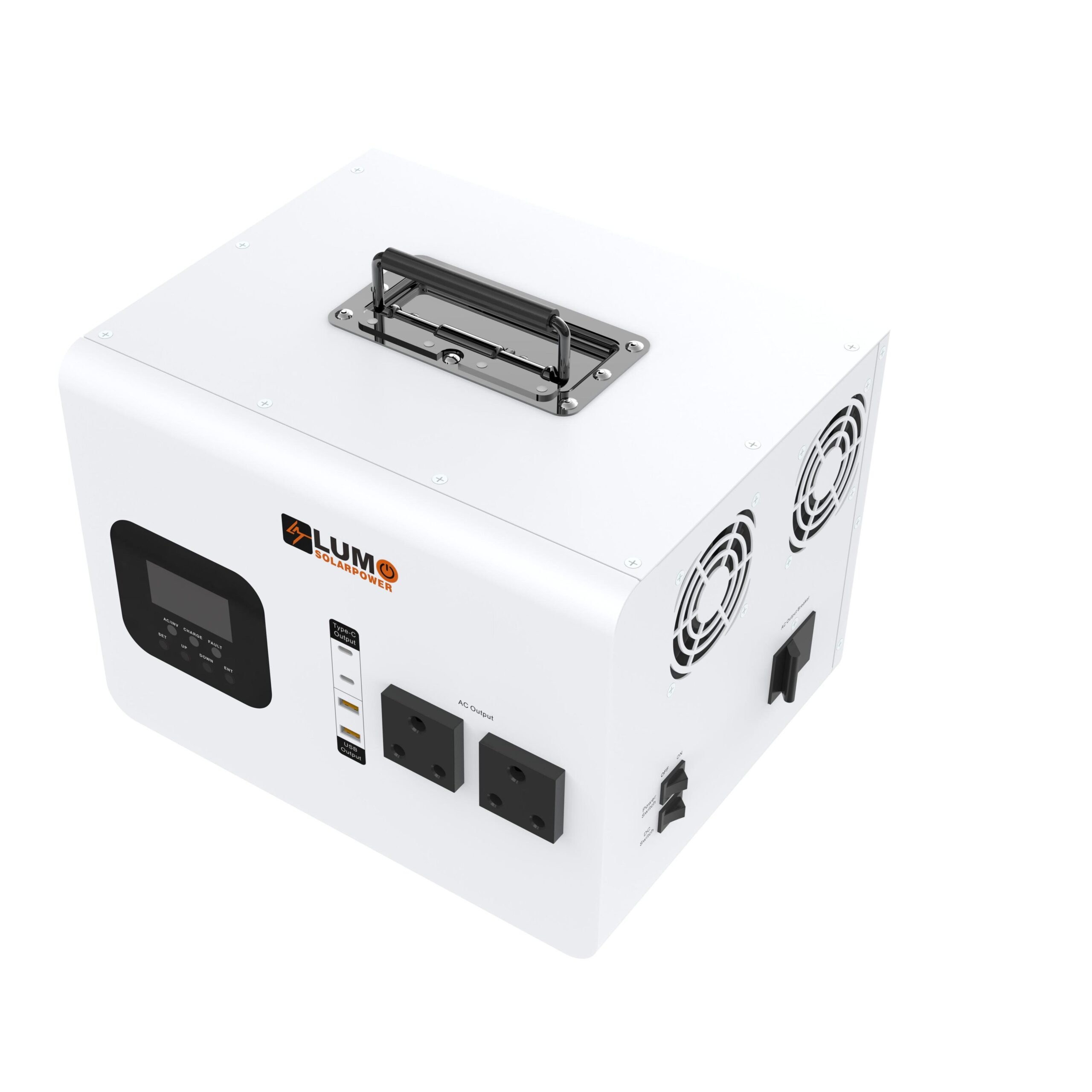
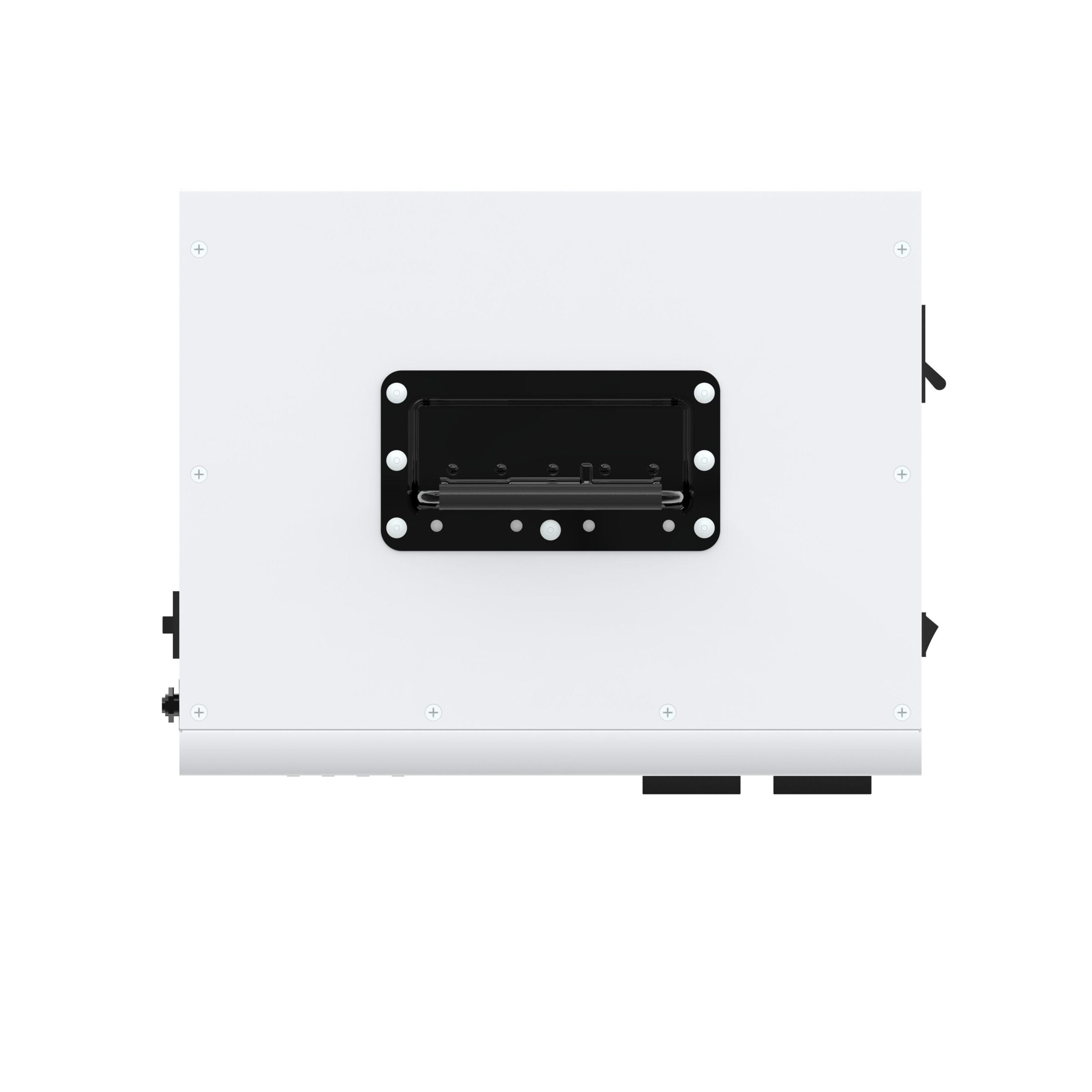
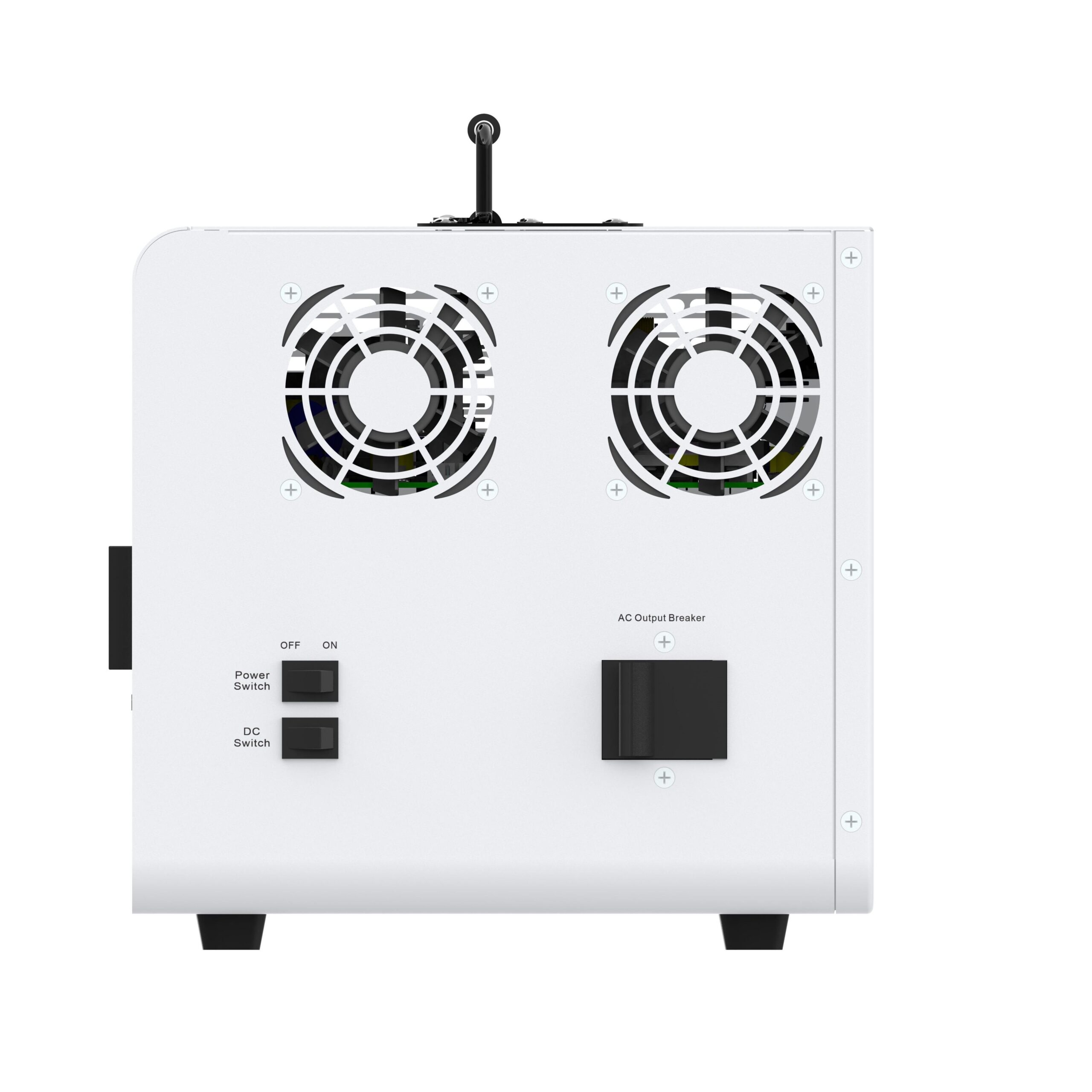
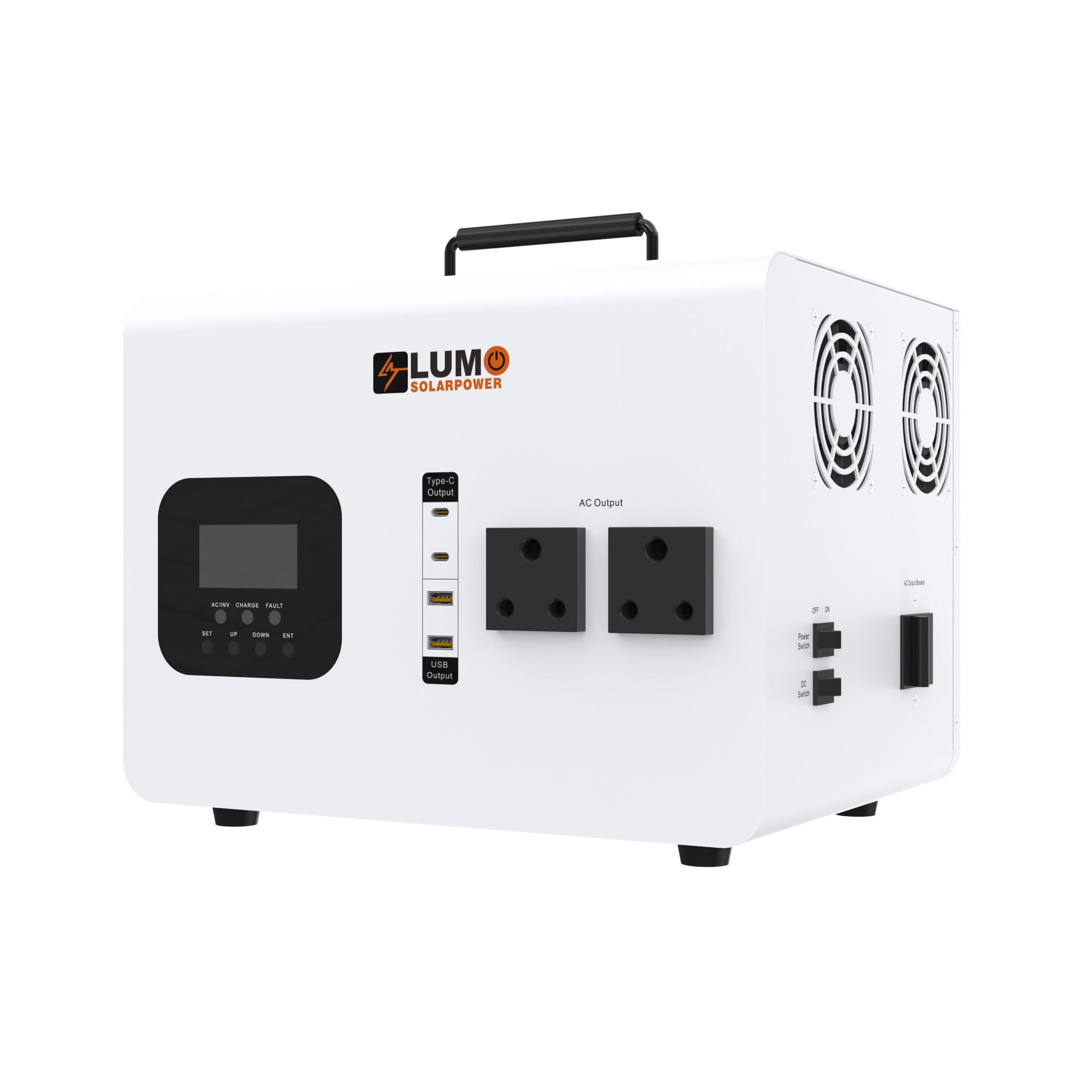
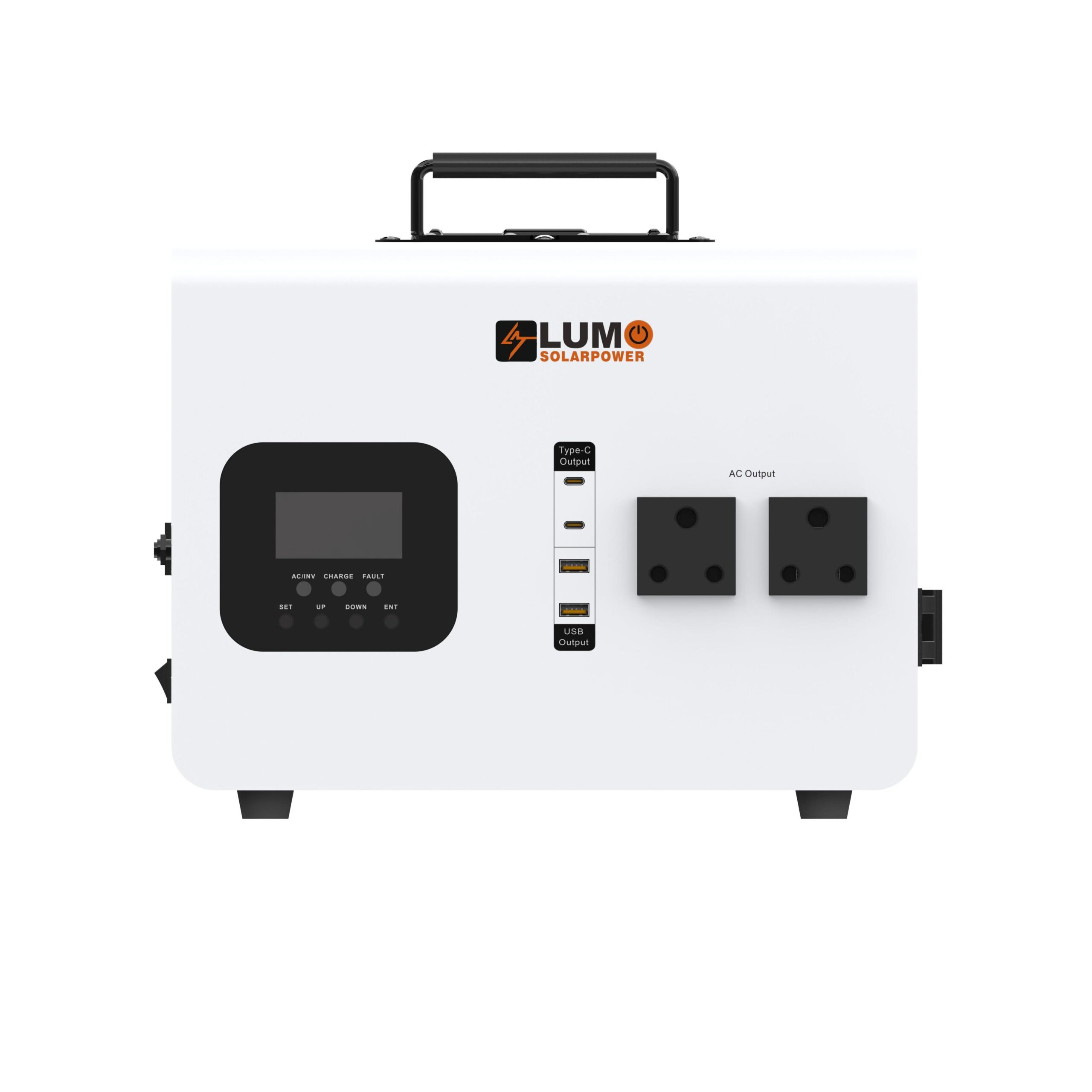
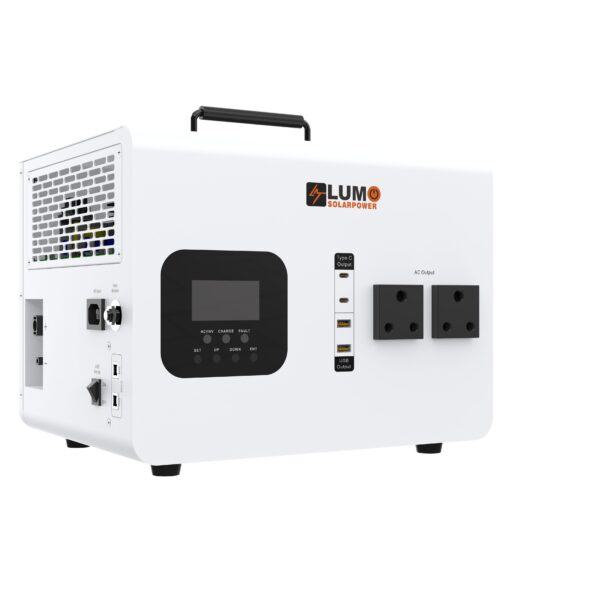
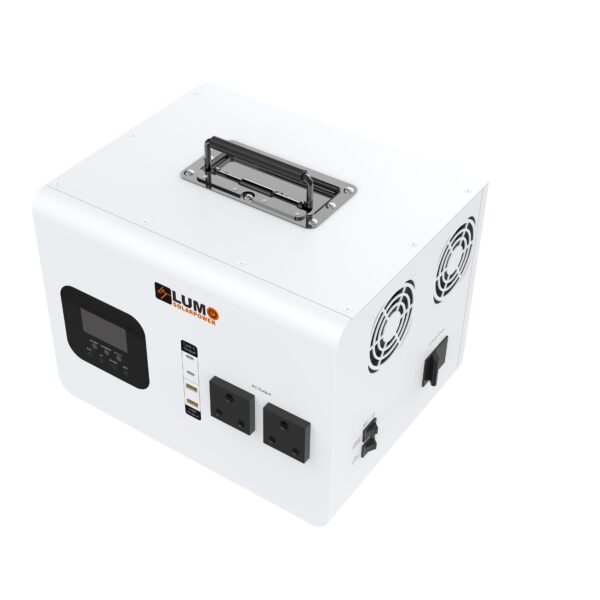
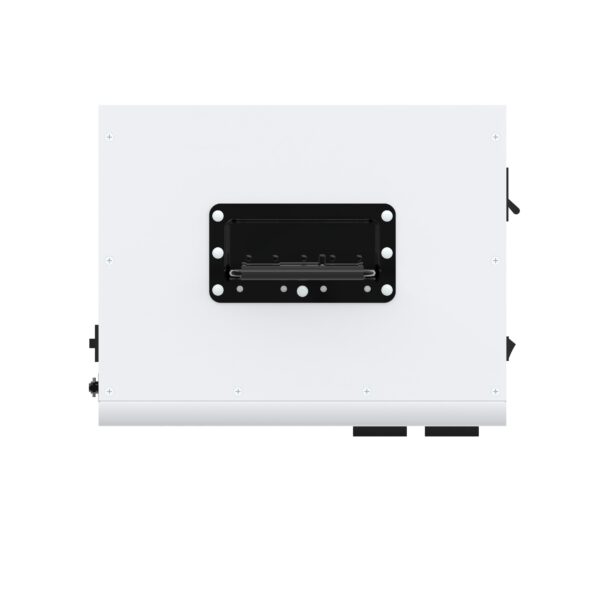
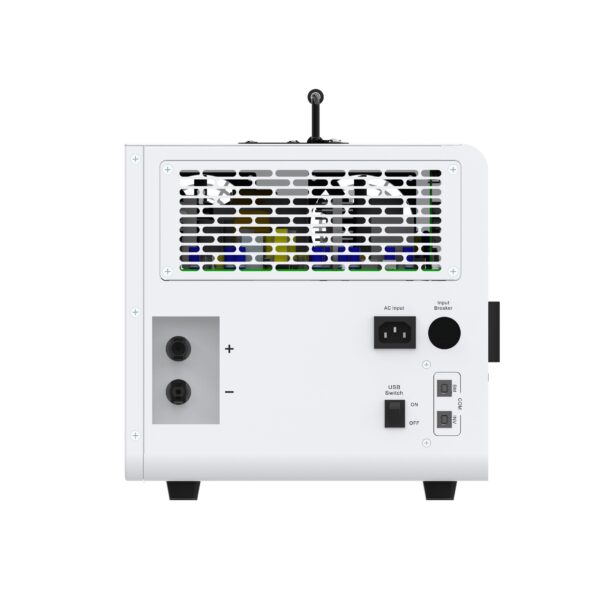
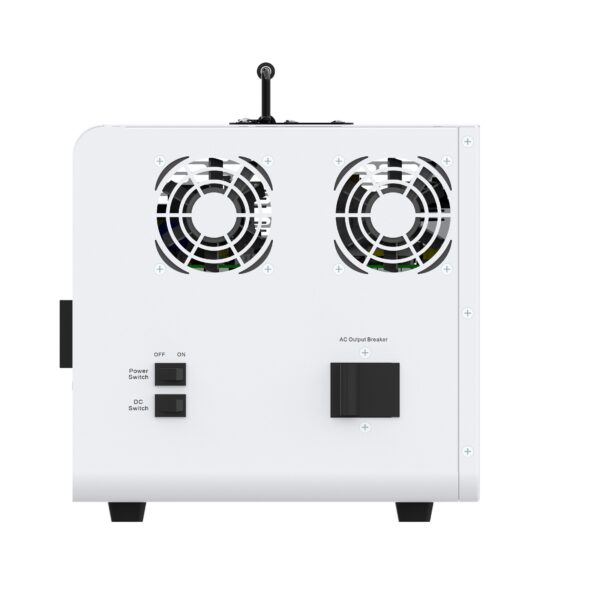
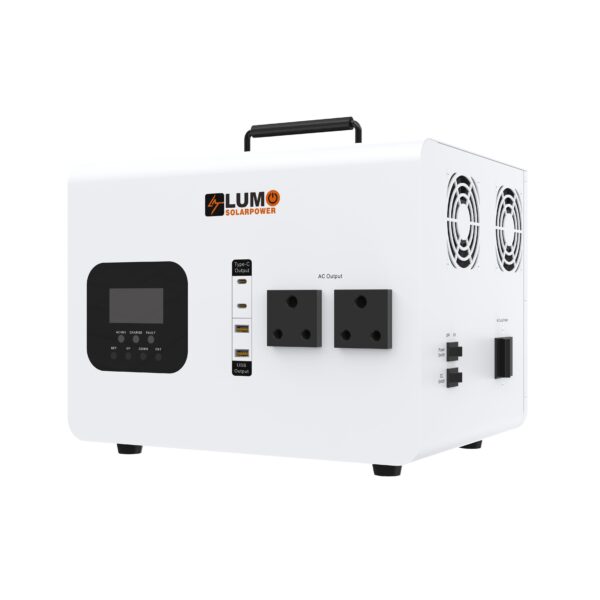
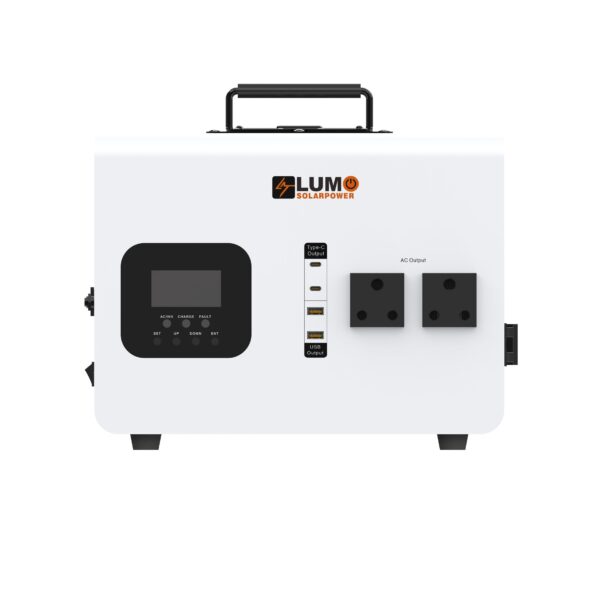
The front view shows the display and outlet area, while the side views show connection access and cooling features. Keep those areas accessible in the intended location and follow the supplied manual for placement and mounting. The unit is rated IP20 for indoor use. A carry handle and the word portable do not establish weather protection, so outdoor scenes should not be interpreted as an approved operating environment.
Consider the weight as well as the footprint
The manufacturer gives dimensions of 340 × 270 × 263mm and a weight of 19.4kg. Plan an appropriate support surface and handling route rather than treating the unit as a lightweight phone power bank. The forced-air cooling system also needs the access and clearance specified in the manual. Confirm any wall-mounting hardware and the suitability of the chosen support before selecting that arrangement.
USB charging is separate from the AC sockets
The datasheet lists two 18W USB charging references and two 24W Type-C references. Use compatible device cables and the unit’s instructions when selecting a charging outlet. These figures should not be interpreted as additional household AC capacity. When planning a longer interruption, include connected USB devices in the overall energy requirement alongside anything supplied through the inverter outlets.
Keep the supplied documents with the unit
Retain the operating manual, exact unit identification and warranty terms for later support. The existing offer states a one-year limited product warranty, with an optional extension up to three years subject to terms, and free delivery. Confirm the selected warranty option in the order and use the linked terms for its conditions. No universal cycle-life or fixed-appliance runtime guarantee is implied by the planning examples on this page.
Product documents
POWERALL 1 / 1.5 datasheet · PowerAll series manual · Warranty terms
| Weight | 27 kg |
|---|---|
| Dimensions | 39 × 32 × 36 cm |