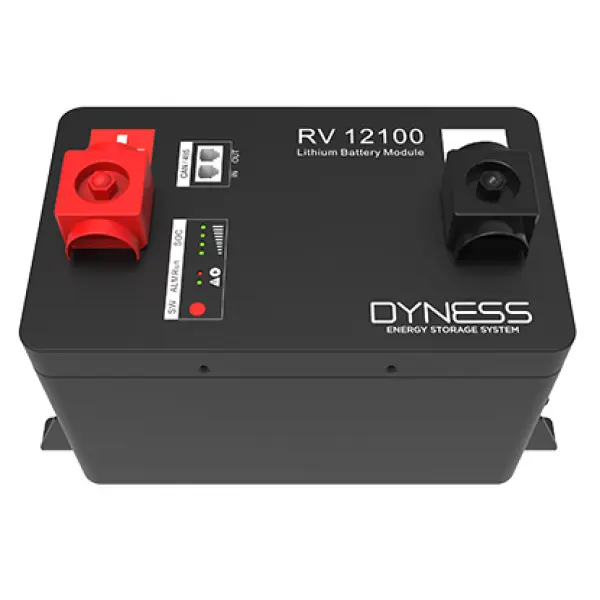
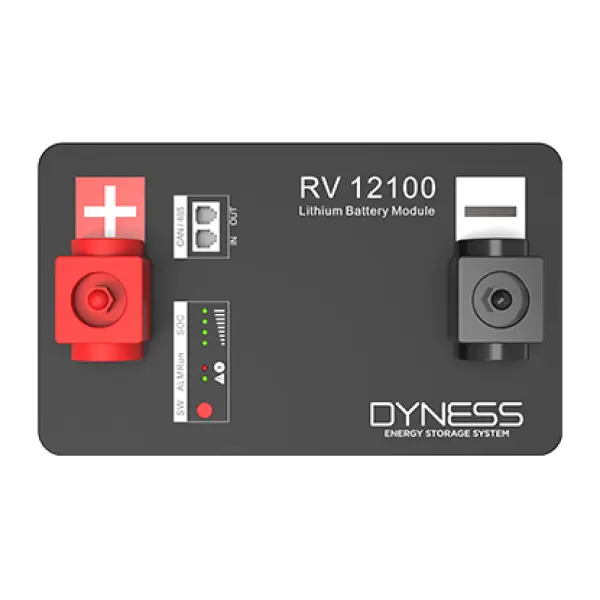
Dyness RV12100 12.8V 100Ah LiFePO4 RV Battery
Original price was: R9,900.00.R6,800.00Current price is: R6,800.00.
The Dyness RV12100 is a 12.8V, 100Ah LiFePO4 battery designed around compatible recreational-vehicle power systems. Its nominal 1.28kWh capacity belongs to a 12V-class application, rather than the 48V class used by many residential solar inverters. This makes voltage matching the first selection check for a camper or mobile-power installation.
Dyness RV12100 12.8V 100Ah LiFePO4 RV Battery
The Dyness RV12100 is a 12.8V, 100Ah LiFePO4 battery designed around compatible recreational-vehicle power systems. Its nominal 1.28kWh capacity belongs to a 12V-class application, rather than the 48V class used by many residential solar inverters. This makes voltage matching the first selection check for a camper or mobile-power installation.
A compact battery for mobile energy storage
The documented dimensions and 14kg weight provide a useful starting point for checking an RV battery compartment. Space planning should also include the terminals, connection access and the required installation clearances. The case dimensions alone do not establish that a particular compartment is suitable. Secure mounting and access for inspection remain part of the vehicle installation.
Check every charging source
A vehicle may have more than one way to charge its auxiliary battery, such as an external charger or a solar controller. Each charging arrangement must suit this LiFePO4 model and its permitted operating limits. A charger selected for a different battery chemistry is not automatically suitable. Review the complete charging path rather than checking only the battery’s nominal voltage.
Use the current ratings with the load schedule
The 50A recommended operating current and 75A maximum rating describe battery-side current. Appliances supplied through an inverter also introduce conversion losses and inverter limits. A 100Ah capacity label does not mean that every 12V appliance can run without restriction. Consider which devices may operate together and how long they are expected to run between charging opportunities.
Match energy to the trip
For a weekend application, record the energy needed by the intended auxiliary loads and the charging opportunities available during the trip. A parked vehicle with little solar input has a different energy balance from one that can recharge regularly. The 1.28kWh nominal figure should be reduced for the chosen reserve and system losses when estimating usable energy.
Outdoor travel does not mean an exposed installation
Although the product is intended for RV applications, its IP20 enclosure is not an invitation to leave it exposed to rain or road spray. The battery needs a suitable protected installation position. Temperature also matters: the manufacturer lists different charging and discharging temperature ranges, so a cold-weather discharge capability must not be treated as the same permission to charge.
Select the supported configuration
Use the exact RV12100 documentation when assessing a larger bank or a replacement. Do not assume that arranging 12.8V batteries creates a supported substitute for a residential high-voltage or 48V battery system. Provide the vehicle power-system details when ordering so that the battery, charger and any inverter can be assessed as one compatible arrangement.