No products in the cart.
Return To Shop
Megarevo MPS250 250kW Microgrid Hybrid Inverter
R588,250.00
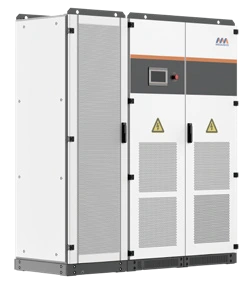
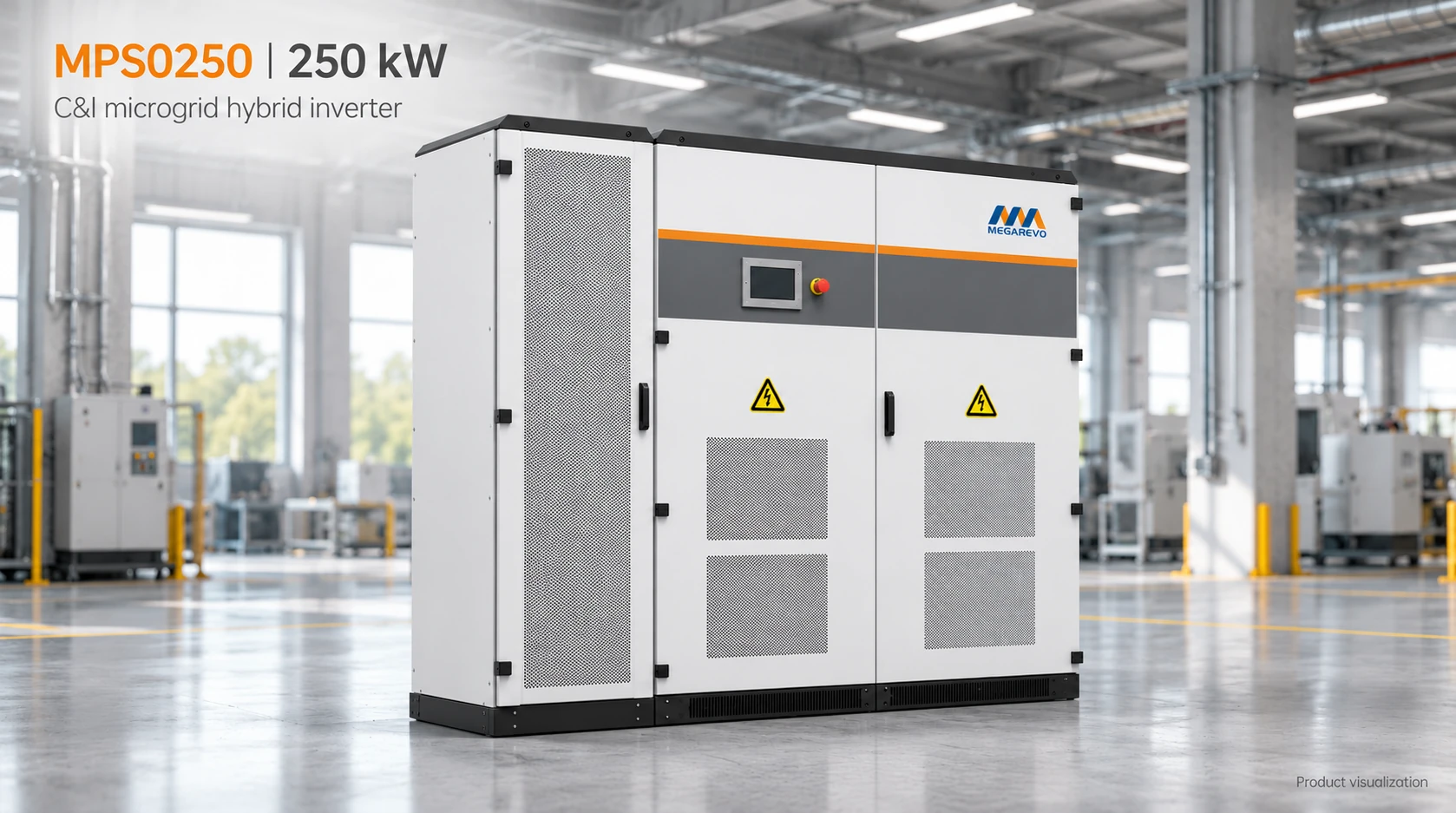
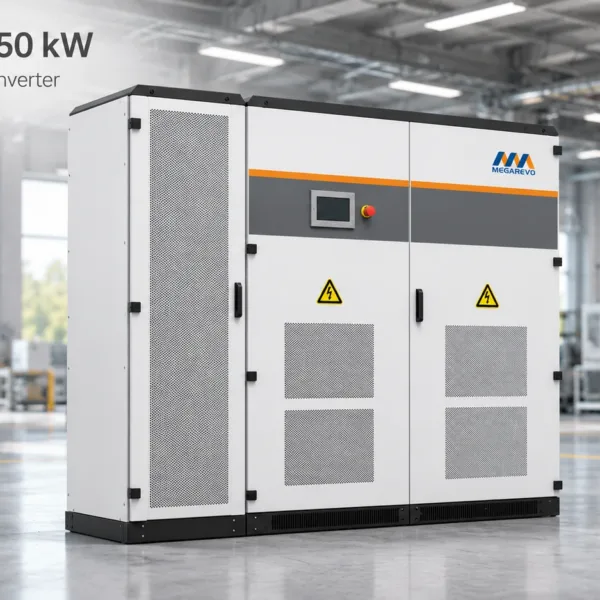
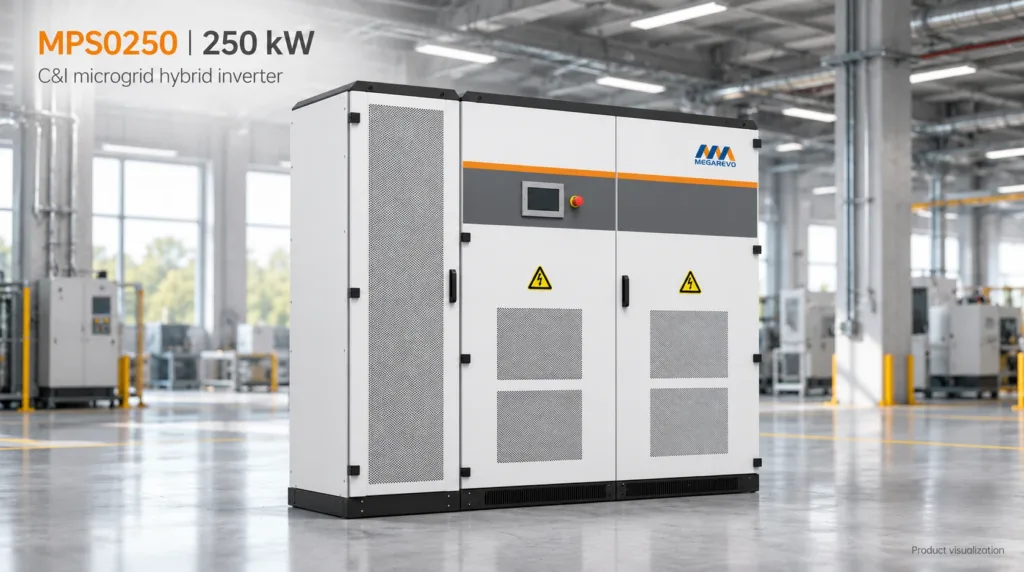
Megarevo MPS0250 combines a 250kW AC rating with 400V operation and a 420–950V battery interface. Its catalogue configuration lists a transformer, STS and four 75kW DC/DC-G3 modules, plus provision for one additional MPPT module. The sum of the DC/DC module ratings is distinct from the 250kW rated AC output.
Megarevo MPS250 250kW Microgrid Hybrid Inverter
- Rated AC power: 250kW
- AC voltage: 400V
- Battery voltage: 420–950V
- PV voltage ceiling: 1000V
250kW MPS platform for a commercial microgrid
Megarevo MPS0250 combines a 250kW AC rating with 400V operation and a 420–950V battery interface. Its catalogue configuration lists a transformer, STS and four 75kW DC/DC-G3 modules, plus provision for one additional MPPT module. The sum of the DC/DC module ratings is distinct from the 250kW rated AC output.
An adaptable generation and storage strategy
The MPS platform supports configurable controls for solar, storage and generator operation. The manufacturer identifies generator load-rate management and unbalanced-load support as family features. Start with the site’s demand profile, motor loads and operating hours to establish the appropriate battery and generation mix.
250kW with one additional narrow cabinet
The MPS0250 reference uses one 600 × 720 × 2,050mm cabinet together with a 1,200 × 800 × 2,050mm main cabinet. This physical arrangement matters for equipment-room planning and distinguishes the model from the integrated 150kW unit. The standalone listing does not include the battery racks shown in some system illustrations.

Key details that shape the system design
Choose the right electrical platform
Battery voltage: 420–950V
This figure is a starting point for matching equipment. The complete operating range, current capability and supported communication arrangement must also align. For a high-voltage battery module, the complete stack voltage is a separate design value.
Plan the solar input
PV voltage ceiling: 1000V
The solar input specification gives the array designer a defined limit. Panel count, string voltage, temperature conditions and input current still need to be checked together before selecting a final array configuration.
Choose a suitable equipment location
Protection: IP20
Consider the enclosure rating together with the manufacturer’s environmental and mounting instructions. Cable entries, ventilation, service access and exposure at the intended position all form part of the installation design.
Designed around the way your system works
Coordinate solar, storage and the site load
A microgrid inverter is selected as part of an operating system for a site with a defined load profile. Farms, remote accommodation and industrial premises can have very different daytime, night-time and motor-starting demands. The inverter power rating establishes one part of the design; battery energy and the available generation establish others.
For a remote site, the practical objective is to coordinate the available resources through changing conditions. Solar production, battery reserve and any generator contribution should be assessed together. The operating strategy must be commissioned for the specific equipment and the site’s essential-load priorities.
Plan the energy balance before choosing a battery bank
A daily load survey helps identify sustained demand, short peaks and the energy needed overnight. It also distinguishes loads that can be scheduled during solar hours from those that must run continuously. That distinction can materially affect the required storage and generation capacity.
A battery bank must match the inverter’s voltage window and provide the required charge and discharge performance. Its energy capacity should be assessed against the intended duration, conversion losses and reserve strategy. A single inverter rating should never be read as a complete battery-system specification.
Allow for the actual cabinet configuration
This MPS range uses different cabinet arrangements across its power classes. The equipment footprint, handling method, access route and final service space should be established before delivery. The selected MPPT configuration can also affect the supplied specification and cabinet weight.
Provide a suitable equipment-room environment and maintain the manufacturer’s ventilation and clearance requirements. The published IP20 rating is relevant to the installation environment; the product should not be treated as an exposed outdoor cabinet simply because it is used in a farm or remote-site application.
Commission the operating strategy for the business
The project should define which loads have priority, what reserve is required, and how the system responds when available solar falls below demand. Where generator integration is used, coordinate the generator operating strategy with the inverter controls and the site distribution.
At handover, retain a clear single-line diagram, equipment schedule and record of commissioned settings. These make future servicing and expansion easier. Parallel operation or additional PV capacity should be assessed against the current Megarevo documentation for the exact MPS configuration.

Where this product fits
Commercial and industrial facilities
Coordinate generation, storage and loads around the facility’s operating schedule and continuity requirements.
Farms and remote sites
Develop a site-specific solar, battery and generator strategy where supported, with enough stored energy for the required duty.
Engineered microgrid projects
Treat protection, distribution, controls and commissioning as part of the system design alongside the inverter rating.
MPS0250 technical specifications
| Manufacturer model | MPS0250 |
|---|---|
| Rated AC power | 250kW |
| AC voltage | 400V |
| Battery voltage | 420–950V |
| PV voltage ceiling | 1000V |
| Protection | IP20 |
| Catalog configuration | Transformer, STS and 4 × 75kW DC/DC-G3 modules; provision for one extra MPPT module |
Product documents & downloads
MPS0250 — manufacturer specificationsSpecifications / product reference · English · 1.47 MB
Download PDFMegarevo MPS series user manualUser manual V1.0 · English · 4.10 MB
Download PDFYour questions about MPS0250
How should I interpret the output rating?
MPS0250 is listed at 250kW. This describes power output, while the battery’s kWh figure describes stored energy. Both must be considered when planning backup or daily operation.
Is this a complete solar and battery system?
This listing covers MPS0250 and its specified function. The surrounding equipment and installation arrangement must be selected for the complete application.
What information helps Solar Deity recommend a suitable configuration?
Send the MPS0250 reference together with your existing equipment models, intended application and load profile, required operating period and planned solar or storage capacity. Those details make the discussion more useful than a headline power or capacity figure alone.
Which document should I use for installation?
Use the applicable manufacturer installation or user manual for the exact model and hardware revision. The specification document in the download section supports product selection; a shared family document may cover several variants. Keep the selected model column and the equipment nameplate aligned when preparing the installation.
Plan your next step with Solar Deity
Bring together the right power, storage and operating strategy for your project. Share the MPS0250 reference and your requirements so our team can help you evaluate a suitable configuration.
Discuss your project