



SRNE 5kW All-in-One Inverter & 5.12kWh Battery Kit
Original price was: R33,000.00.R24,000.00Current price is: R24,000.00.
The SRNE 5kW all-in-one inverter and 5.12kWh battery kit combines the principal conversion and storage components in a coordinated format. It is a starting point for a residential backup or solar-storage installation where space and a clear equipment layout matter. The 5kW rating describes inverter output, while the 5.12kWh figure describes battery energy; each answers a different question when choosing the system.
SRNE 5kW All-in-One Inverter & 5.12kWh Battery Kit
The SRNE 5kW all-in-one inverter and 5.12kWh battery kit combines the principal conversion and storage components in a coordinated format. It is a starting point for a residential backup or solar-storage installation where space and a clear equipment layout matter. The 5kW rating describes inverter output, while the 5.12kWh figure describes battery energy; each answers a different question when choosing the system.
The SR-EOV05S-220 configuration
The manufacturer identifies the SR-EOV05S-220 arrangement as a 5kW inverter with one 5.12kWh battery configuration. Its battery reference is SR-EOV05B at 51.2V and 100Ah. That combination is distinct from the 25.6V, 200Ah battery used by the smaller EOV24 package. Both store the same nominal energy, but their battery-voltage classes and inverter arrangements should not be mixed.
More output with the same nominal storage
Compared with a 3.5kW package containing 5.12kWh, this package provides a higher inverter-output class while retaining the same advertised stored energy. That can accommodate a different simultaneous load requirement, but it does not create more energy for overnight operation. If the higher output is used heavily, storage is consumed faster. Compare both ratings when deciding which package addresses the household’s actual limitation.
Model-specific solar-charger ratings
The referenced SR-EOV05S-220 document lists up to 5,500W of solar array power and a 500V maximum solar open-circuit voltage. Those are design limits, not instructions to connect any array with that nameplate wattage. The installer still needs to check the exact panels, voltage under expected conditions and the permitted electrical arrangement. A panel count copied from another installation may be inappropriate even when the inverter power matches.
Charging sources have different current ratings
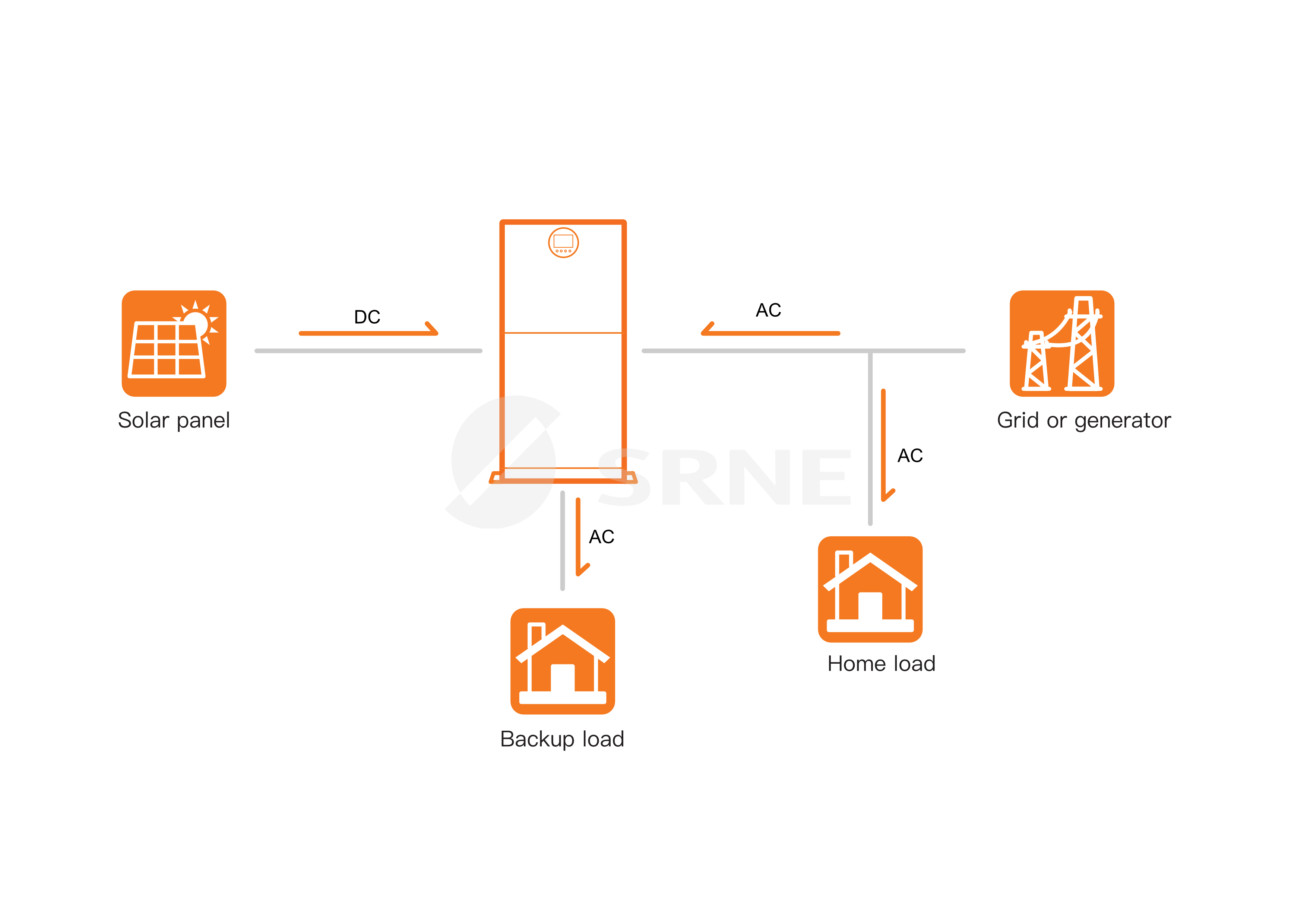
For this reference, maximum solar charging is listed at 100A and grid/generator charging at 60A. These are separate source ratings; they should not be added together as a promise of combined charging current. The battery and the system configuration still determine what is permitted. Choose the charging behaviour around available solar energy and the desired backup reserve rather than always seeking the largest possible setting.
Use the enclosure views to plan access
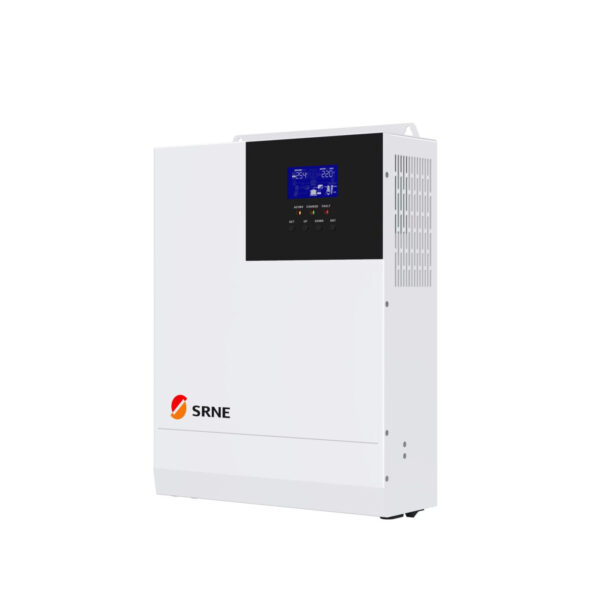
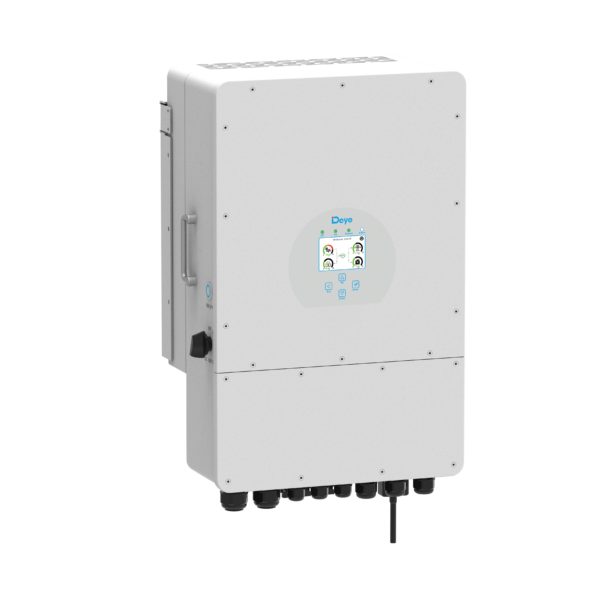
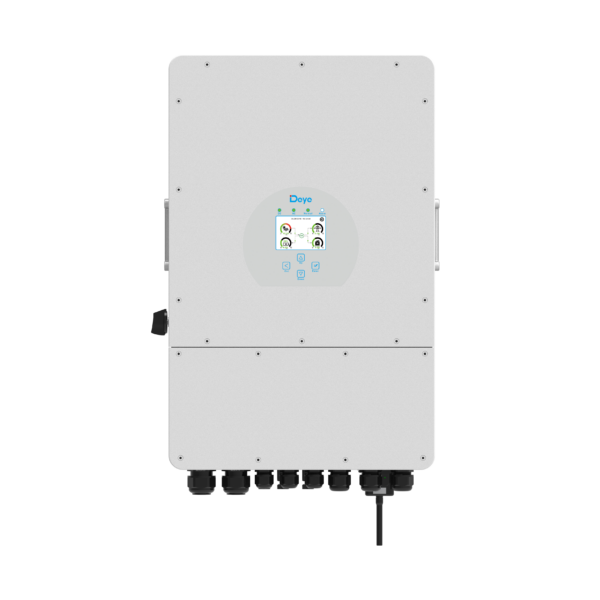
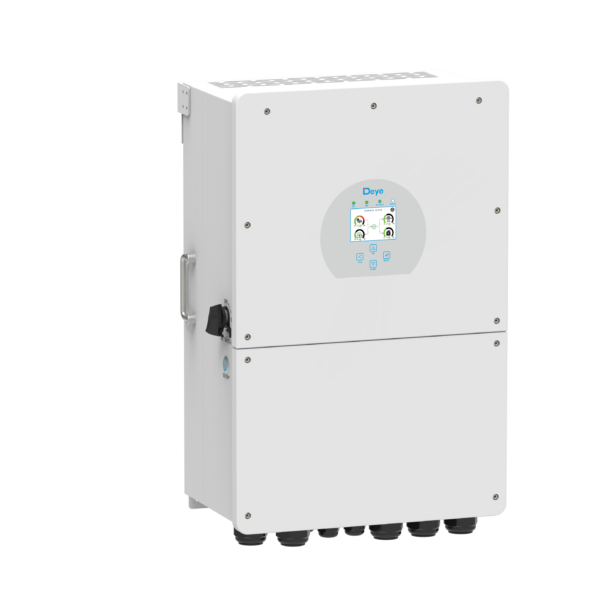
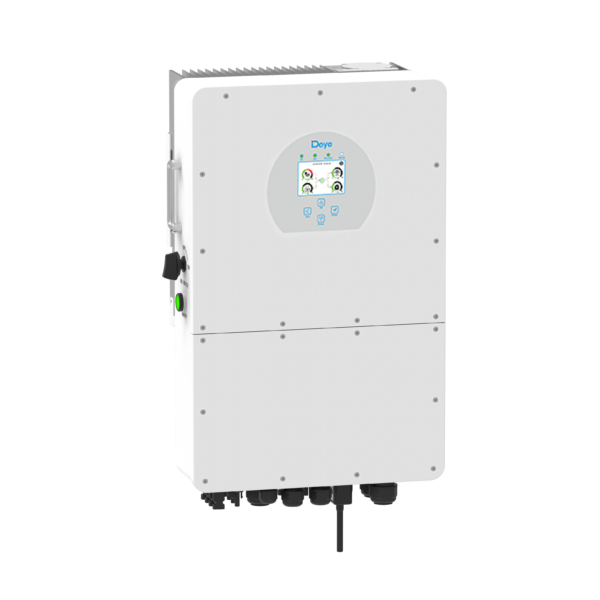
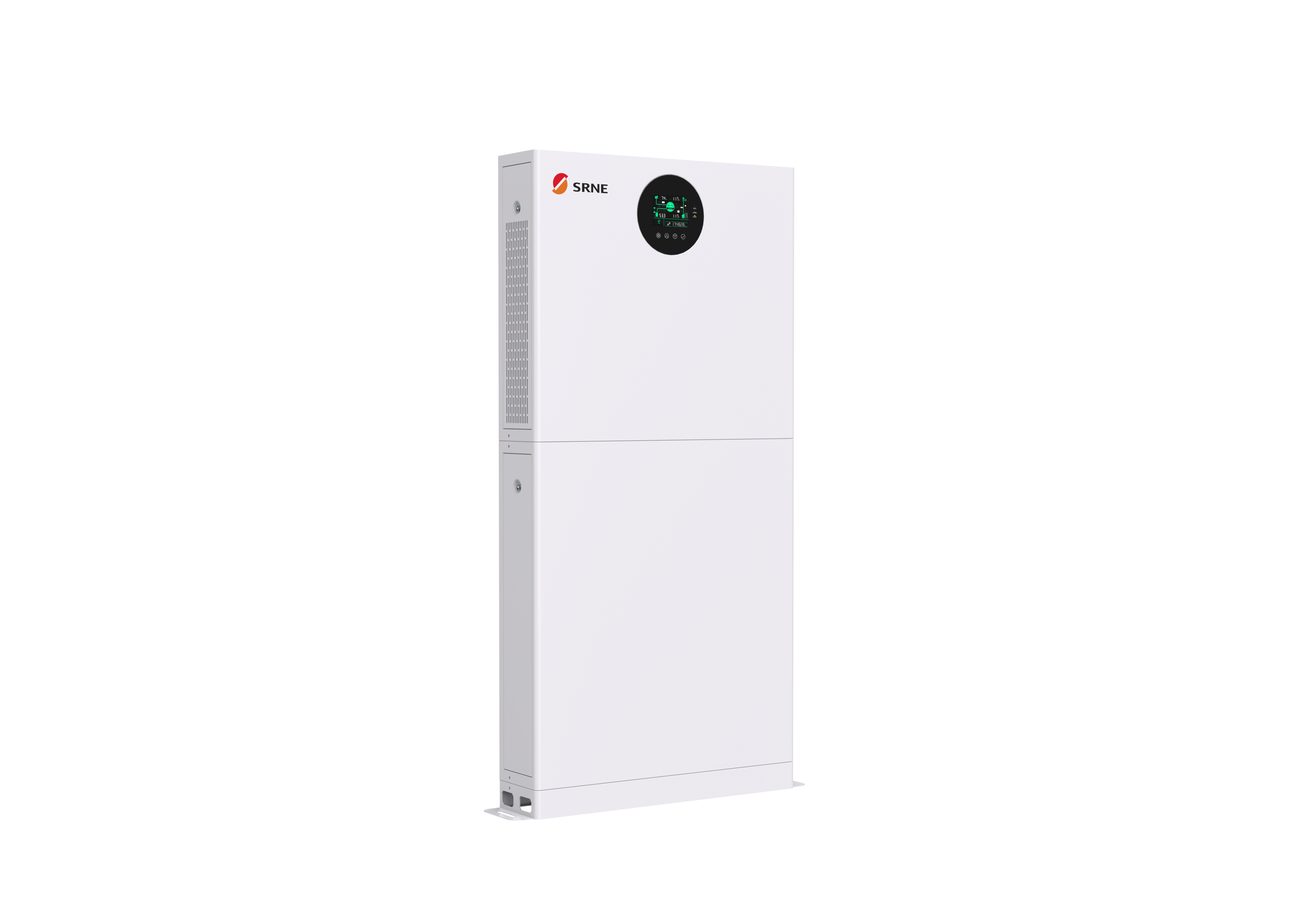
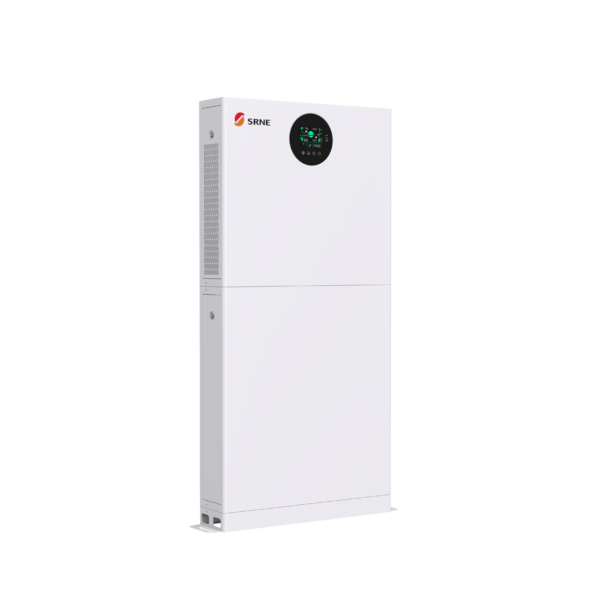
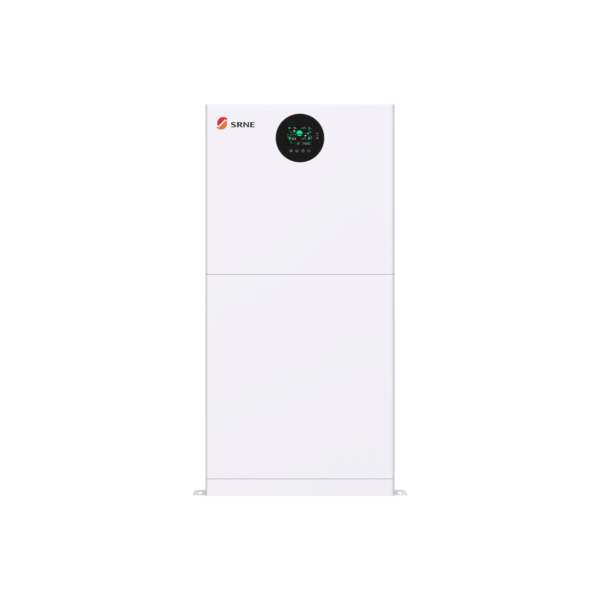
The EOV design integrates the battery and inverter arrangement into a compact product presentation. The front and side views help identify the display and physical format, while the manufacturer dimensions are the planning reference. Allow for the connections, clearances and maintenance access required by the manual. An attractive narrow profile does not mean that the equipment can be placed in any unused gap without further checks.
Future expansion must match the original system
The EOV family literature shows different battery quantities and supported configurations. Those options do not mean that extra batteries are included with this 5.12kWh package. If expansion is part of the plan, record the exact inverter, battery module and revision now, then confirm the manufacturer-supported arrangement before purchasing additional equipment. Treat both available charging energy and the desired backup duration as part of that decision.
Match the kit to your household
The 5kW inverter provides a different power envelope from the smaller 3.5kW kit, while this configuration still carries 5.12kWh of storage. It can be assessed for a broader simultaneous-load requirement, but the battery runtime must be calculated separately. Build the proposed backup list around the appliances that matter during an outage and identify anything that can be delayed. A larger inverter rating should be paired with a realistic battery discharge assessment, not used as a promise of unrestricted whole-home operation.
Understand the battery configuration
The referenced EOV48 configuration uses a 51.2V battery rated at 100Ah. Multiplying voltage by amp-hours gives the nominal energy basis of 5.12kWh. The 51.2V, 100Ah specification belongs to this 5kW reference and should not be replaced with the 25.6V, 200Ah values from the smaller kit. Match replacement or expansion components by approved model and communication requirements. A shared brand name or similar cabinet shape is not enough to establish electrical compatibility.
Estimate useful runtime
A steady 500W load consumes 0.5kWh each hour. Dividing 5.12kWh by 0.5kW gives 10.24 hours as a nominal, energy-only calculation before reserve, conversion losses and other operating factors. The actual AC runtime will be lower under those assumptions and changes when loads cycle or additional appliances are switched on. Ask for a calculation using the intended reserve setting and a measured or carefully estimated average load. Keep a separate check for peak demand, because a satisfactory energy calculation does not prove a motor can start.
Plan solar charging for the exact generation
The system reference includes an MPPT solar charging function, but the array still needs a string design. The installer should assess panel open-circuit voltage at the design temperature, operating voltage and current against the supplied unit’s limits. The linked EOV48 reference identifies a 5.5kW maximum solar-array rating and a 500V maximum open-circuit limit; neither value is permission to connect an arbitrary panel combination. Roof shading and orientation also affect the energy available for charging.
Decide how charging should support backup
Agree the operating priorities at commissioning: which sources may charge the battery, how much reserve should remain and how discretionary loads will be managed. A higher reserve can preserve more energy for an outage while leaving less storage available for routine daily use. The best setting depends on how you use electricity and the charging opportunities at the property. Grid or generator charging, where configured, also has to respect the incoming supply and battery limits. Keep a written record of the selected settings for later support.
Make room for a complete installation
The IP20 reference calls for an appropriate indoor location. Reserve space for ventilation, inspection and cable access as well as the cabinet footprint. A compact all-in-one format can simplify the equipment arrangement, but it does not remove the need for site wiring, protection and commissioning. Before delivery, check the access route and mounting requirements with the installer. Identify any supplied base, brackets, cables and monitoring accessories on the quotation so that a tidy product image does not become an assumption about package contents.
Use monitoring to improve daily decisions
At handover, learn where to check battery charge, operating mode and any reported faults. Where app monitoring is part of the supplied configuration, confirm the required communications accessory and network access. Comparing daytime charging with evening consumption helps reveal whether loads are being scheduled effectively. Keep the unit’s full model, serial number and supplier documentation accessible. The EOV48 family includes larger storage arrangements, but an upgrade still needs the correct modules, hardware and commissioning procedure.
Frequently asked questions
Does all-in-one mean no installation is needed? No; the site still needs a designed and commissioned connection. Are panels part of this offer? Confirm the component list in the quotation. Does 5kW mean 5 hours of backup? No; output power and stored energy are different quantities. Can I add another battery later? Ask for the approved configuration for the exact product generation. Is this an outdoor cabinet? Use the indoor IP20 reference when planning this installation rather than assuming weatherproof construction.