

Luxpower LXP 10kW Hybrid Inverter
R25,500.00
The Luxpower LXP 10kW is a single-phase hybrid inverter for a compatible 48V battery system. The 10kW manufacturer brochure linked here specifies two MPPT trackers, up to 15,000W of PV input and a 10,000W maximum UPS output. These are separate ratings for the solar input, conversion equipment and backup output, and each plays a different part in selecting the system.
Luxpower LXP 10kW Hybrid Inverter
The Luxpower LXP 10kW is a single-phase hybrid inverter for a compatible 48V battery system. The 10kW manufacturer brochure linked here specifies two MPPT trackers, up to 15,000W of PV input and a 10,000W maximum UPS output. These are separate ratings for the solar input, conversion equipment and backup output, and each plays a different part in selecting the system.
Two MPPT trackers for a planned solar array
The two MPPT trackers allow suitable groups of solar panels to be managed independently. This can be useful when the roof design creates different array conditions. Each group still has to satisfy the inverter’s voltage and current requirements. The 25A/25A input-current reference and the full-power MPPT range should be checked using the actual panel datasheet; a panel’s wattage alone is not enough to establish a compatible string layout.
A 15kW array allowance is not 15kW of AC supply
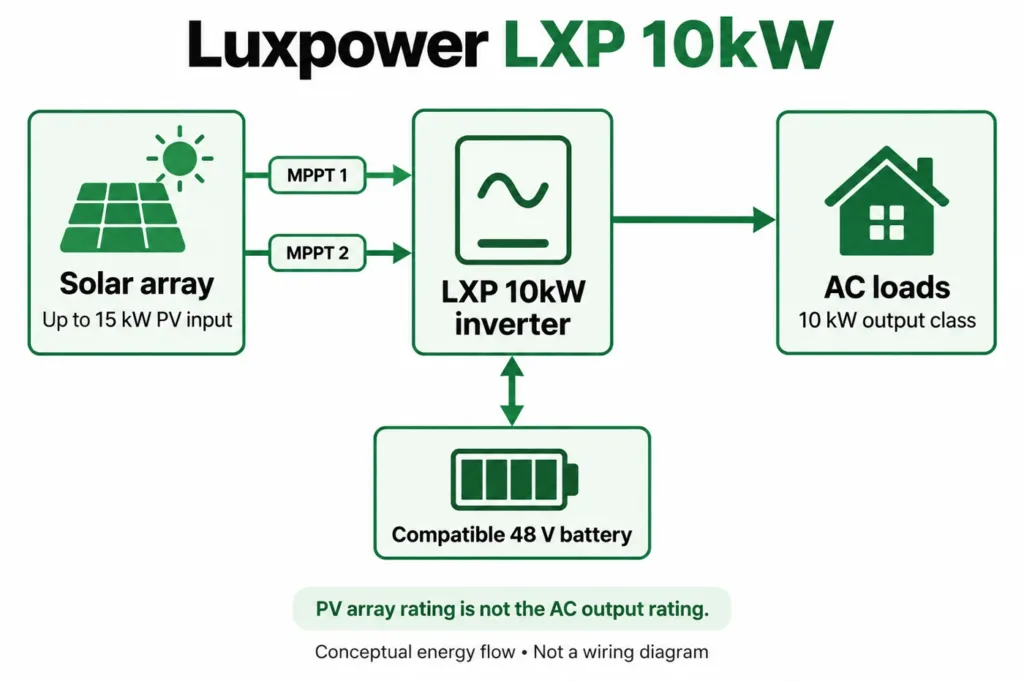
The brochure permits up to 15kW of PV input for this 10kW model. That array allowance can help the designer use available sunlight across a broader part of the day, depending on the site and operating conditions. It does not increase the AC inverter rating to 15kW. The conceptual energy-flow image below keeps the solar-input rating separate from the 10kW output class so that these numbers are not confused during product comparisons.
Check both PV operating voltage and maximum voltage
The 100–600V DC input reference and 210–500V full-power MPPT range describe different conditions. The panel arrangement must be checked for operating voltage as well as its highest open-circuit voltage in cold conditions. The maximum voltage is not a target operating point. An installer should verify the complete string design before transferring an existing array from another inverter, particularly when the replacement has different MPPT characteristics.
The 48V battery needs substantial current capability
This inverter belongs to the low-voltage battery category, with a stated 40–60V battery operating range. The brochure lists a maximum 210A charge/discharge current for the 10kW model. A battery selected only by kWh may not be able to support the intended power. The battery-management limits and the inverter settings must agree; specifying a large inverter does not override the current rating of a smaller battery.
Use the UPS rating when selecting backup circuits
The referenced maximum UPS output is 10,000W at a nominal 230V, with a nominal current of 43.5A. Select backup loads using their simultaneous running demand and starting behaviour. Heating appliances, motors and other intermittent loads can change the total quickly. The output rating describes a capability of the inverter under the specified conditions, while battery state, available solar and system configuration affect what is practical during an actual interruption.
Transfer time is a reference rather than an appliance guarantee
The brochure lists a switching-time reference below 10ms. This helps distinguish the backup function from a system that requires manual changeover, but it does not guarantee uninterrupted operation of every sensitive device. Equipment with strict power-quality requirements should be assessed individually. If continuity for a particular server, controller or appliance is essential, include that requirement in the load schedule and commissioning checks.
Connect storage capacity to the evening load profile
The inverter does not determine backup duration by itself. A battery stores a finite amount of energy, while the connected loads consume that energy over time. Review the evening demand and the desired reserve before selecting storage. A household with a large daytime solar load may also have less surplus available to charge the battery than the panel nameplate total suggests. These choices determine whether the system’s energy budget matches the intended use.
Monitoring should support useful operating decisions
The manufacturer brochure lists a colour LCD and RS485, Wi-Fi and CAN communication references. Confirm the communication accessories and compatible battery protocol included with the supplied unit. Monitoring is most useful when it helps explain whether an issue comes from consumption, charging opportunity or a configured reserve. It should not replace the initial electrical design or be treated as evidence that an unlisted battery will communicate correctly.
Keep the 10kW and 12kW product specifications separate
Luxpower models with similar branding can have different MPPT counts, battery currents and operating limits. This page uses the two-MPPT 10kW brochure, rather than applying figures from a newer three-MPPT 12K product. Retain the full supplied model and revision in the handover documents. That information is especially valuable when adding batteries or replacing an older inverter within an existing solar installation.
What to include when requesting the complete system
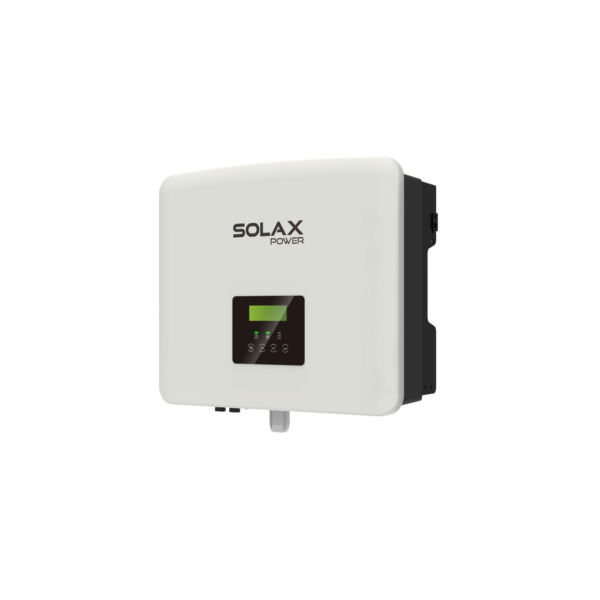
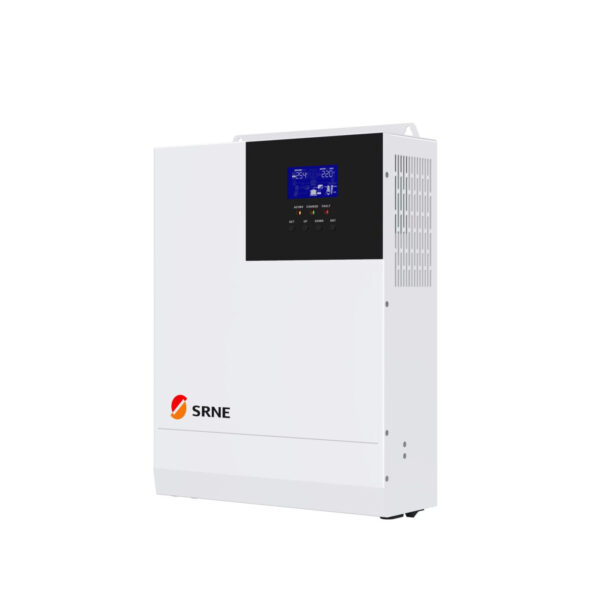
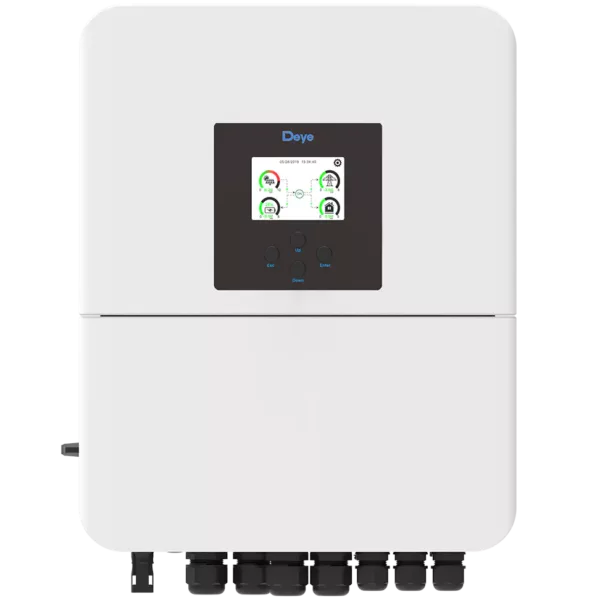
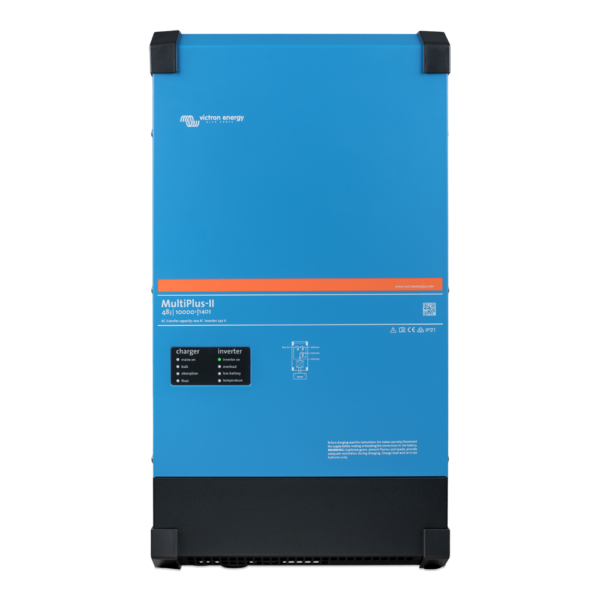
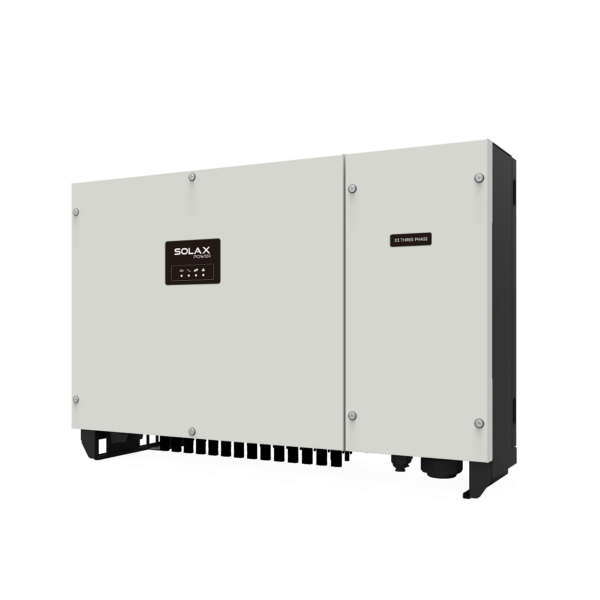
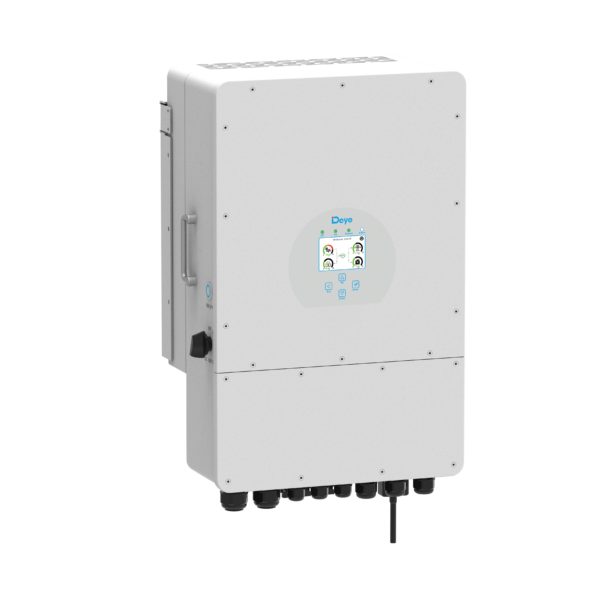
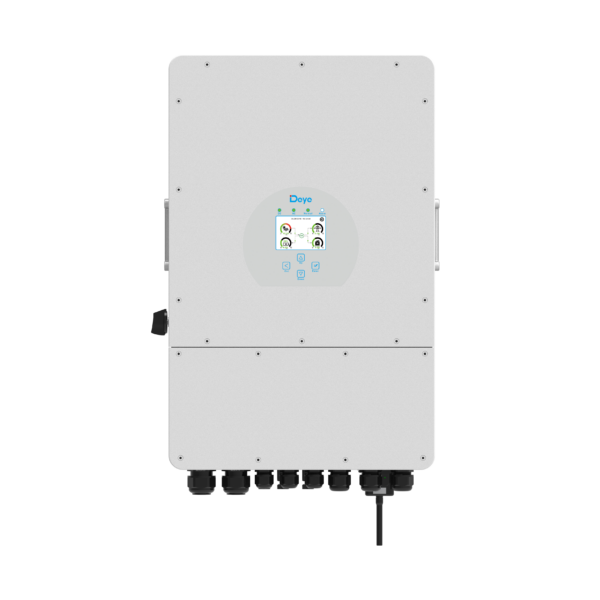
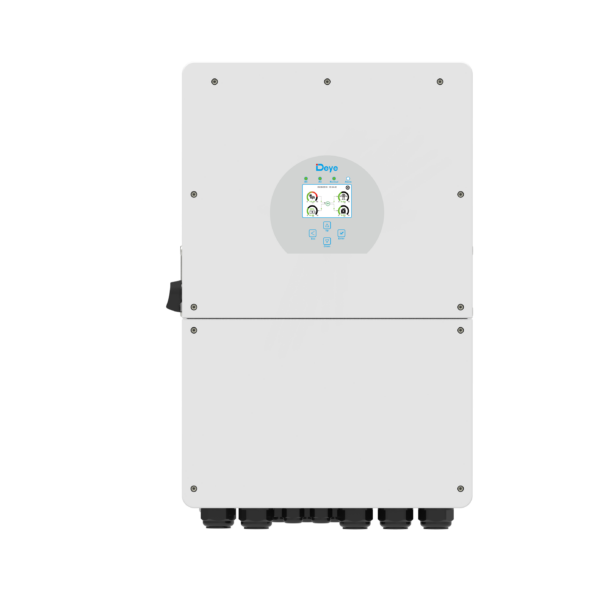
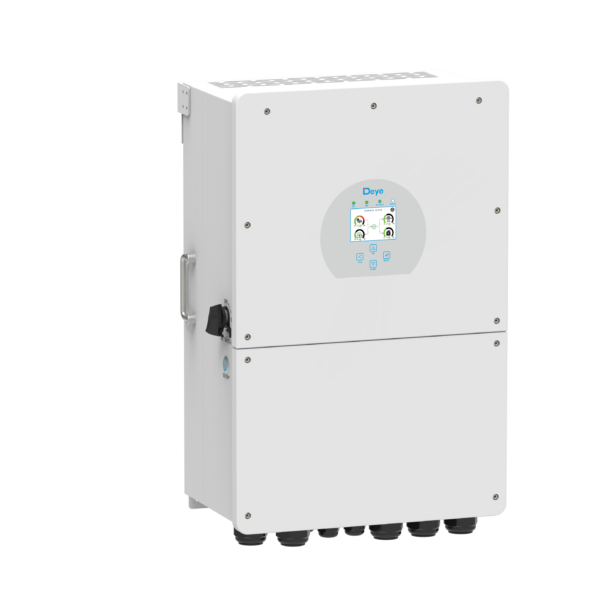
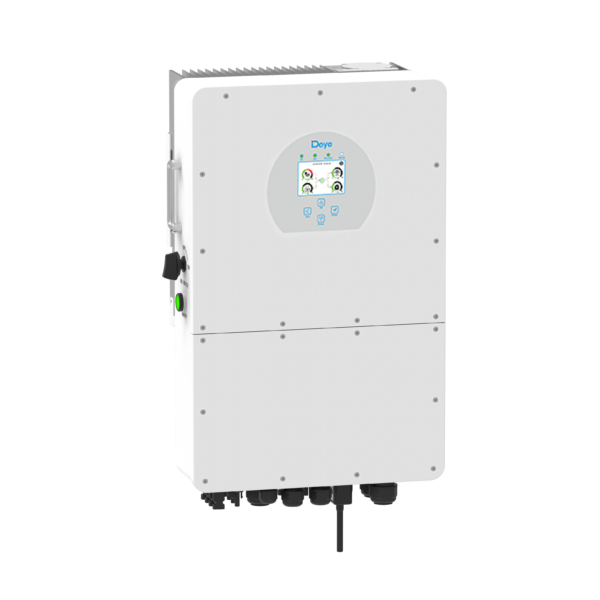
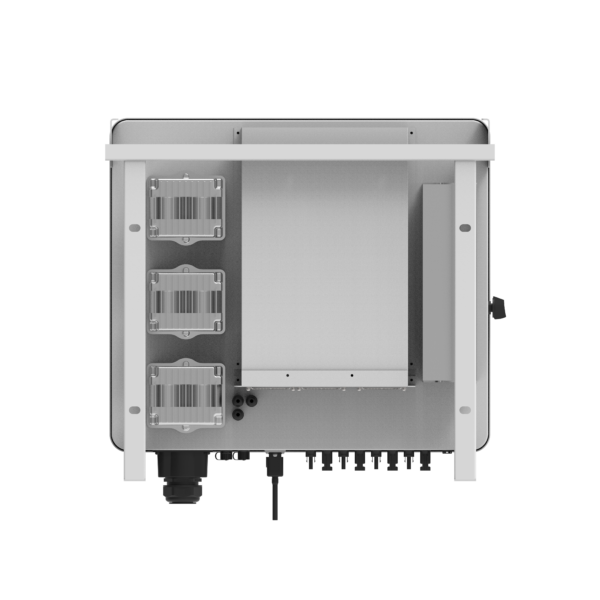
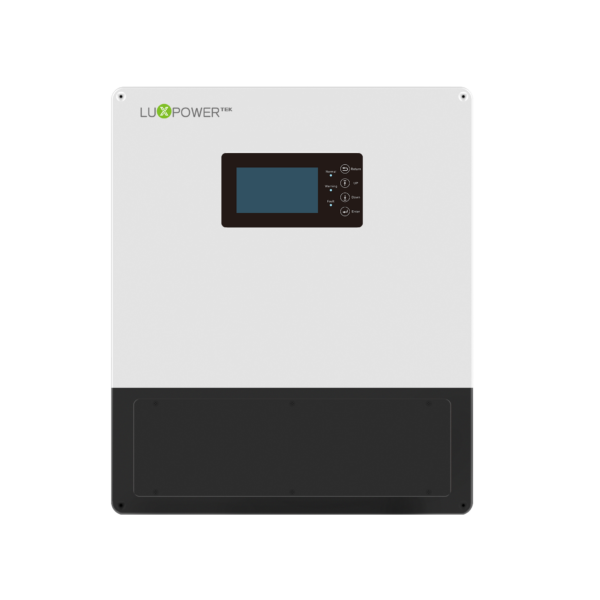
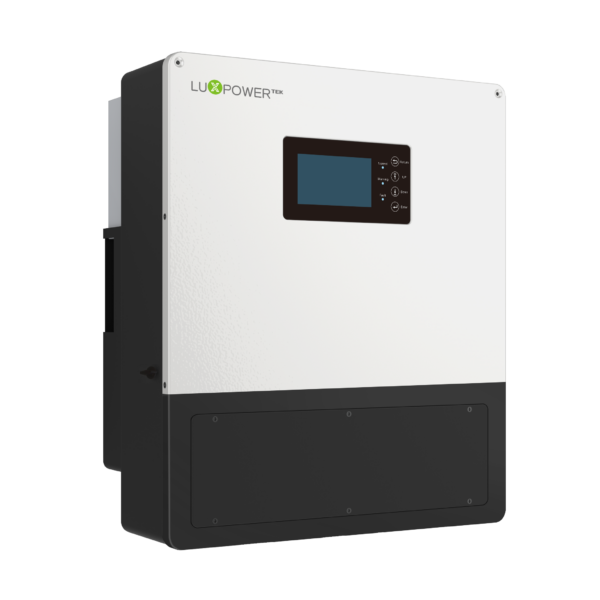
Specify the LXP 10kW inverter, the exact battery model and quantity, the proposed panels and the circuits intended for backup. Ask for the array arrangement and communication requirements to be checked together. The product views show the enclosure from different angles, while the additional illustration explains its principal energy paths. Batteries, panels and installation work should be listed explicitly when they are included in the quotation.