

Victron MultiPlus-II 5kVA 48/5000/70-50 Inverter/Charger
Original price was: R26,000.00.R23,500.00Current price is: R23,500.00.
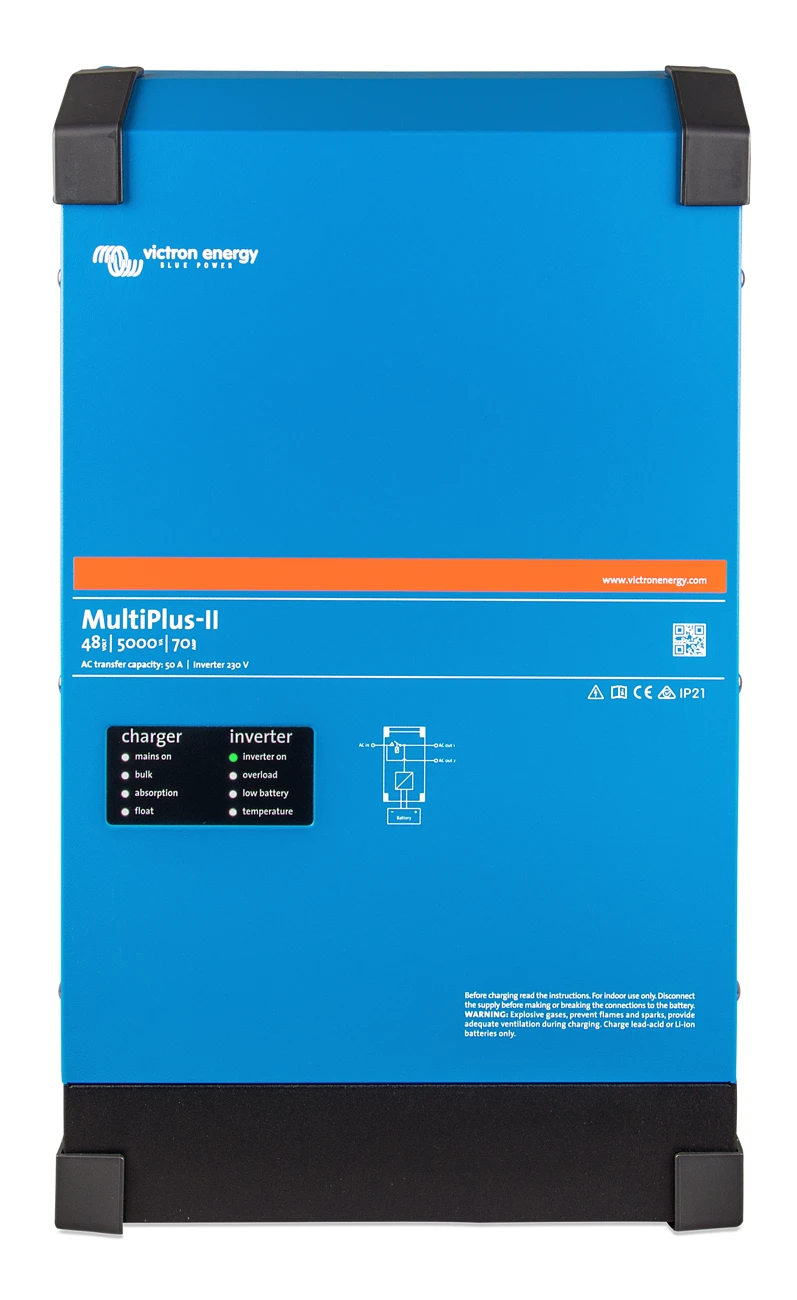
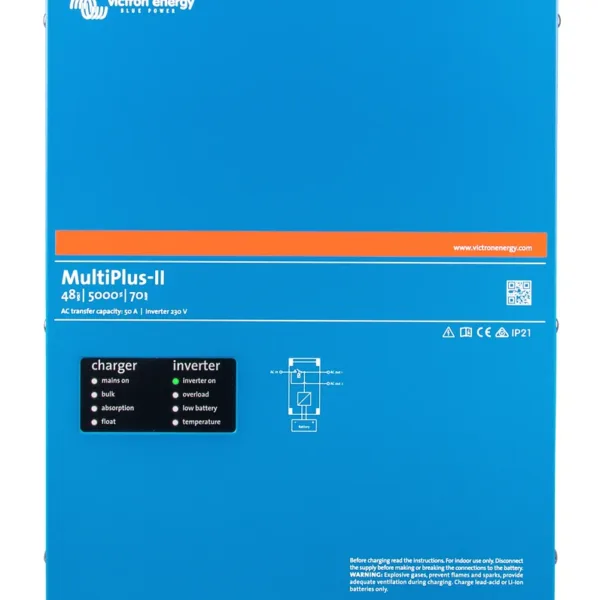
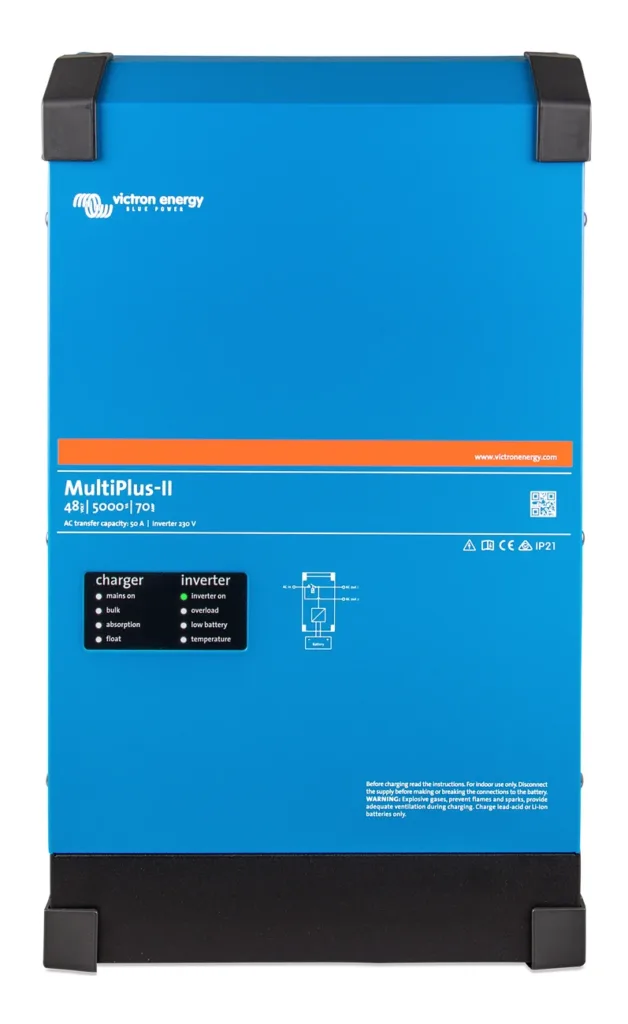
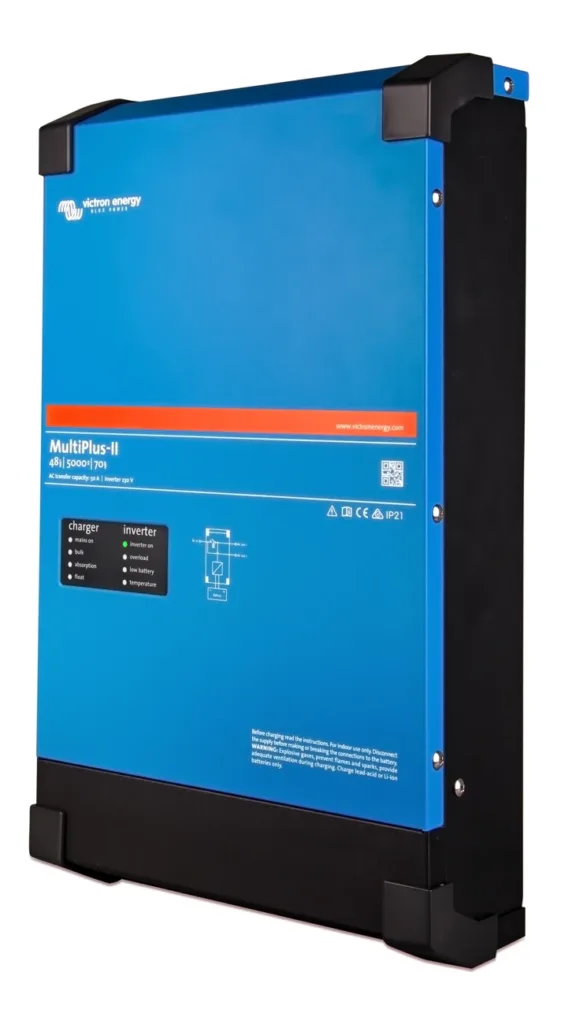
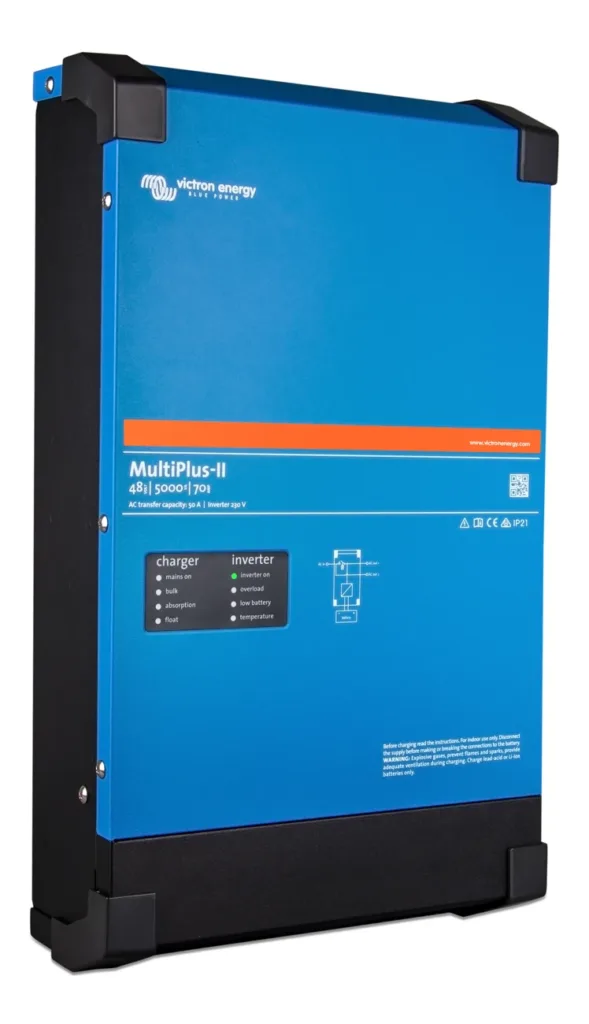
The Victron MultiPlus-II 48/5000/70-50 is a 48V inverter/charger with a 5kVA apparent-power rating and 4,000W of continuous real-power output at 25°C. It combines battery inversion, AC battery charging and transfer functions in one unit. This page covers the 48V, 70A-charger version, with manufacturer images of that exact model.
Victron MultiPlus-II 5kVA 48/5000/70-50 Inverter/Charger
The Victron MultiPlus-II 48/5000/70-50 is a 48V inverter/charger with a 5kVA apparent-power rating and 4,000W of continuous real-power output at 25°C. It combines battery inversion, AC battery charging and transfer functions in one unit. This page covers the 48V, 70A-charger version, with manufacturer images of that exact model.
Read the complete model number
The four parts of 48/5000/70-50 identify the nominal battery voltage, apparent inverter output, battery-charger current and transfer-current class. The 70A charger is a useful way to distinguish this product from the 24V 5kVA version, which has a different charging specification. Keeping the complete model number on the order helps ensure that a replacement or system extension is electrically appropriate, even when the blue enclosures look almost identical.
Why 5kVA does not mean 5kW continuously
Apparent power and real power describe different aspects of an AC load. The manufacturer specifies 5,000VA and 4,000W at 25°C for this unit. A household load assessment therefore needs to respect both the watt rating and the equipment’s electrical characteristics. Do not plan a continuous 5kW load simply because the product name contains 5000. Motor starting demand also needs a separate check; it is not captured by adding only the normal running watts.
Temperature affects the available output
The continuous real-power rating falls to 3,700W at 40°C and 3,000W at 65°C in the manufacturer specification. These figures make installation location important. An enclosed cupboard or hot utility area may not provide the same operating conditions as the 25°C reference. Allow the ventilation and access required in the installation manual, and discuss the expected ambient temperature when deciding which circuits the unit should support.
A 70A charger for a compatible 48V battery bank
The integrated charger can charge a suitable battery bank from an available AC source. Its 70A maximum is a battery-side current rating; it is not a promise that charging will always occur at that current. The battery’s permitted charge current, the selected charging profile, temperature and available input supply can reduce it. A lithium battery also needs an appropriate control and communication arrangement where required by its manufacturer.
PowerControl manages a limited AC supply
PowerControl allows the system to work within a configured AC input-current limit by managing how much of the available supply is used for battery charging. This can be useful where the connected supply or generator has limited capacity. The installer must set that limit for the actual source. Raising the setting does not increase the rating of the upstream supply, and a charger operating below its maximum can be the expected result of a deliberately restricted input.
PowerAssist supports periods of greater demand
PowerAssist can supplement an available AC source with battery energy when loads require more than the configured input allowance. This is useful for suitable systems with a constrained grid or generator supply, but it still depends on the battery and inverter limits. It does not create extra stored energy. A battery that is nearly empty or restricted by its management system cannot be assumed to provide the same assistance as a fully available battery bank.
Keep transfer current separate from inverter output
The 50A feed-through specification describes the AC transfer path when an appropriate input source is available. It is different from the inverter’s 4kW continuous battery-powered output. This distinction matters when a property can run more appliances while grid power is present than it can during an interruption. The backup circuit selection should reflect the battery-powered operating condition as well as normal operation through the AC input.
Two AC outputs support deliberate circuit selection
The MultiPlus-II provides a main output with backup functionality and an additional output intended for loads that should operate only while an AC source is available. This allows the installer to separate equipment that should consume stored energy from equipment that should not. For example, a nonessential high-consumption circuit may be treated differently from refrigeration or communications equipment. The final arrangement must follow the supplied manual and the planned protection scheme.
Add solar through the appropriate external equipment
This unit is an inverter/charger, and it does not contain an integrated solar MPPT input. A solar installation needs compatible additional equipment, such as a correctly selected Victron solar charge controller, or another supported system arrangement. Panel string limits belong to that solar equipment. A quotation should identify the PV charging components separately so that the customer can distinguish the MultiPlus-II functions from the capabilities of the complete solar system.
Size storage for both power and duration
Battery energy in kWh influences how long selected loads can run; battery discharge capability influences the power they can receive. At a nominal 48V, 4,000W corresponds to approximately 83A before conversion losses. This simple comparison explains why a battery’s current capability matters alongside its energy rating. It is an orientation figure rather than a cable-sizing calculation, because actual battery voltage, efficiency and operating conditions change the current.
Plan monitoring and service access together
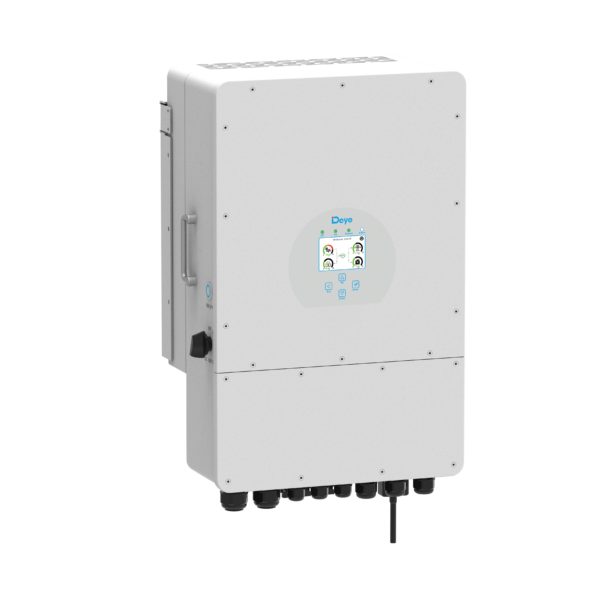
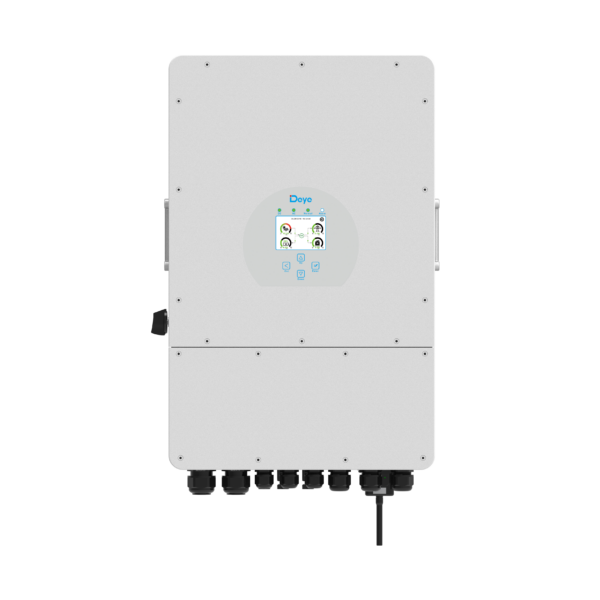
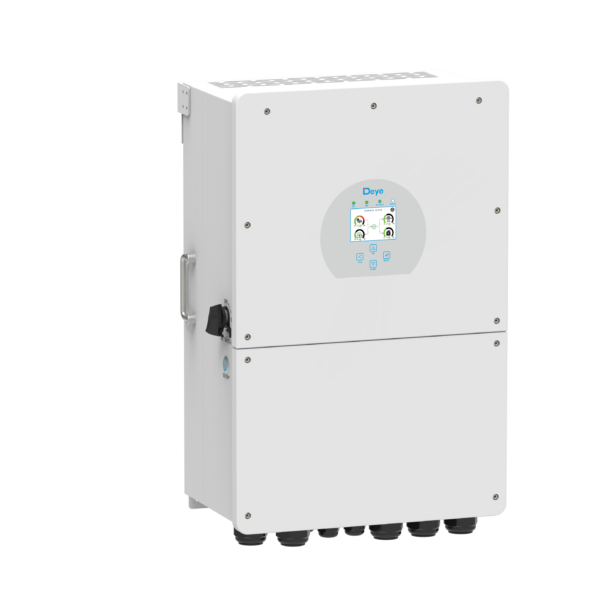
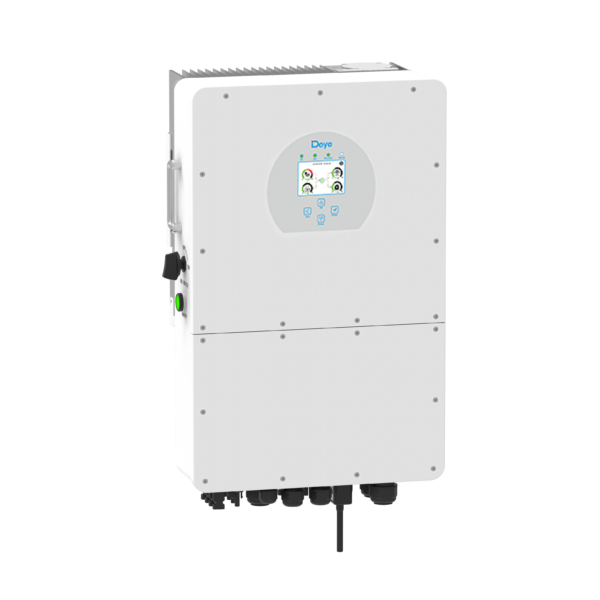
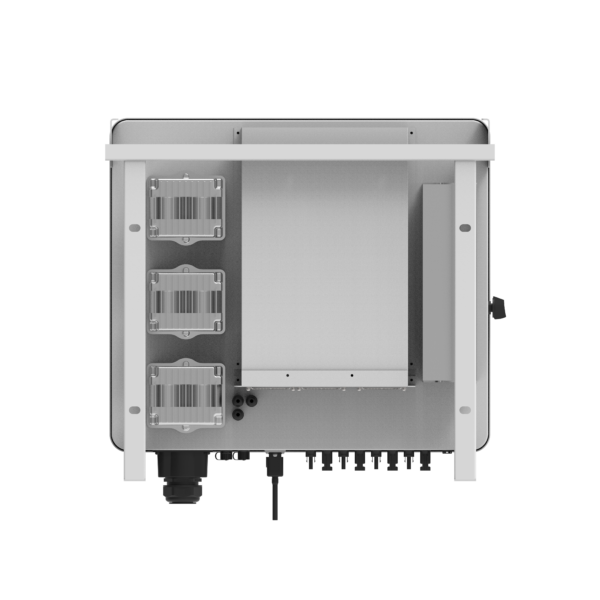
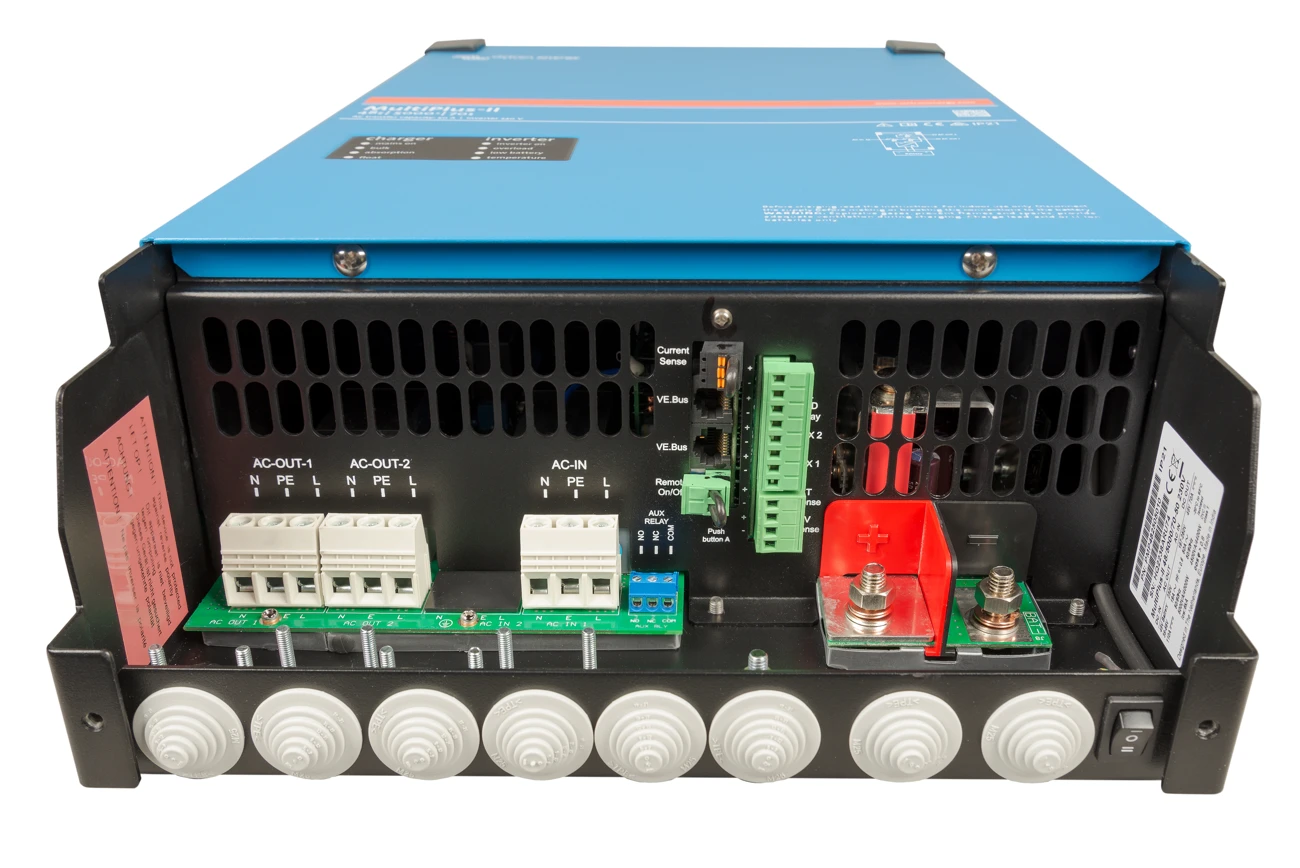
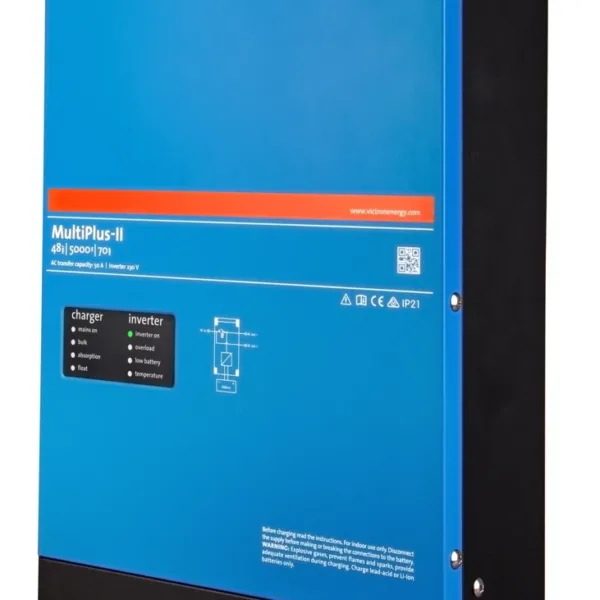
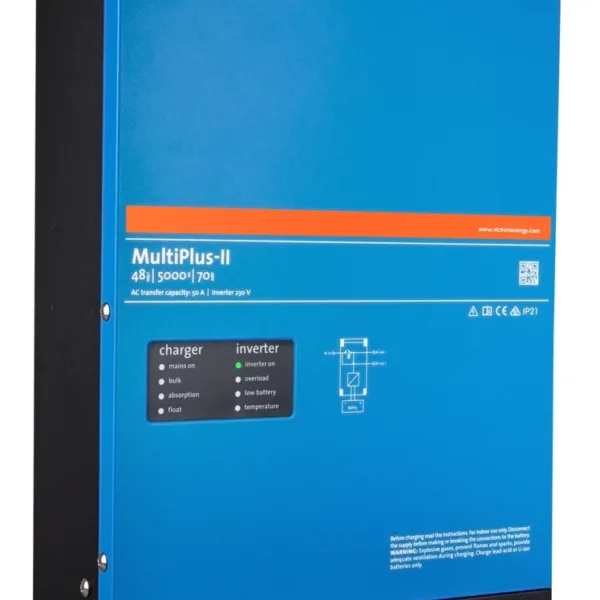
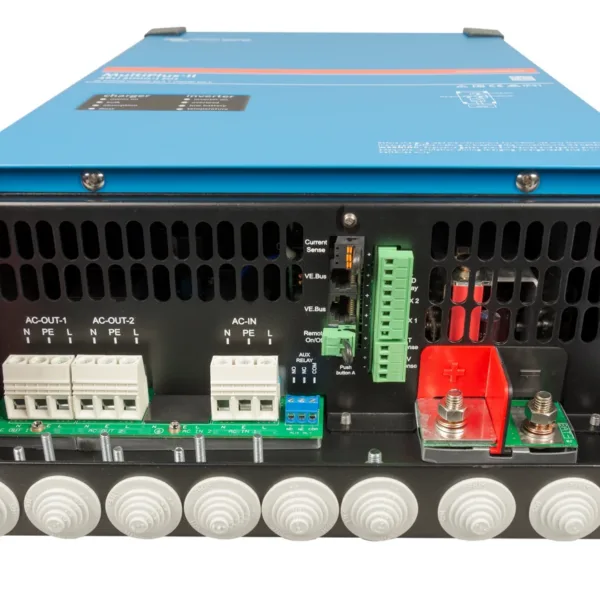
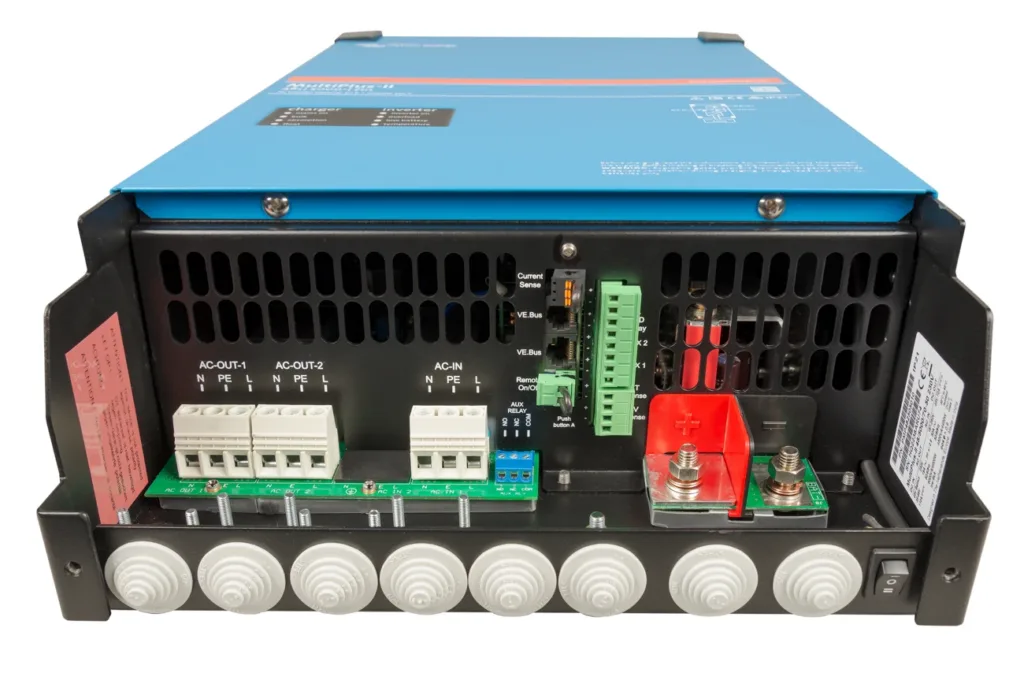
A suitable GX device can provide the system coordination and monitoring functions required by the selected Victron arrangement. Confirm which monitoring hardware is included rather than assuming it is built into this non-GX model. The correct 48V product views below show the enclosure and connection area for identification and access planning. They should be used alongside the manufacturer manual rather than as installation drawings.
A good fit for a deliberately designed backup system
This model is worth considering where a 48V battery architecture, configurable AC input management and separate solar charging are part of the design. It benefits from a clear essential-load list and an accurate understanding of the 4kW continuous reference. Ask for the complete inverter model, battery model, charging equipment and monitoring components on the quotation. That record makes commissioning, later expansion and future service much easier to assess.