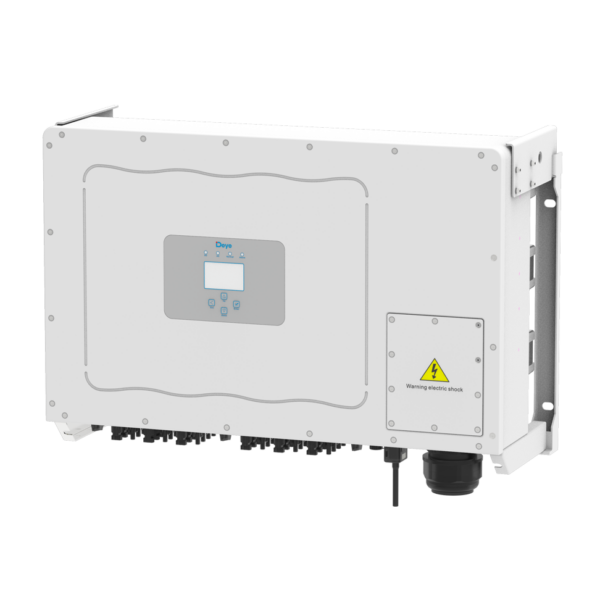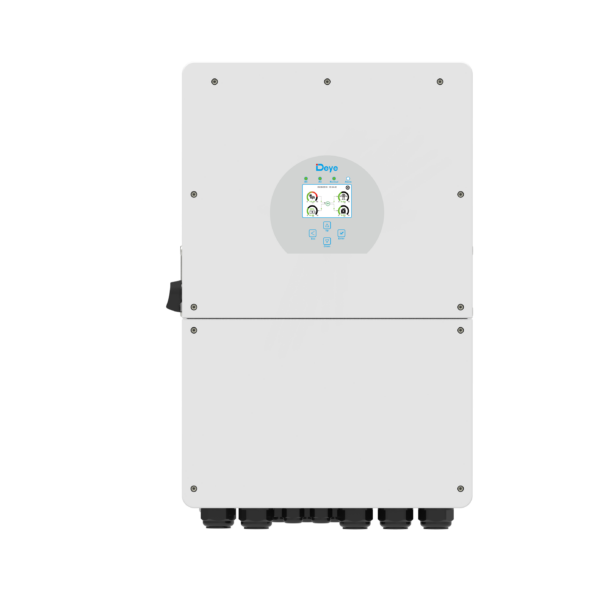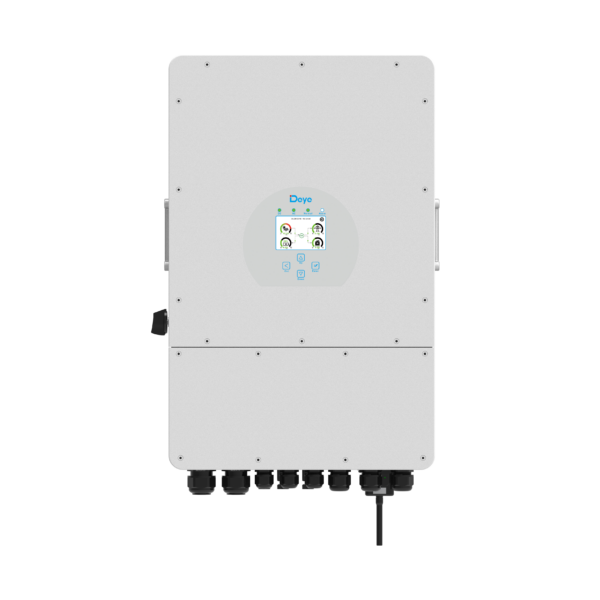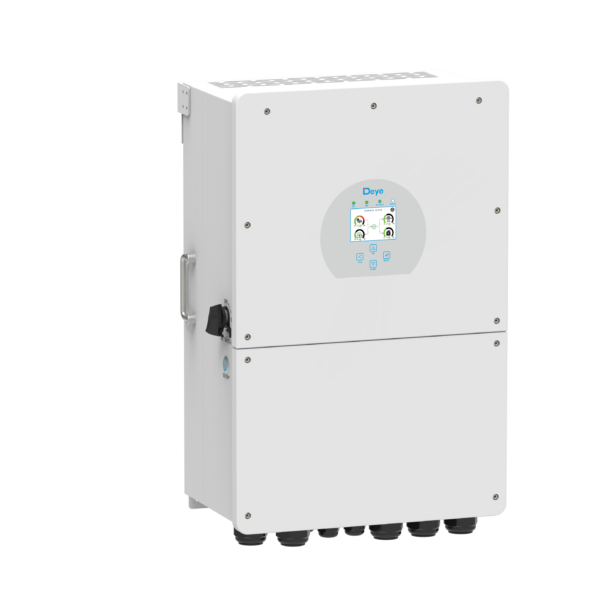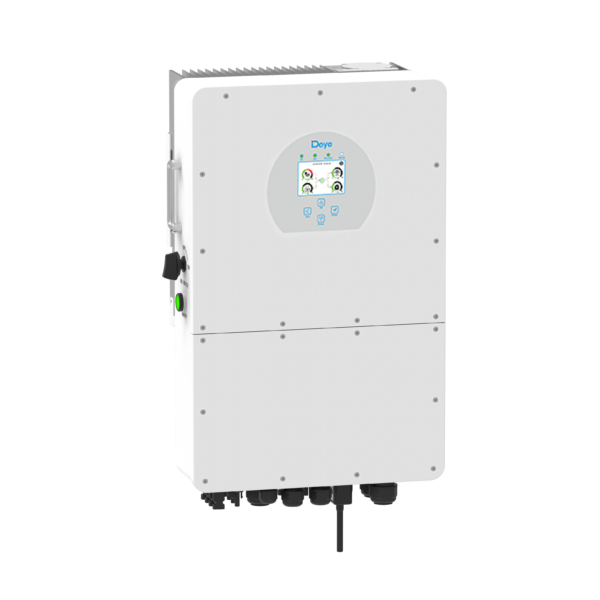

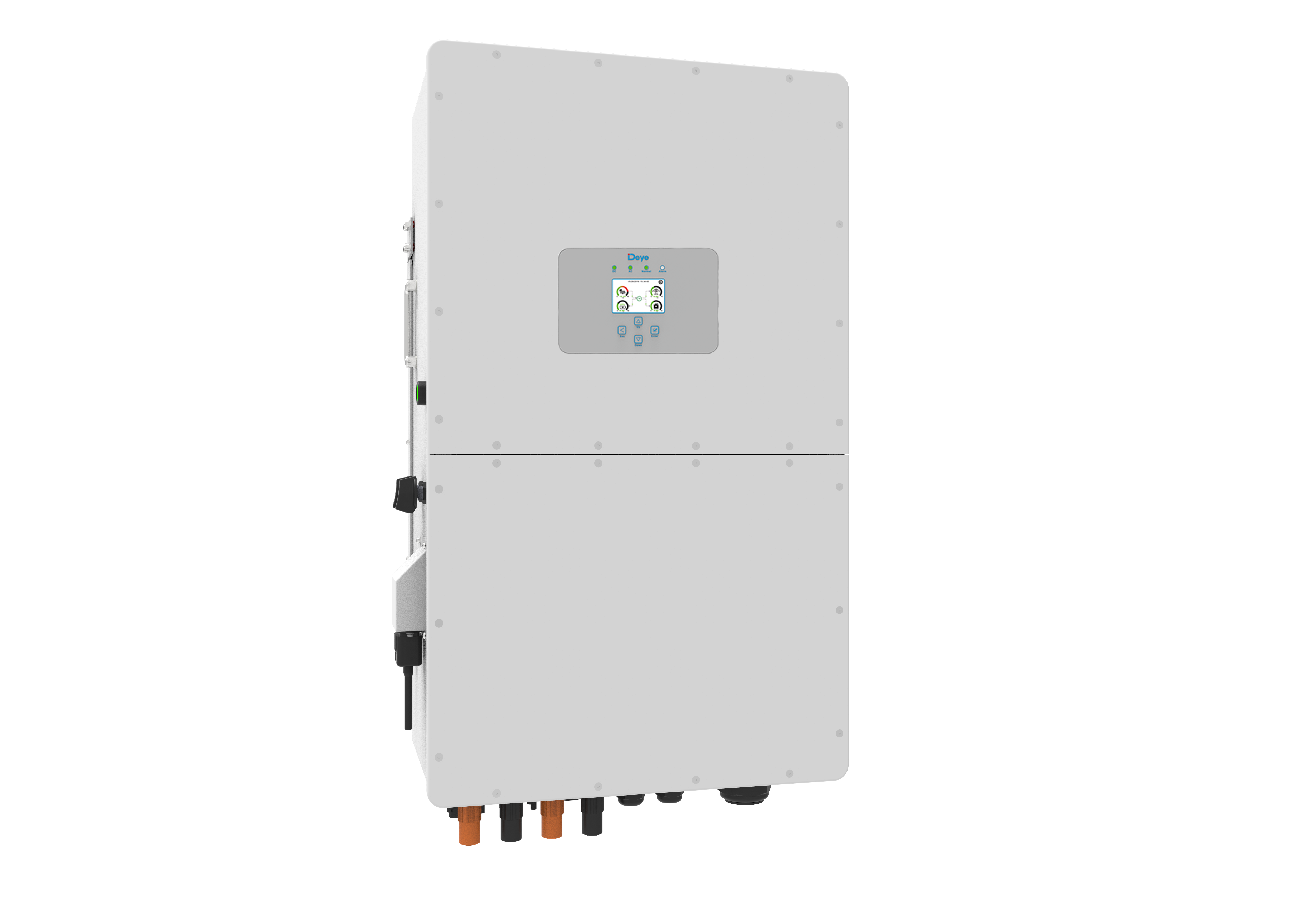
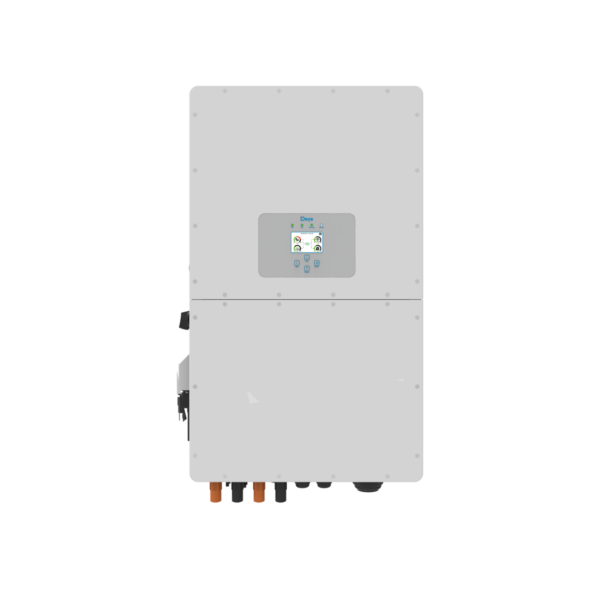

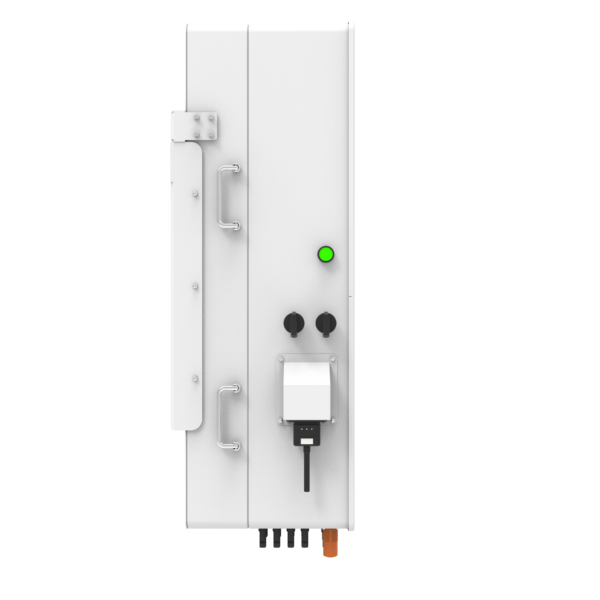
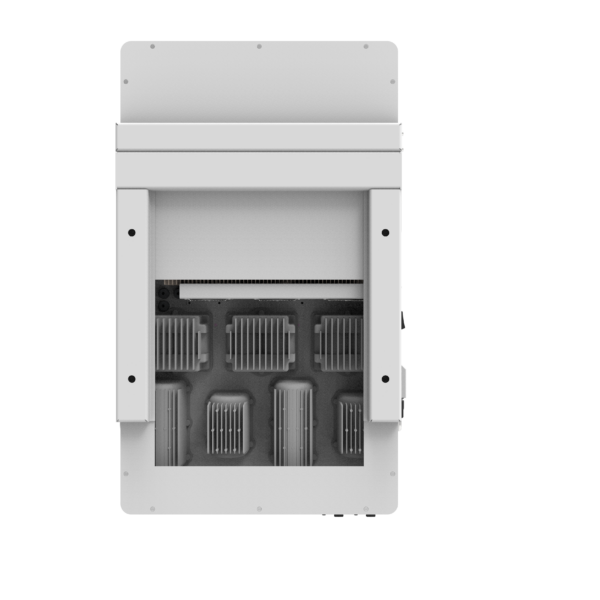
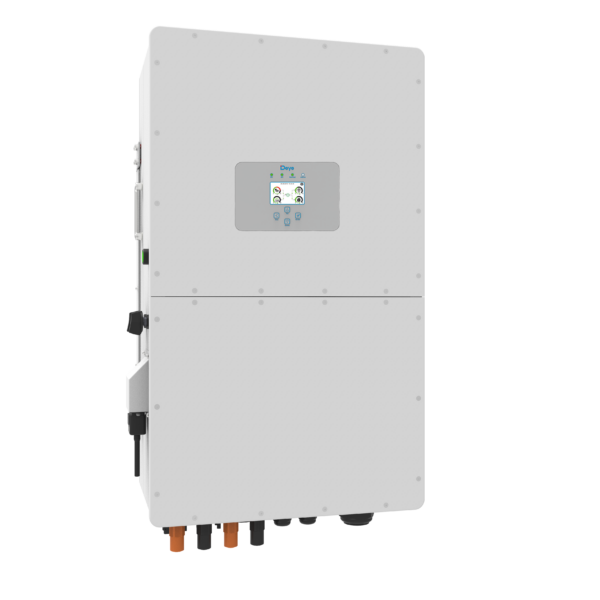
Deye 50kW HV Three-Phase Hybrid Inverter | SUN-50K-SG01HP3-EU-BM4
Original price was: R145,000.00.R83,500.00Current price is: R83,500.00.
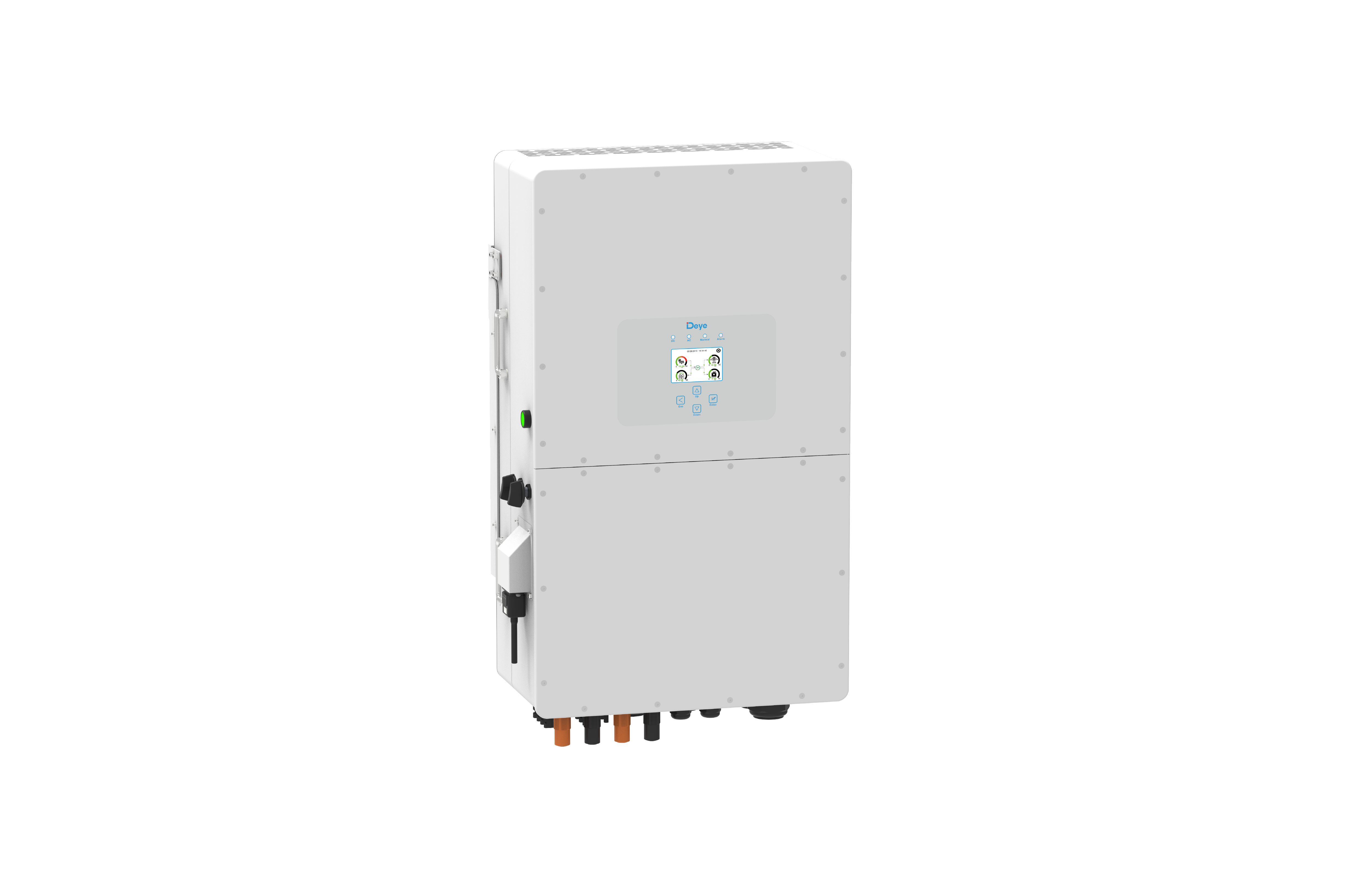
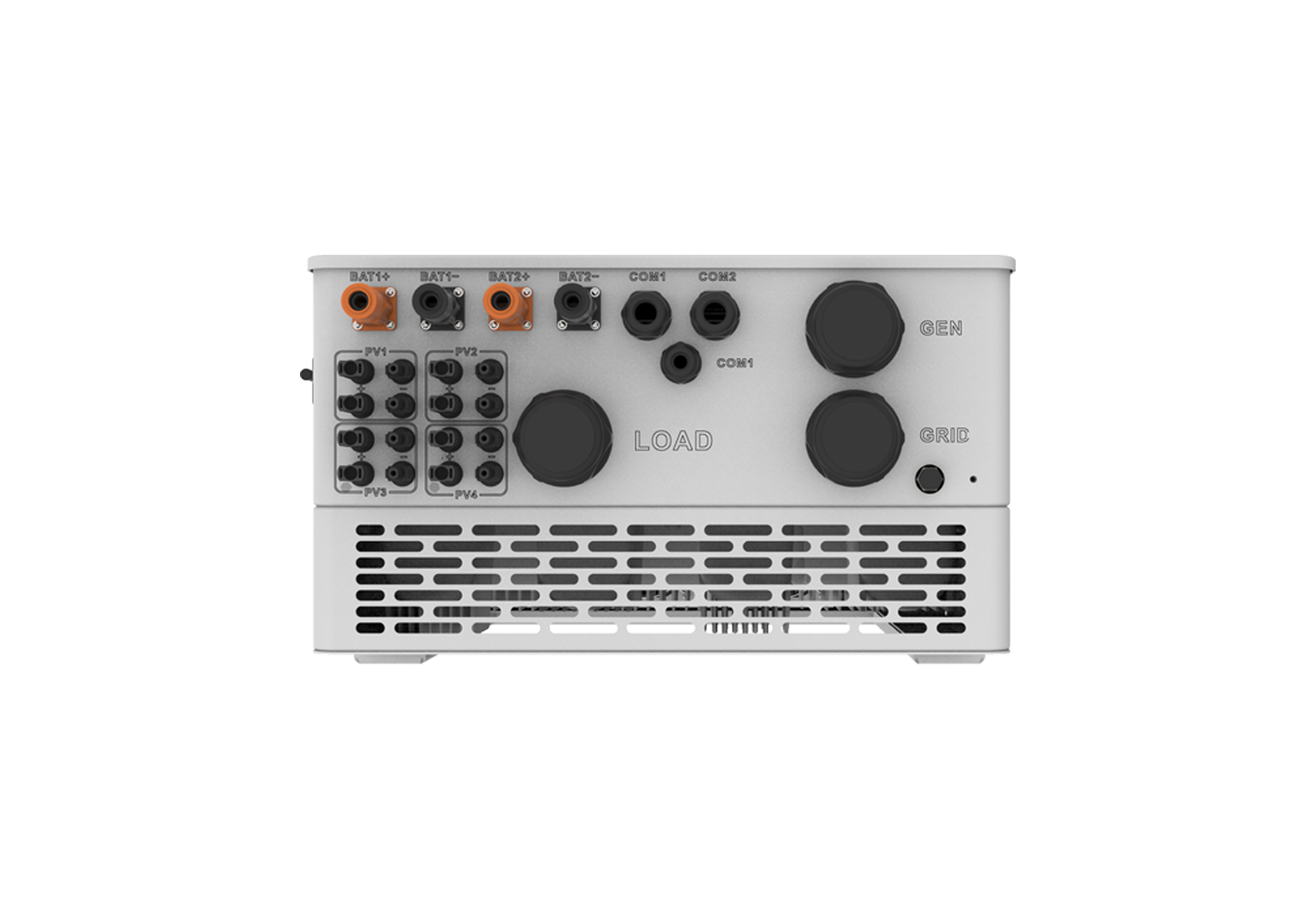
Deye SUN-50K-SG01HP3-EU-BM4 50kW three-phase hybrid inverter for a designed high-voltage battery system. Four MPPT trackers and a 160–800V battery range support model-specific project planning.
Deye 50kW HV Three-Phase Hybrid Inverter
The Deye 50kW high-voltage three-phase hybrid inverter is a project component for commercial and other substantial energy installations. The SUN-50K-SG01HP3-EU-BM4 combines solar conversion with a compatible high-voltage battery interface. A useful design starts with the building’s load profile, incoming supply and required backup circuits, then matches the inverter, storage and array to that brief.
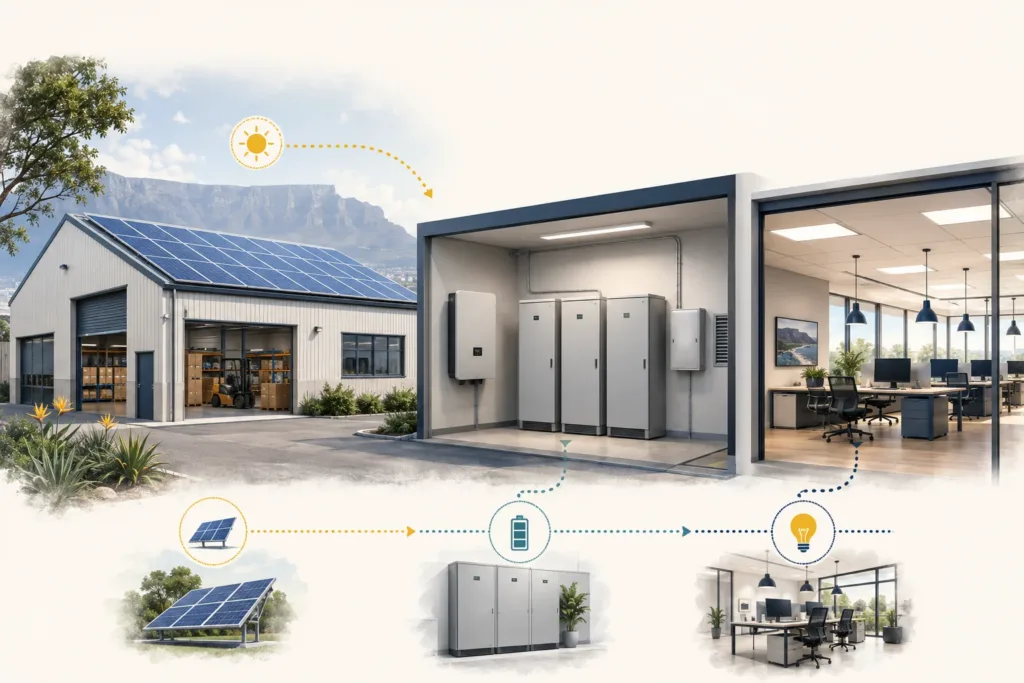
Where a 50kW system fits
A warehouse, office building or other three-phase property may have very different electricity use across the day. Lighting and workstations can produce a relatively steady demand, while motors, pumps or refrigeration introduce changing loads and startup requirements. Treat this inverter as a candidate for an assessed project rather than a universal solution for any building below a headline power figure. A useful survey records the loads on each phase, periods of highest demand and which operations must continue during an interruption.

Separate essential operations from discretionary demand
List the equipment whose interruption has the greatest operational impact. Then identify loads that can be scheduled, reduced or left outside the backed-up section. This may allow the battery system to focus on a smaller, more useful load rather than attempting to support every circuit. Three-phase design also needs attention to phase distribution and the permitted operating conditions of the inverter. A total kW figure alone does not establish the acceptable load on an individual phase or the behaviour of a particular motor.
High-voltage storage must be matched as a system
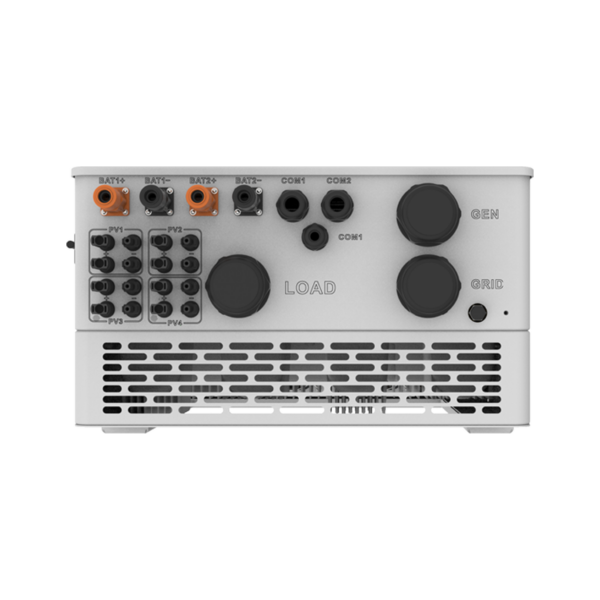
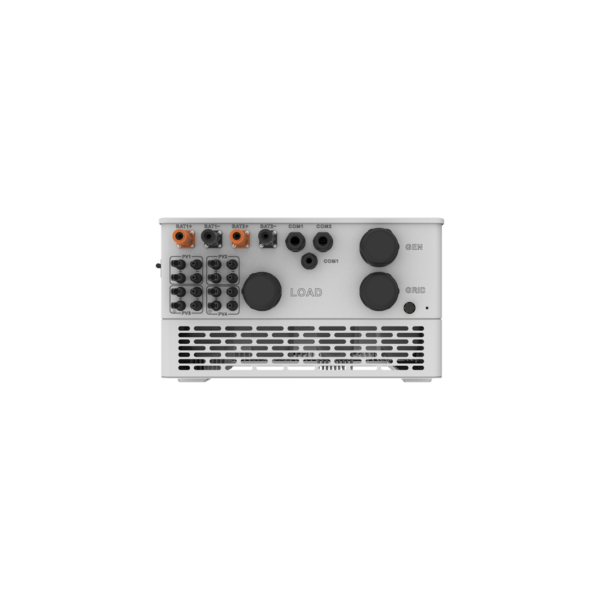
The referenced battery range is 160–800V, with two battery inputs and 50A + 50A maximum charging and discharging current. These values are design limits, not a statement that any high-voltage battery can be connected. The chosen battery system needs an approved voltage configuration, BMS communication and current capability for the intended operating range. A standard 48V home battery is not a direct substitute. Have the quotation identify the battery modules, control equipment and complete configuration rather than only a total kWh number.
Size storage from the business requirement
Decide both how much power must be supplied and how long it is needed. A steady 10kW essential load uses 20kWh over two hours before conversion losses and reserve allowances. This arithmetic is a starting point for an energy budget, not a recommendation for a particular battery bank. The designer must also account for changing demand, battery discharge limits, site conditions and charging opportunities. A 50kW inverter does not imply that a smaller attached battery can deliver 50kW continuously.
Make the roof survey part of the specification
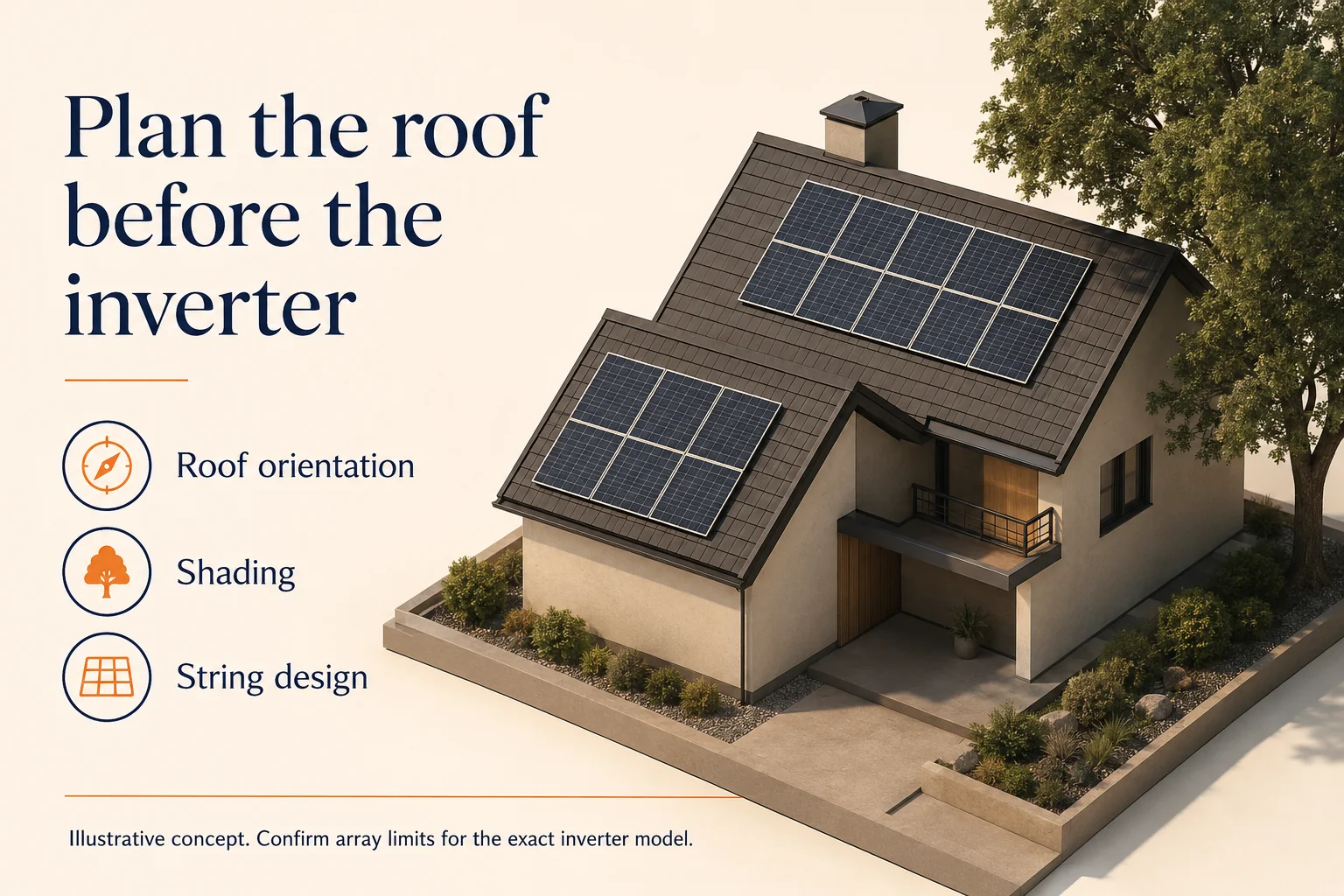
Four MPPT trackers provide inputs for a designed PV arrangement. The referenced 65kW maximum PV input power and 1000V maximum PV voltage must be considered alongside tracker and string current limits. Do not convert those two headline figures directly into a panel count. Roof orientation, shaded sections, panel electrical characteristics and the design temperature affect string selection. Obtain an array schedule showing the proposed modules and string grouping so that procurement and installation use the same assumptions.
Think about charging schedules and other sources
The reference supports scheduled battery operation and generator-related integration, but the appropriate arrangement depends on the project. Ask the designer to explain when the battery will charge, what reserve remains and what happens when the incoming source is constrained. Where an existing solar installation or generator will remain, include its exact details in the assessment. Do not assume that an existing source can be connected without checking protection, controls and permitted operating modes across the combined system.
Plan the equipment area and handover
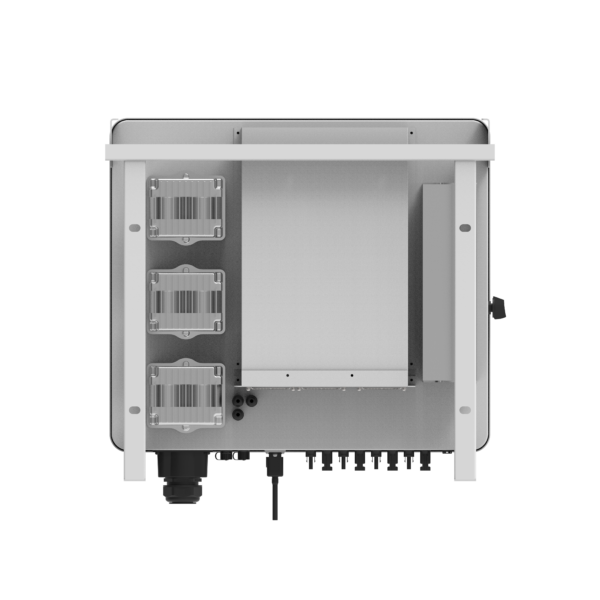
The IP65 reference and intelligent air cooling still require a suitable installation position with the manufacturer’s clearances. Allow access for inspection, service and cable routing, and have the mounting arrangement assessed for the supplied unit. Commercial handover should include the equipment schedule, settings record, load allocation and a demonstration of the intended backup behaviour. Agree who can review monitoring data and who receives fault reports. Clear records are especially useful when the building later adds machinery, tenants or extra solar capacity.

Frequently asked questions
Can it use ordinary 48V batteries? This model requires a compatible high-voltage battery system. Does 50kW mean the whole building is backed up? Only the designed circuits and operating conditions determine that. Is a battery included? Confirm the quotation; this product is the inverter. Can I add it to an existing solar plant? The existing equipment and connection arrangement must be assessed first. Will it achieve a particular saving? Savings require an energy and tariff assessment, not an inverter rating alone.
Get a system-specific quotation
Send Solar Deity the exact product required, your existing inverter or battery details, the installation location and the loads you want to support. Include any planned expansion and the desired backup period. Ask for a written component list that identifies equipment, accessories and installation scope, so that prices can be compared on the same basis. Contact Solar Deity to discuss the configuration.
Technical reference
Deye SUN-29.9–50K SG01HP3 datasheet
Product specifications
| Specification | Product reference |
|---|---|
| Exact inverter model | SUN-50K-SG01HP3-EU-BM4 |
| Rated AC active power | 50kW |
| AC arrangement | Three phase |
| Battery voltage range | 160–800V |
| Battery inputs | 2; 50A + 50A maximum charge/discharge current |
| MPPT trackers | 4 |
| Maximum PV input power | 65kW |
| Maximum PV voltage | 1000V |
| Enclosure and cooling | IP65; intelligent air cooling |
| Weight | 60 kg |
|---|---|
| Dimensions | 56 × 83.7 × 32 cm |