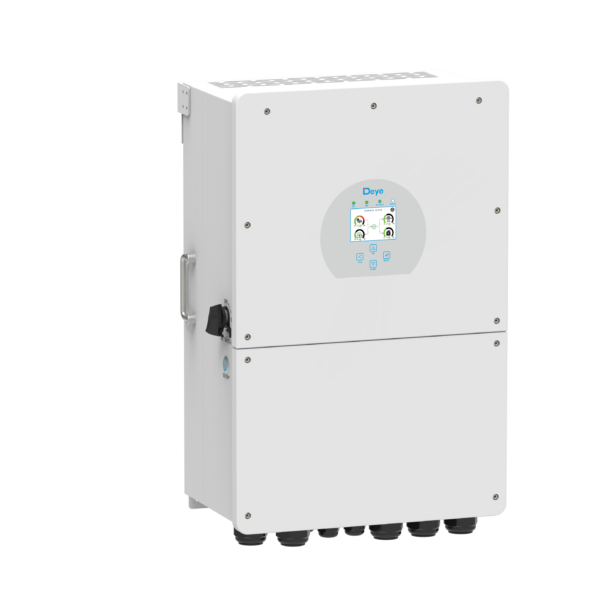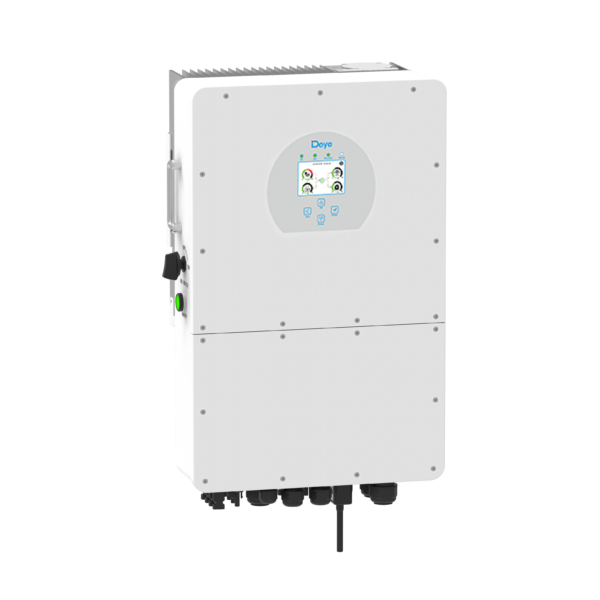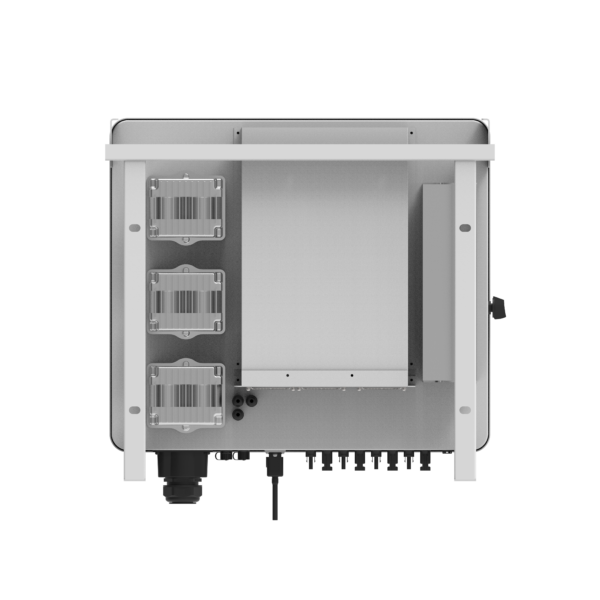
SolaX X3 Hybrid 15D 15kW Three-Phase Inverter
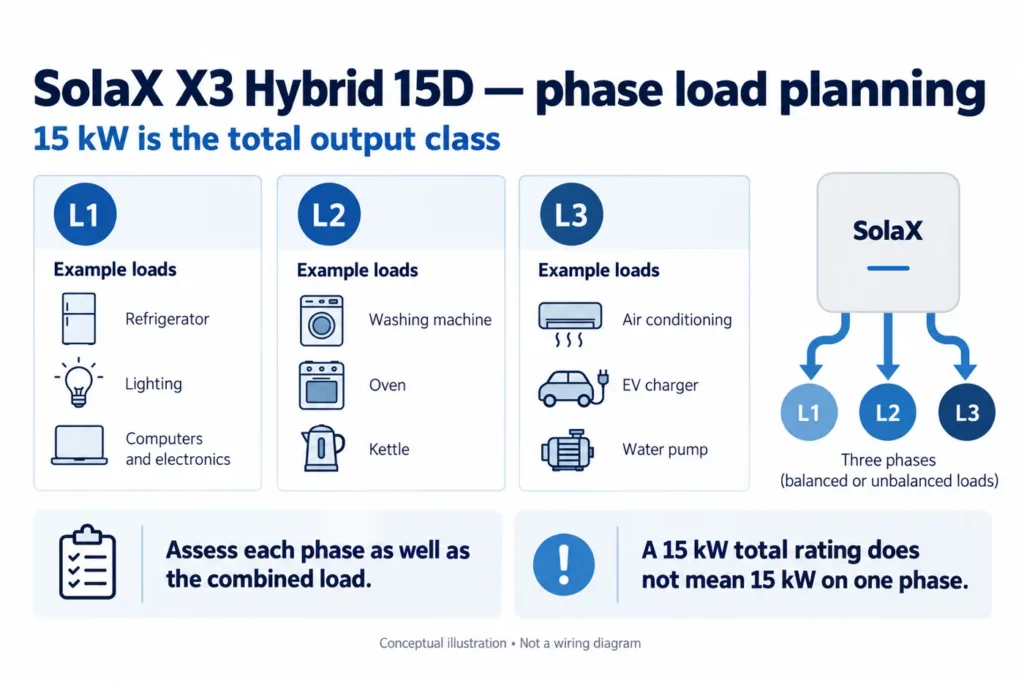
The SolaX X3 Hybrid 15D is a 15kW three-phase hybrid-inverter reference. Its total output class is shared across a three-phase system; it is not a promise of 15kW from each phase. This makes the distribution of loads, as well as their combined demand, central to selecting the inverter and the supported battery configuration.

Three-phase selection begins with the distribution board
A three-phase property can place very different loads on its individual phases. A total-demand figure may hide a heavily loaded phase alongside two lightly loaded ones. Have the installer review the actual circuit distribution and the loads intended for backup. This is why the 15kW X3 reference should be assessed as a three-phase system rather than compared with a single-phase inverter only by the number in its product name.

Do not multiply the output label by three
The listing’s 15kW class is the total output reference. It does not become 45kW merely because the system has three phases. Equally, unused capacity on other phases should not be assumed to allow any load on one phase. The permitted phase imbalance and per-phase limits belong to the exact inverter version and operating mode. The phase-planning illustration makes this distinction without assigning an unverified numerical limit to the supplied stock.
Review simultaneous demand and its location
List major equipment by phase as well as by its running power. A pump, air-conditioning unit or cooking circuit can affect one phase more than another, and starting demand may add a short peak. A combined total below 15kW is therefore not the whole assessment. The distribution and timing of consumption help determine whether circuit changes, operating priorities or another system arrangement are needed.
The battery must support the chosen backup arrangement
This hybrid family uses a supported high-voltage battery configuration. Battery module count and operating voltage are part of the compatibility assessment, not simply a choice of kWh. The management-system protocol and the inverter revision must also match. A battery advertised as high-voltage is not automatically suitable, and a low-voltage battery should not be substituted on the assumption that all solar batteries perform the same electrical role.
Separate power capability from stored energy
A larger inverter can serve a different power requirement, but it does not create additional battery energy. As an illustration, a 3kW average load running for four hours requires 12kWh before allowing for losses and reserve. That is an energy calculation rather than a performance claim for a particular battery bank. Use the expected interruption duration and actual load pattern to select storage alongside the inverter.
Solar-array inputs need the complete model reference
The linked manufacturer document describes the current X3 Hybrid G4 reference. It is not confirmation that every older 15D listing has the same PV current, battery range or overload capability. The supplied label and manual must establish those detailed limits. Have the panel model and string arrangement checked against that exact reference, including cold-condition voltage and input current, before equipment is ordered for an existing array.
Backup circuits and normal grid operation can differ
A property may operate more equipment with grid supply present than the selected battery-backed arrangement can sustain during an interruption. Identify the circuits that should remain available under the backup condition. The distinction is particularly important when a site has several large three-phase or single-phase loads. The final scope should describe both normal operation and the supported interruption behaviour rather than assume they are identical.
Choose a reserve that matches the operating priority
A battery reserve can be used to preserve energy for an interruption, while a different operating preference may use more stored solar energy routinely. Those choices affect availability at different times of day. Discuss the intended balance during commissioning and confirm how the owner will observe it through the installed monitoring arrangement. The inverter’s 15kW class does not by itself establish an appropriate reserve or daily charging schedule.
Use the diagrams to discuss the system clearly
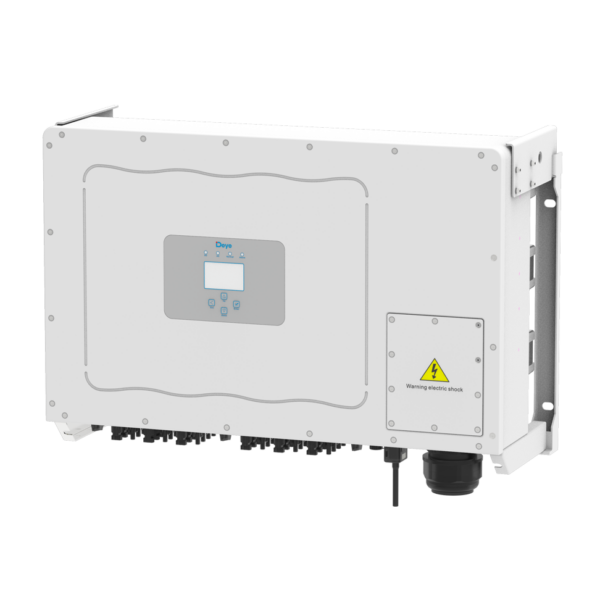
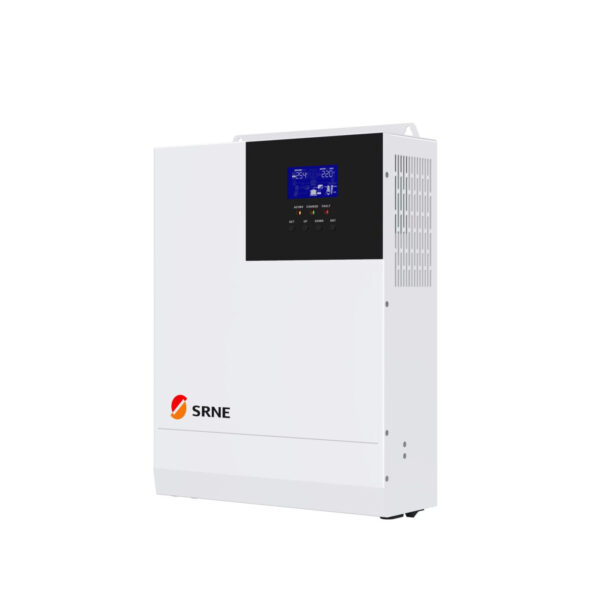
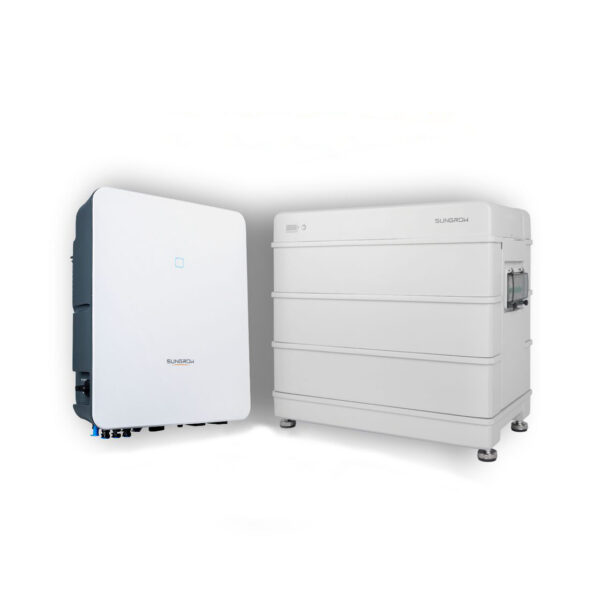
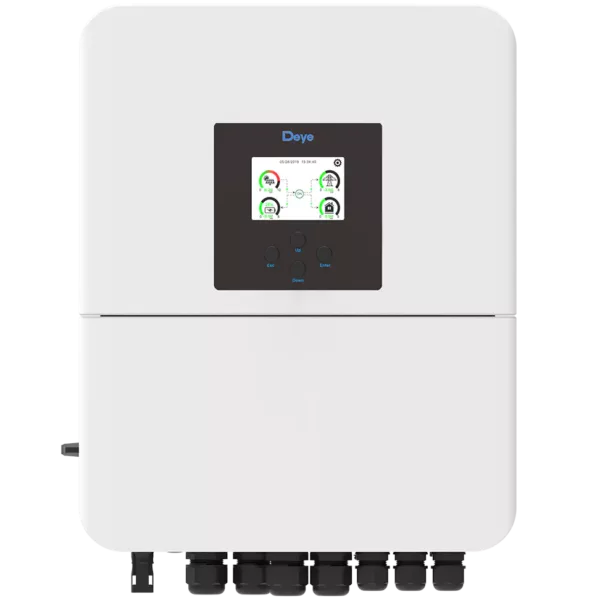
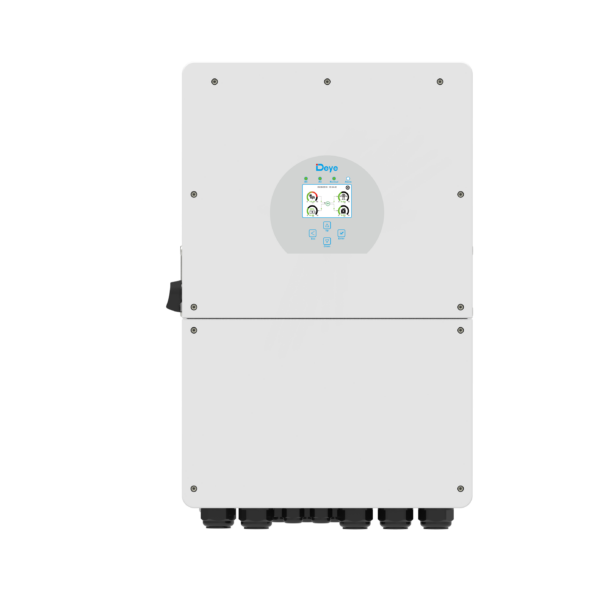
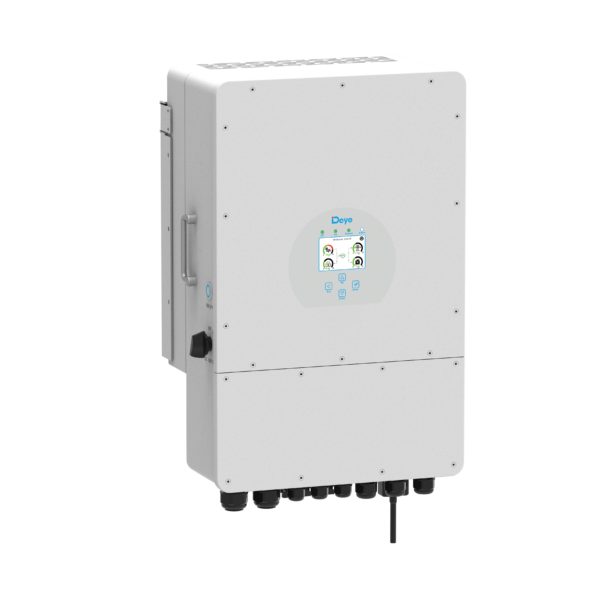
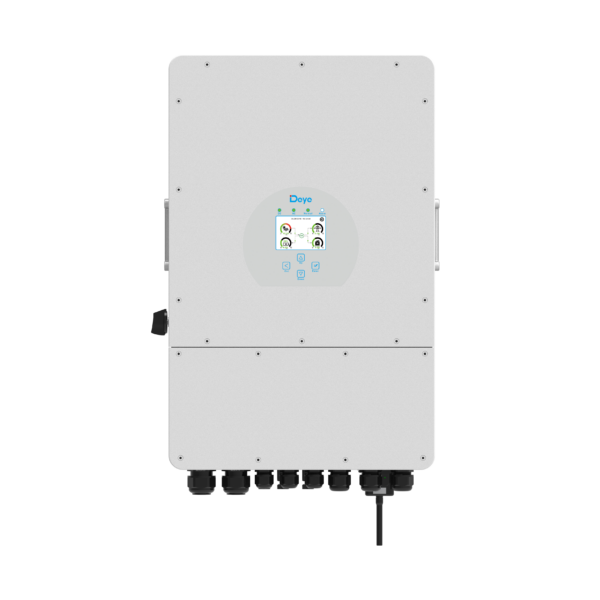
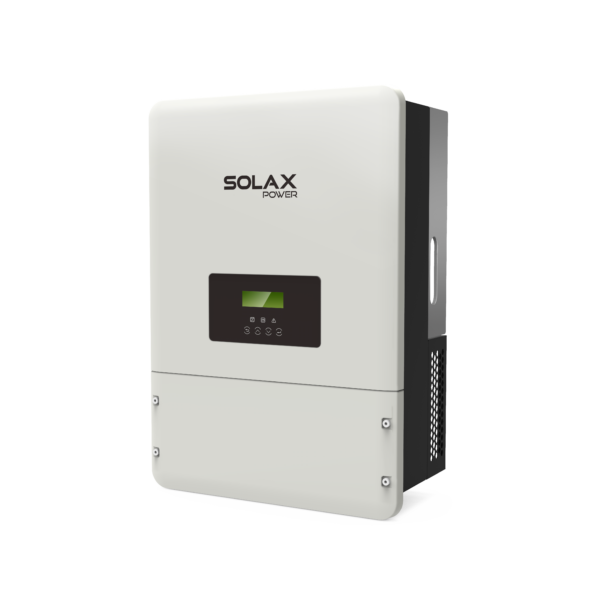
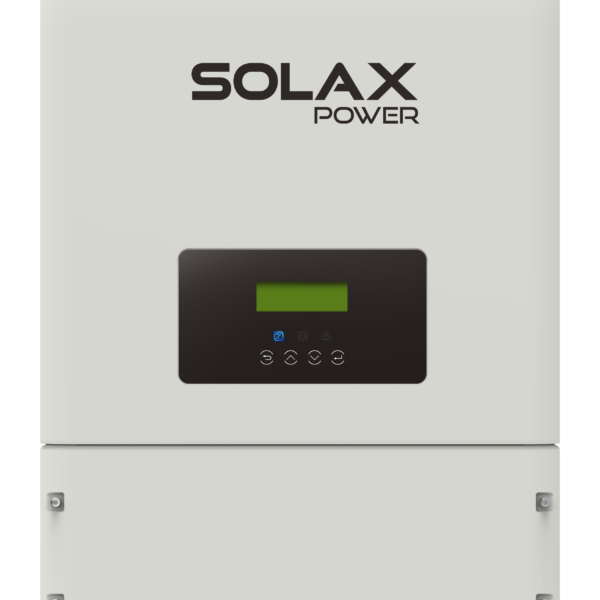
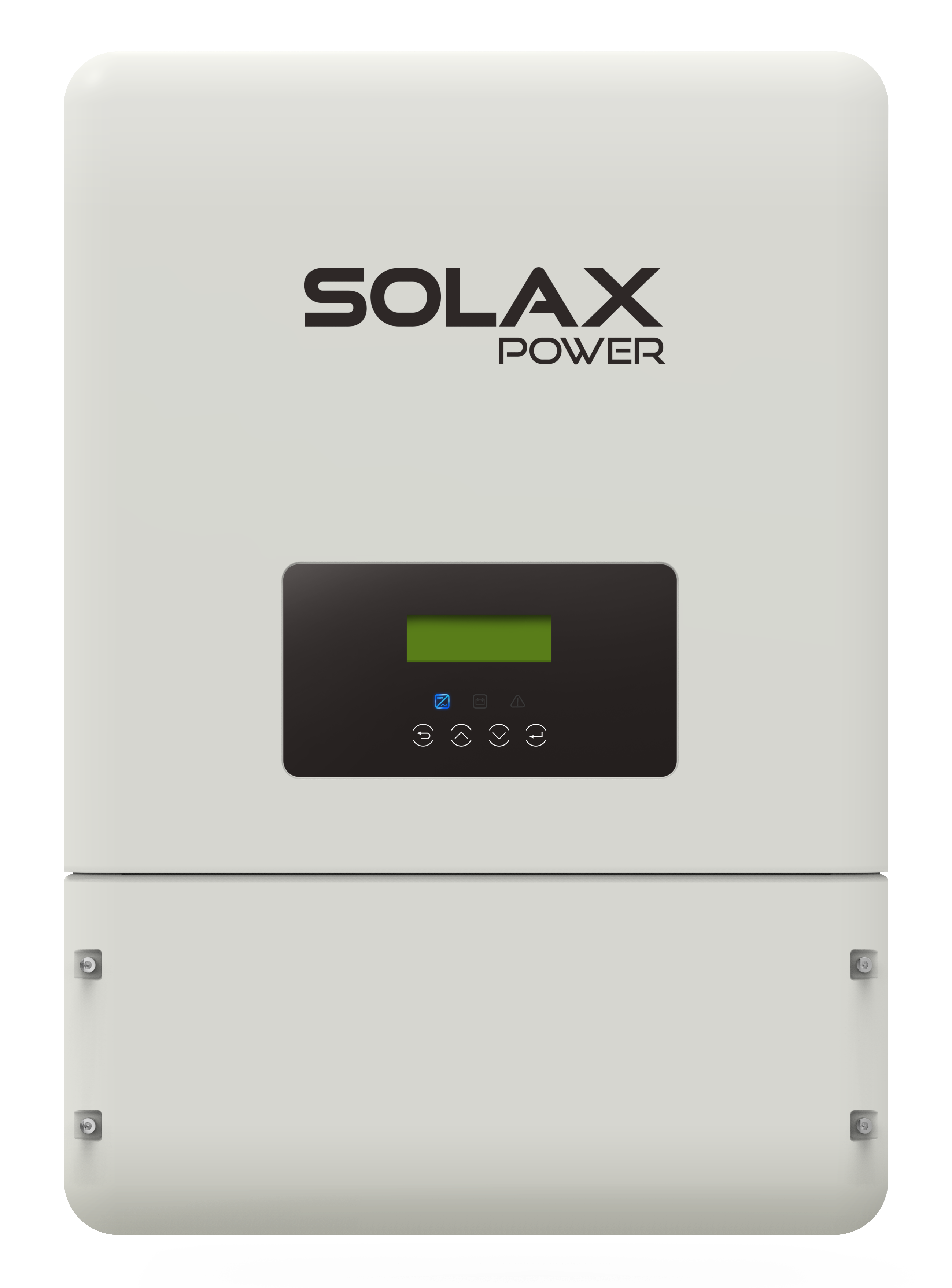
The new illustrations show the three-phase structure and the need to review L1, L2 and L3 individually. Appliance icons represent example load categories, not a guarantee that all pictured devices can run together or that they are included. The original product views remain useful for identifying the enclosure. Electrical connections, mounting and protection must be based on the supplied manual and installation design.
Record the version and the agreed circuit schedule
A useful quotation identifies X3-HYBRID-15.0-D, its generation, the supported battery configuration and the intended backup circuits. Record the applicable phase and overload limits once the unit has been confirmed. This makes later servicing or battery expansion much easier to assess. It also prevents a newer family brochure from silently changing the expectations for equipment that was originally supplied under a different specification.
Commission around the loads the owner actually needs
Handover should explain how the selected circuits behave when supply is lost and restored, how battery information is displayed and how the agreed reserve affects availability. Check the installed system against the actual equipment schedule rather than a general whole-home claim. A clear record of that arrangement is more useful than a broad promise based only on the three-phase product label.
Product reference
Manufacturer or product connection reference. The referenced document must be matched to the supplied model and revision before applying additional electrical limits.
Technical specifications
| Parameter | Product detail |
|---|---|
| Listing model | X3-HYBRID-15.0-D |
| Total rated output class | 15,000 W / 15 kW |
| Supply arrangement | Three phase |
| System category | Hybrid solar inverter |
| Storage category | Supported high-voltage battery arrangement |
| Phase-load interpretation | 15 kW is the total class, not 15 kW per phase |
| Detailed PV and battery limits | Confirm supplied generation before using current G4 numerical specifications |