Lumo 1kW PowerAll UPS with 1.28kWh Battery
R9,500.00
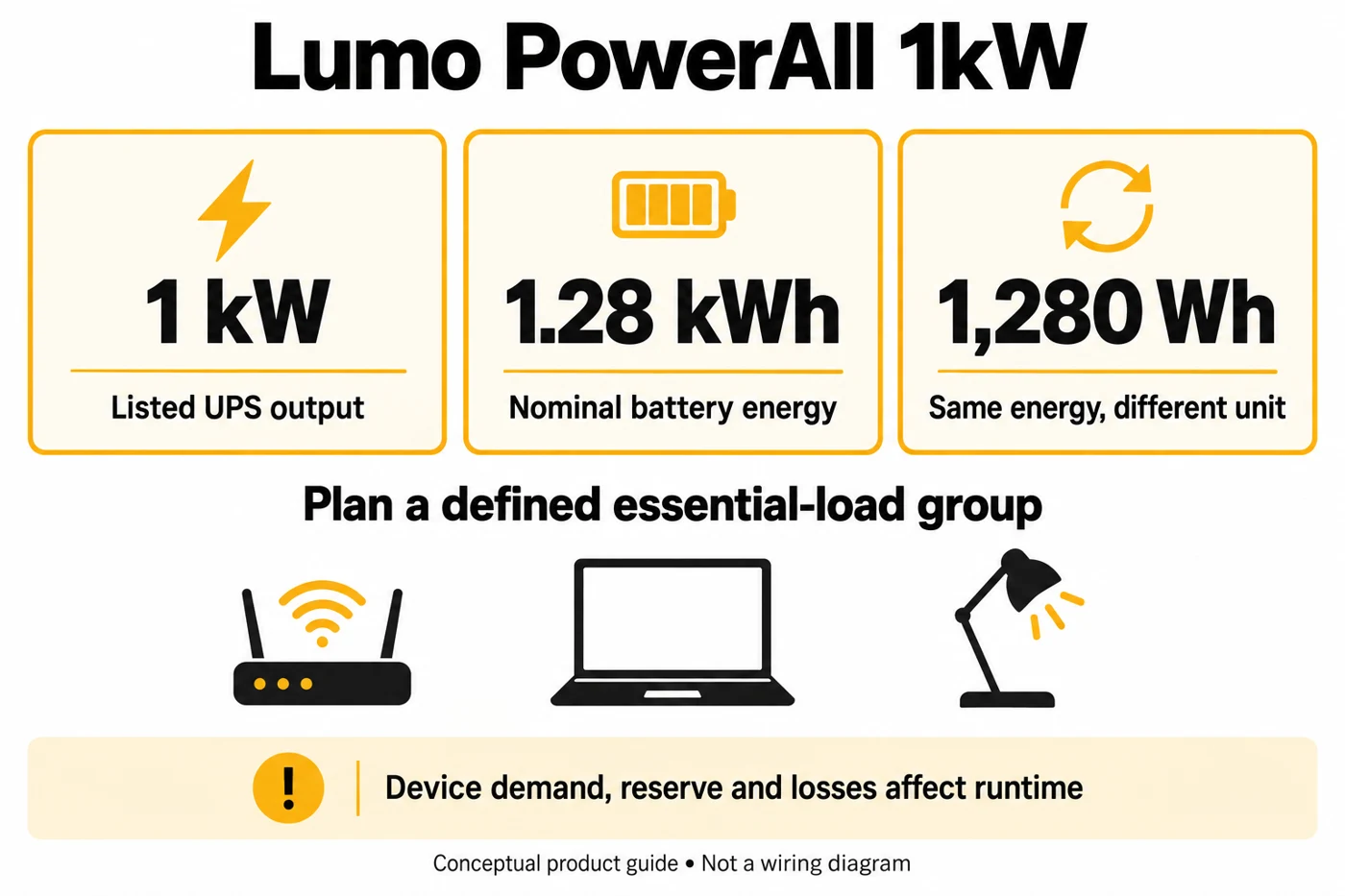
The Lumo PowerAll 1kW UPS is listed with a 1,000W output and 1,280Wh, or 1.28kWh, of nominal battery energy. It is the smaller-capacity PowerAll reference on Solar Deity, intended to be assessed against a defined set of essential devices rather than an unrestricted household load. Confirm the supplied unit’s battery voltage and Ah rating when ordering, because published PowerAll revisions are not interchangeable specifications.
Lumo 1kW PowerAll UPS with 1.28kWh Battery
The Lumo PowerAll 1kW UPS is listed with a 1,000W output and 1,280Wh, or 1.28kWh, of nominal battery energy. It is the smaller-capacity PowerAll reference on Solar Deity, intended to be assessed against a defined set of essential devices rather than an unrestricted household load. Confirm the supplied unit’s battery voltage and Ah rating when ordering, because published PowerAll revisions are not interchangeable specifications.

Identify the 1kW version before comparing
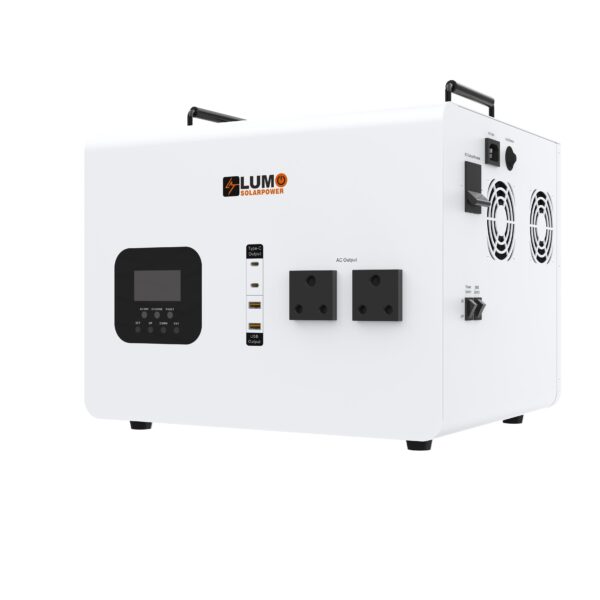
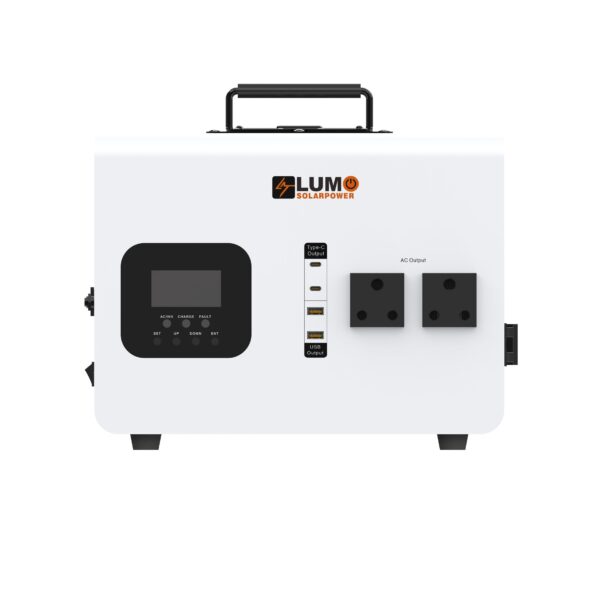
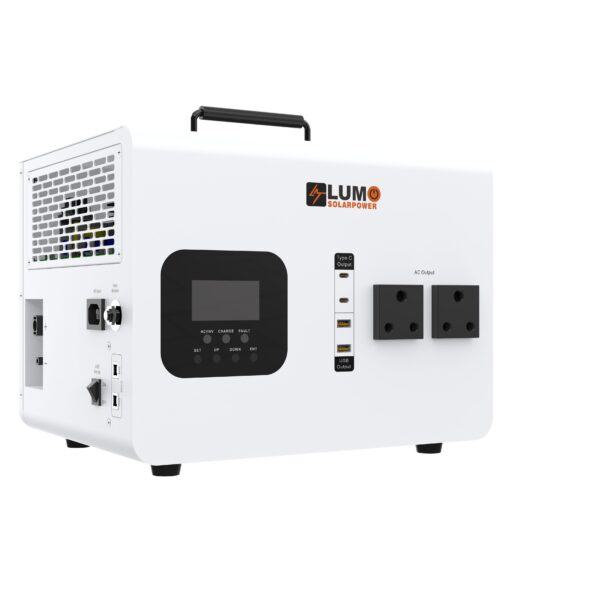
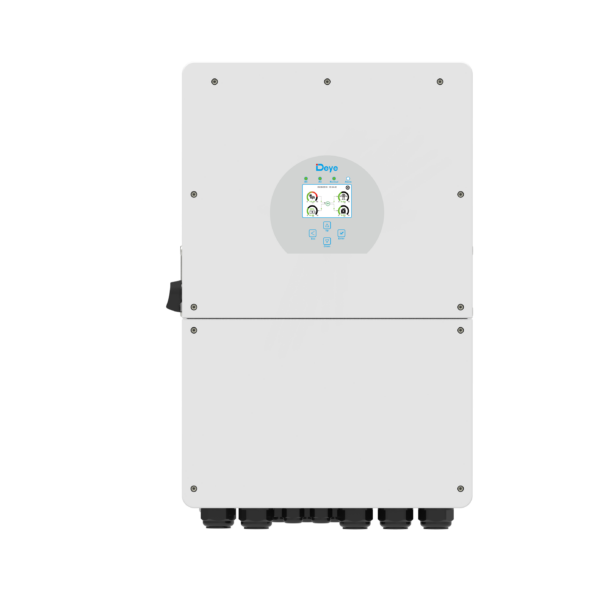
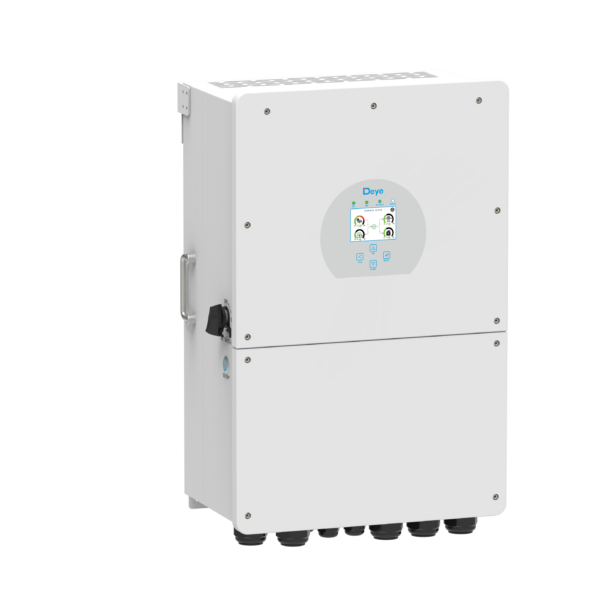
The PowerAll family photograph shows more than one enclosure, so appearance alone is not a reliable way to distinguish this listing from the 2kW offer. Use the 1kW output and 1.28kWh nominal battery rating together. The new product guide makes those figures explicit, while the family photograph is retained only as a labelled range illustration. It should not be read as a promise that two units are included.
Two ratings answer two different questions
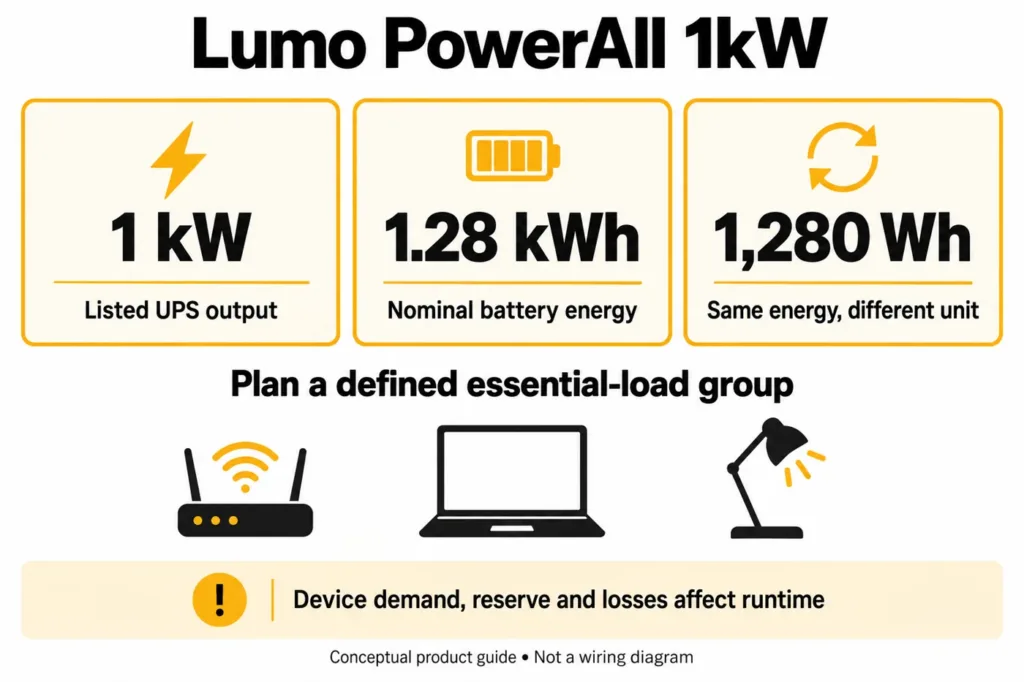
The output rating helps determine whether the selected devices can operate together. Stored energy helps estimate how long their combined demand can be supported. A 1kW rating does not mean that the UPS consumes 1kW all the time, and a 1.28kWh battery does not establish a fixed number of backup hours. The useful comparison is the actual electrical demand of the equipment you intend to connect.
Start with a focused home-office load list
For a small workstation, list the laptop, monitor, router and any essential lighting individually. Their demand varies by device and operating state, so use measured consumption or reliable equipment information rather than a generic appliance count. Keeping the list focused makes the limited storage easier to use effectively. A low-demand communications setup and a desktop workstation can have very different energy requirements even though both are described as office backup.
Convert a planned work session into an energy requirement
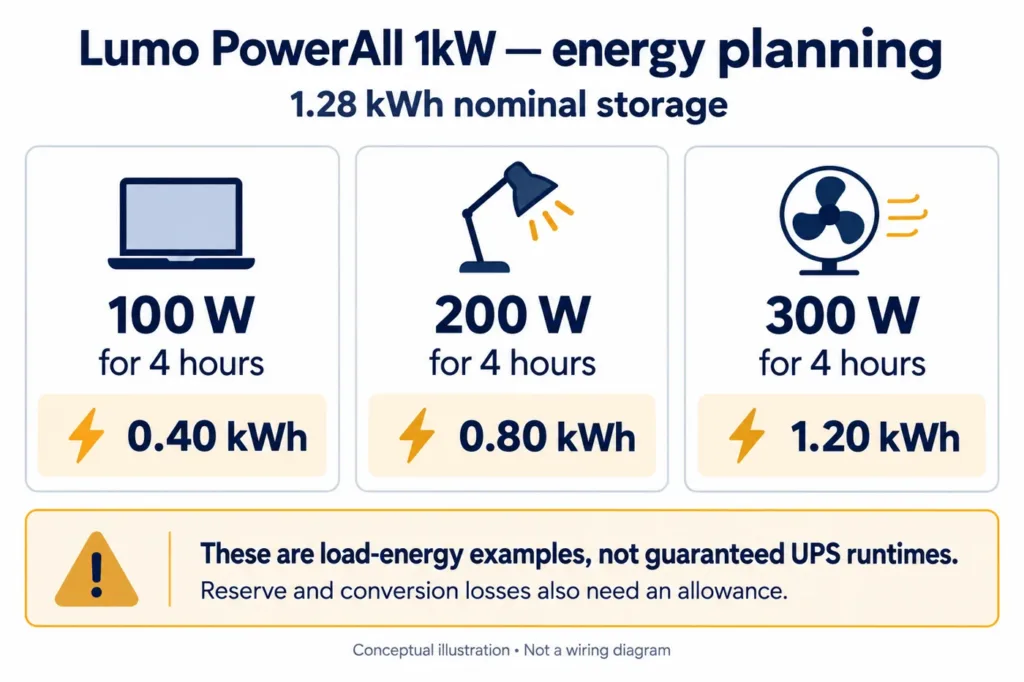
A 100W average load operating for four hours uses 400Wh, while 200W for the same period uses 800Wh. At 300W, four hours requires 1,200Wh. These are load-energy calculations, not runtime promises for the UPS. The 1.28kWh nominal battery total must also accommodate the usable operating window, conversion losses and any chosen reserve, so a requirement close to nominal capacity leaves little allowance for real operating conditions.
Allow for devices that change their demand
A computer may draw more power during intensive work than while idle, and a printer or other intermittent device can add a short burst of demand. Review those changes before connecting all equipment to the same backup source. The listed 1,000W output is not a documented surge rating. Where a device has a significant starting or peak requirement, have that requirement checked against the actual unit specification instead of assuming the running watts tell the whole story.
Prioritise continuity for the tasks that matter
A practical use case is maintaining selected communications, lighting or computer work through an interruption. Decide which activities genuinely need to continue and which can wait for the normal supply to return. This creates a clearer expectation than connecting an unrestricted collection of appliances. Devices that require a particular transfer time or power waveform should be checked against the supplied PowerAll documentation; the UPS name alone does not specify those details.
Plan recovery between interruptions
The energy used during an outage has to be replenished before the next one. The time required depends on the charger, available supply, battery condition and the amount of energy removed. A brief interval with power restored may not return the battery to the same starting state. Ask for the actual charger rating and operating instructions when selecting the unit, particularly if repeated interruptions are the main reason for purchasing backup equipment.
Treat solar charging as a separate compatibility check
The product category and family name do not establish the allowed PV voltage, current or charging arrangement for this exact unit. Before adding solar panels, obtain the supplied unit’s documented input requirements and supported accessories. A panel selected only by wattage may not be compatible. This distinction avoids carrying a feature from another portable-power model into the purchasing decision for the 1kW PowerAll.
Choose an accessible operating location
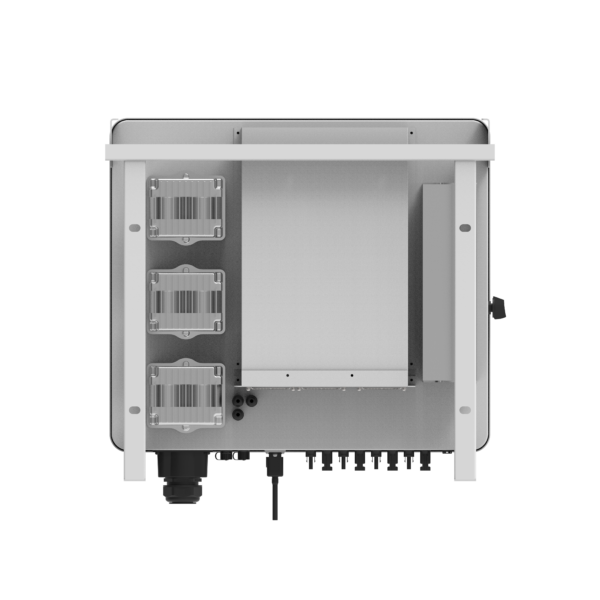
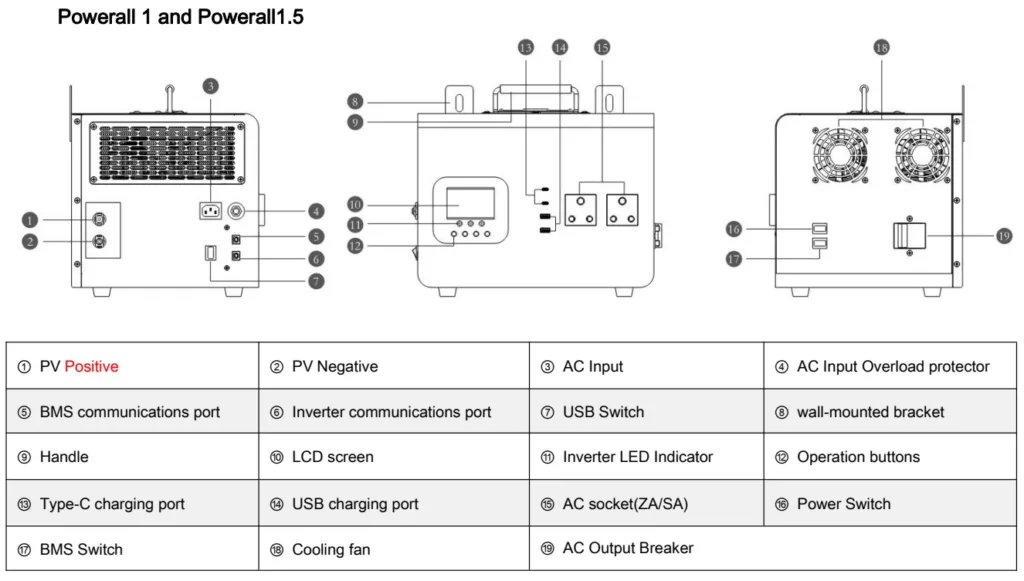
Use the supplied manual to plan ventilation, access and cable routing. The manufacturer reference includes an indoor-only enclosure classification, so family photography should not be interpreted as permission for exposed outdoor operation. The separately labelled port drawing shows the PowerAll 1/1.5 family arrangement in the linked manual. Match that drawing to the delivered revision before relying on a connector location or charging accessory.
Compare with the larger PowerAll on the same basis
The separately listed 2kW PowerAll has a 25.6V, 100Ah reference, corresponding to 2.56kWh nominal energy. The larger listing therefore has twice the stated output class and nominal energy of this one. That does not automatically make it the better fit for a small load. Compare the desired simultaneous demand, backup duration, available space and charging opportunity before selecting between the two.
Keep the order specific
Request the 1kW PowerAll with 1.28kWh nominal energy, together with the battery-label details, operating instructions and supplied accessories. State the devices you want to support and the work session you are planning. Current manufacturer literature describes a 12.8V, 100Ah PowerAll 1, while the older catalogue referred to 25.6V, 50Ah. Both multiply to 1.28kWh, but the electrical configurations differ, so the actual unit label must settle that detail.
Product reference
Manufacturer or product connection reference. The referenced document must be matched to the supplied model and revision before applying additional electrical limits.
Technical specifications
| Parameter | Product detail |
|---|---|
| Product reference | Lumo PowerAll 1kW UPS |
| Listed output | 1,000 W / 1 kW |
| Nominal battery energy | 1,280 Wh / 1.28 kWh |
| Battery voltage and Ah | Confirm supplied unit label; published references differ |
| Load-energy example | 200 W for 4 hours consumes 800 Wh, before system losses |
| Runtime basis | Available AC energy divided by measured average demand |