



SRNE 3kW 24V Inverter — 80A Version
R6,500.00
The SRNE HF2430S80-H is a 3kW inverter/charger for a compatible 24V battery arrangement. This listing identifies the 80A version, which should be distinguished from the separately listed HF2430S60-100. The inverter combines AC supply functions and solar charging in one enclosure, while the storage battery and solar array remain separate parts of the installation.
SRNE 3kW 24V Inverter — 80A Version
The SRNE HF2430S80-H is a 3kW inverter/charger for a compatible 24V battery arrangement. This listing identifies the 80A version, which should be distinguished from the separately listed HF2430S60-100. The inverter combines AC supply functions and solar charging in one enclosure, while the storage battery and solar array remain separate parts of the installation.
Compare versions by the complete model
The 80A designation is useful only when it is tied to the exact model. It should not be used to infer that every electrical specification matches another SRNE 3kW product. In particular, solar input voltage and permitted string design must come from the supplied HF2430S80-H documentation. The same output power is not evidence that different inverter variants accept the same panel arrangement.
A larger charger is not a larger AC inverter
An 80A charging specification describes battery-side charging capability, while 3kW describes the output class. Increasing charging capability does not turn the unit into a higher-power household inverter. Keep those figures separate when comparing products. The battery’s permitted charge current, the available charging source and operating conditions can all prevent the system from using the full charger rating.
Understand the current associated with 24V
A 24V battery system can involve substantial DC current at several kilowatts. For perspective, an ideal 3kW load divided by 24V is 125A before losses; real operation depends on battery voltage and inverter efficiency. This makes the battery’s discharge capability important alongside its kWh rating. Protective equipment and connections must be designed for the complete system rather than selected from the charger number alone.
Configure charging around actual use
The SRNE family offers charging priorities that allow solar and mains energy to be used differently. Discuss whether the battery should be preserved for interruptions or cycled for evening consumption. That preference affects the reserve and charging schedule. The installer should also confirm the battery chemistry settings, because a profile used for an older battery may not suit a replacement lithium battery.
Decide which appliances share the output
A useful backup design starts with a defined group of circuits. Look at startup demand as well as continuous consumption, particularly where a refrigerator or pump is involved. Electric heating and cooking loads can leave little capacity for other appliances when they run together. A practical load schedule gives a better expectation of system behaviour than a broad claim that the inverter powers an entire home.
Plan the array with the supplied electrical limits
The panel layout should account for open-circuit voltage in cold weather, operating voltage and current. Do not copy the 100V solar limit shown on the 60A model’s page: this is a separate product reference. Have the installer validate the intended panel model and arrangement against the actual unit before committing to the array. That check prevents a seemingly similar inverter swap from creating an incompatible solar input.
Use the display and service access effectively
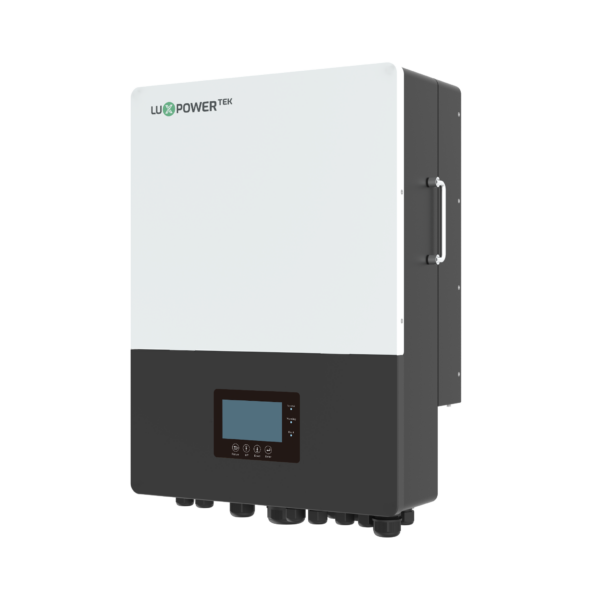
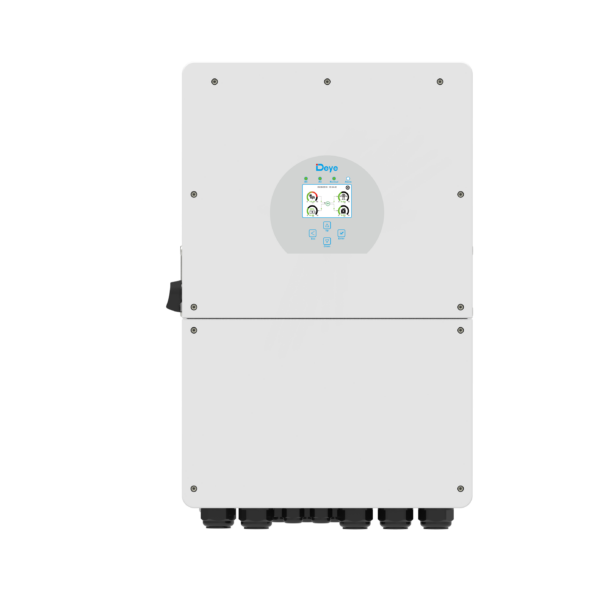
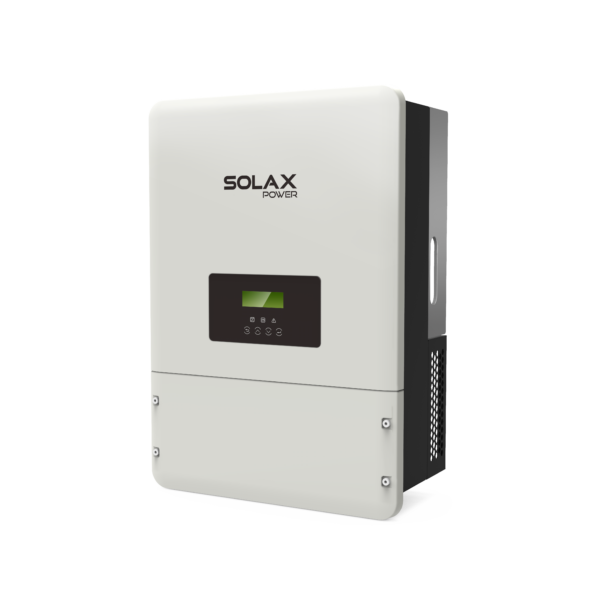
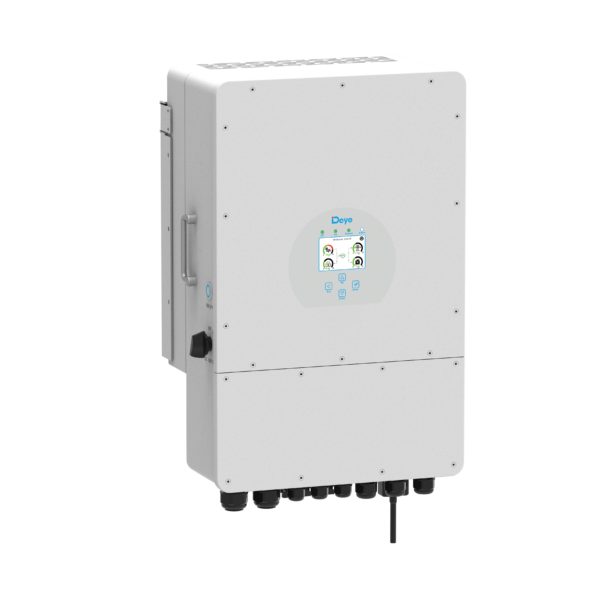
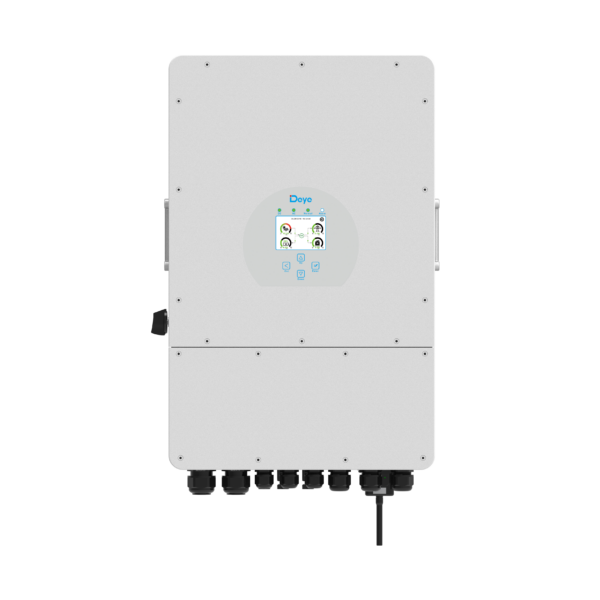
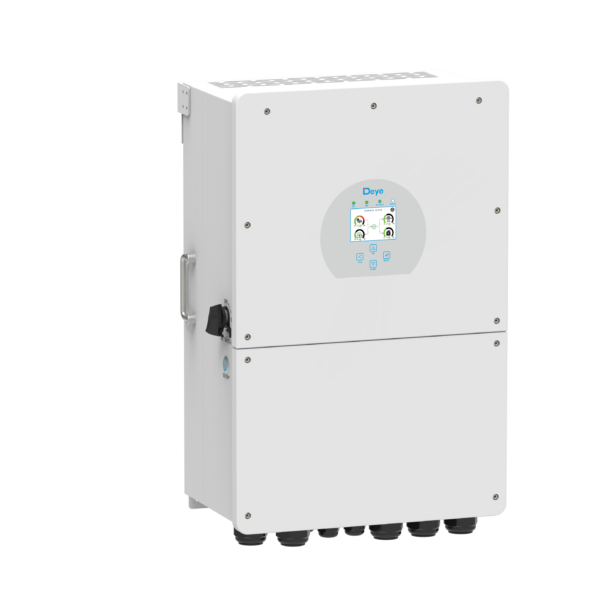
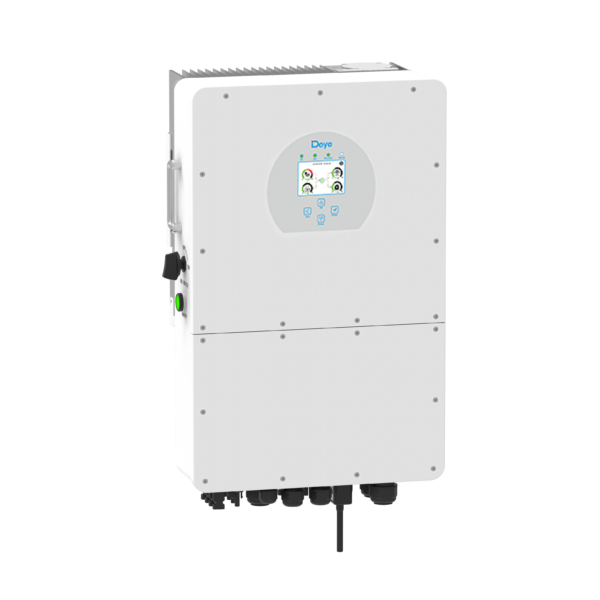
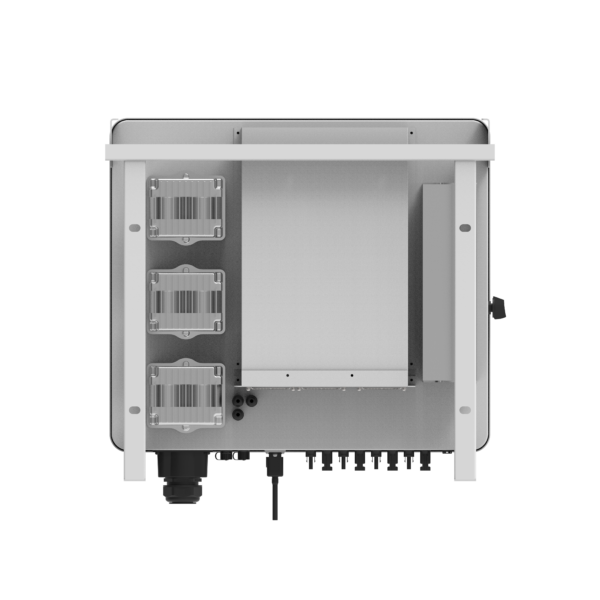
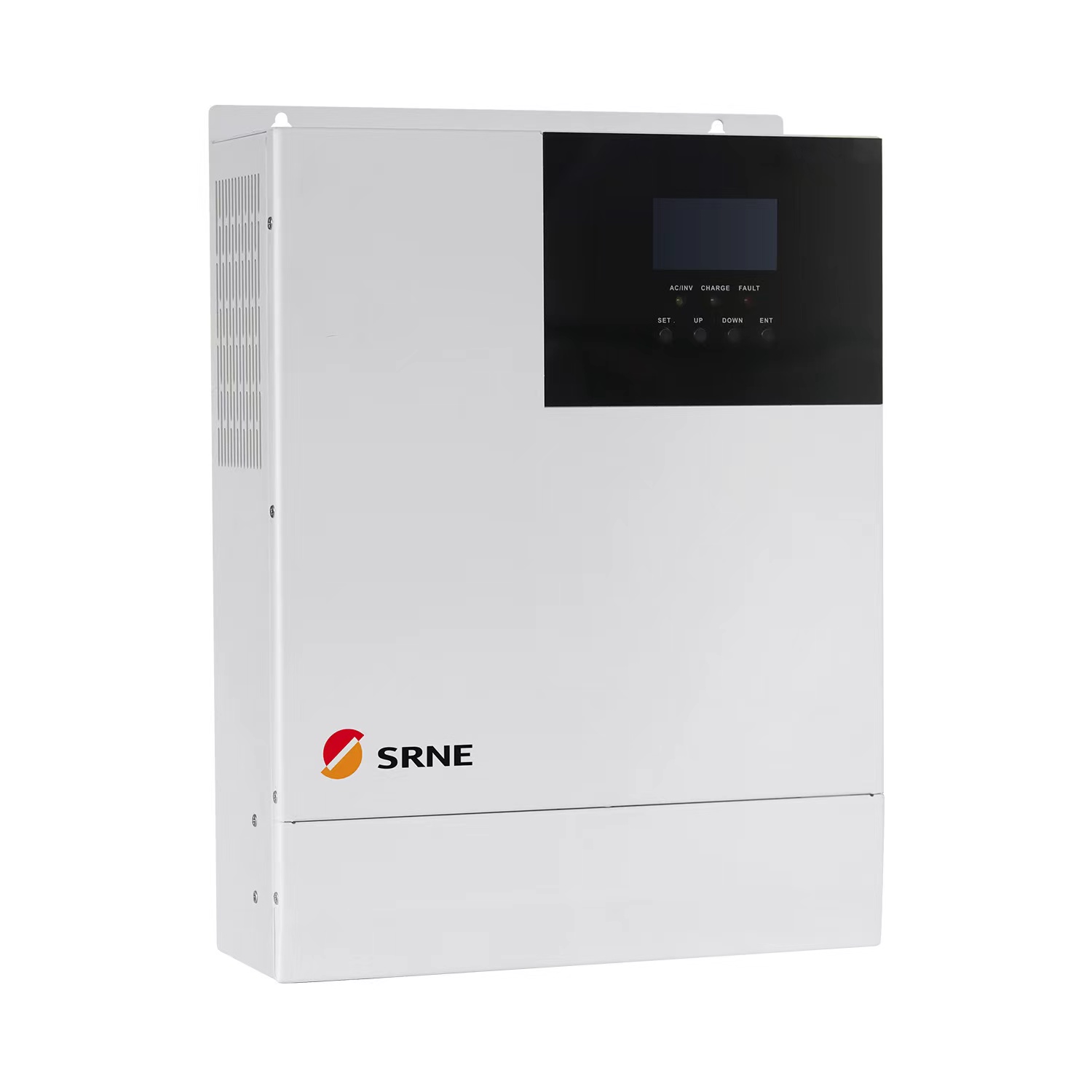
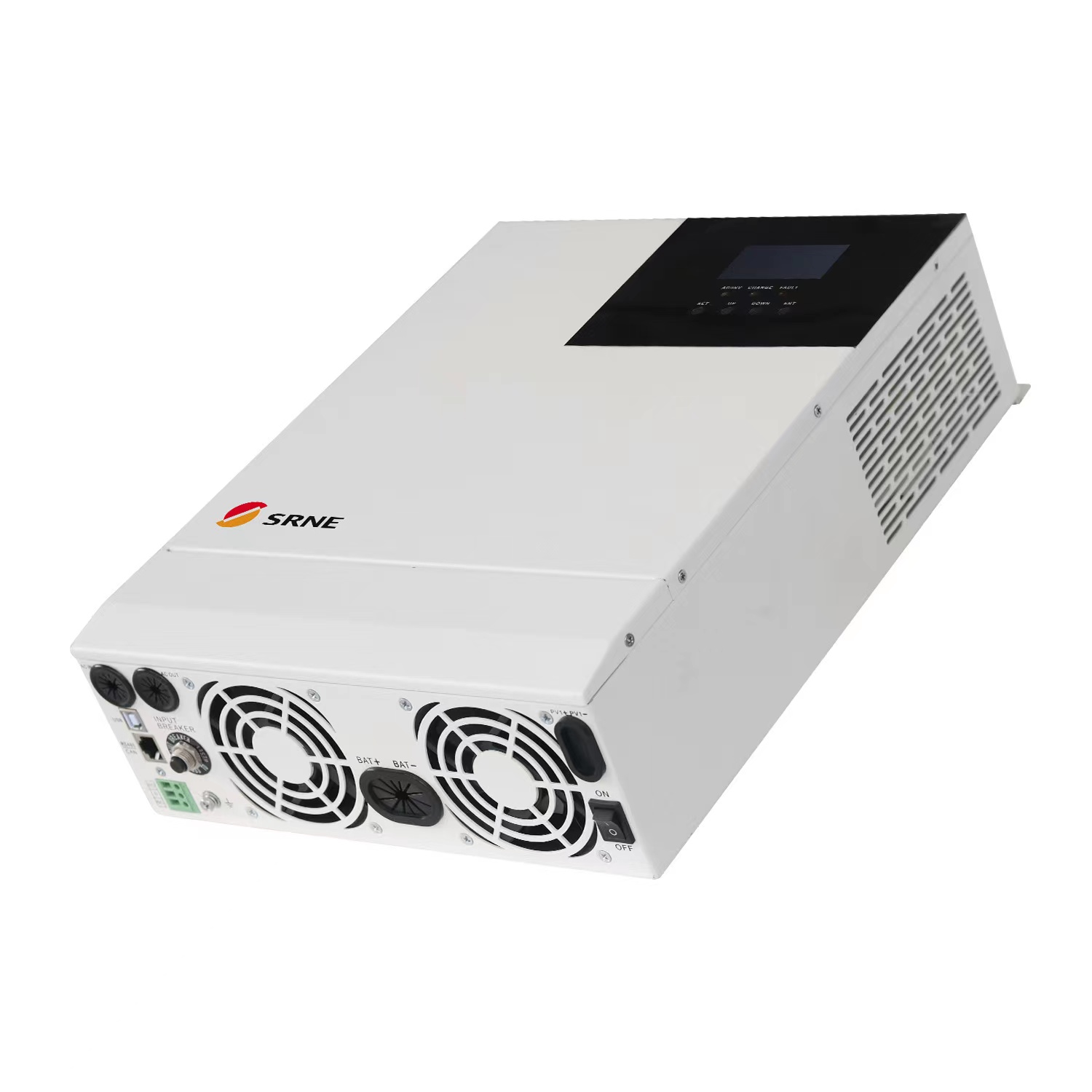
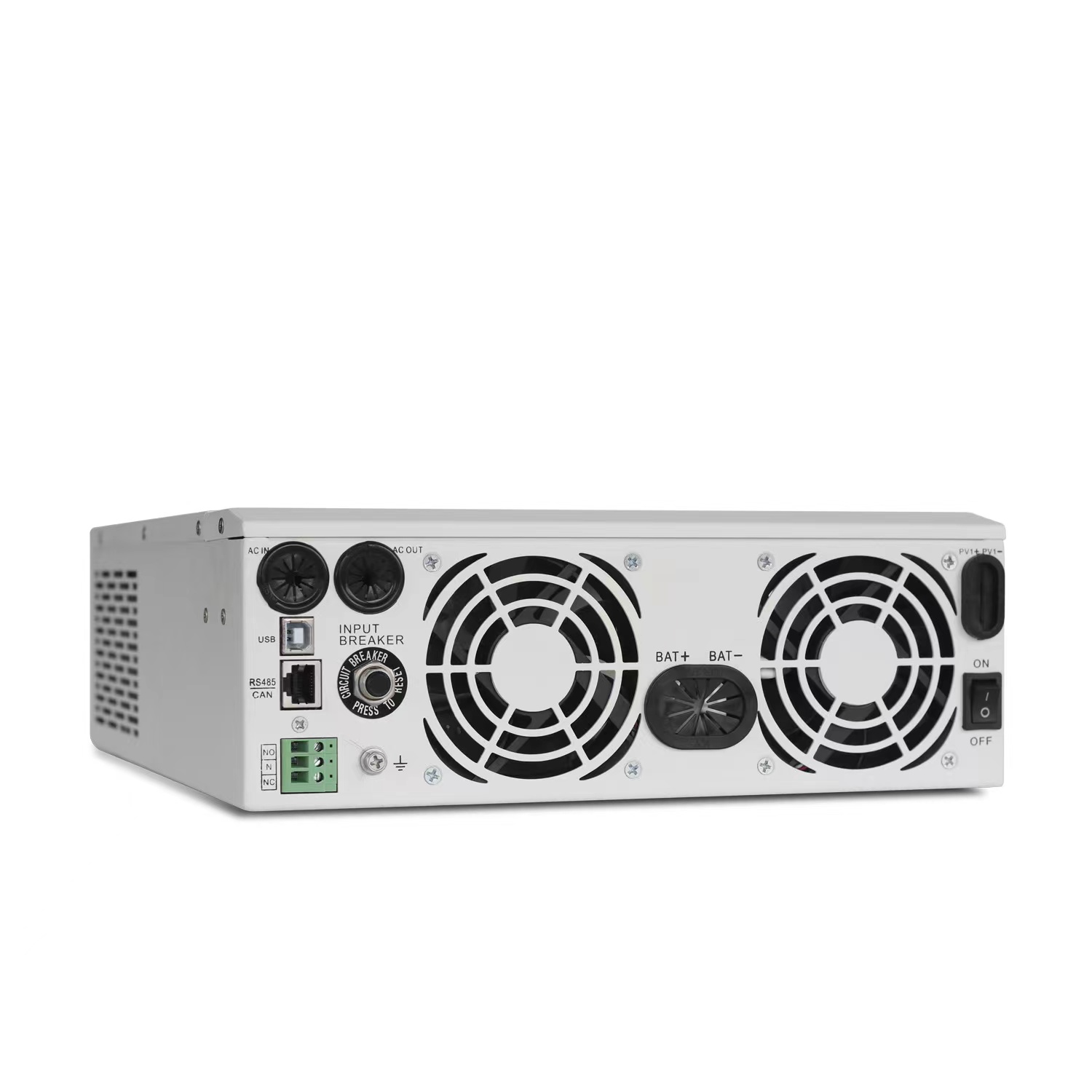
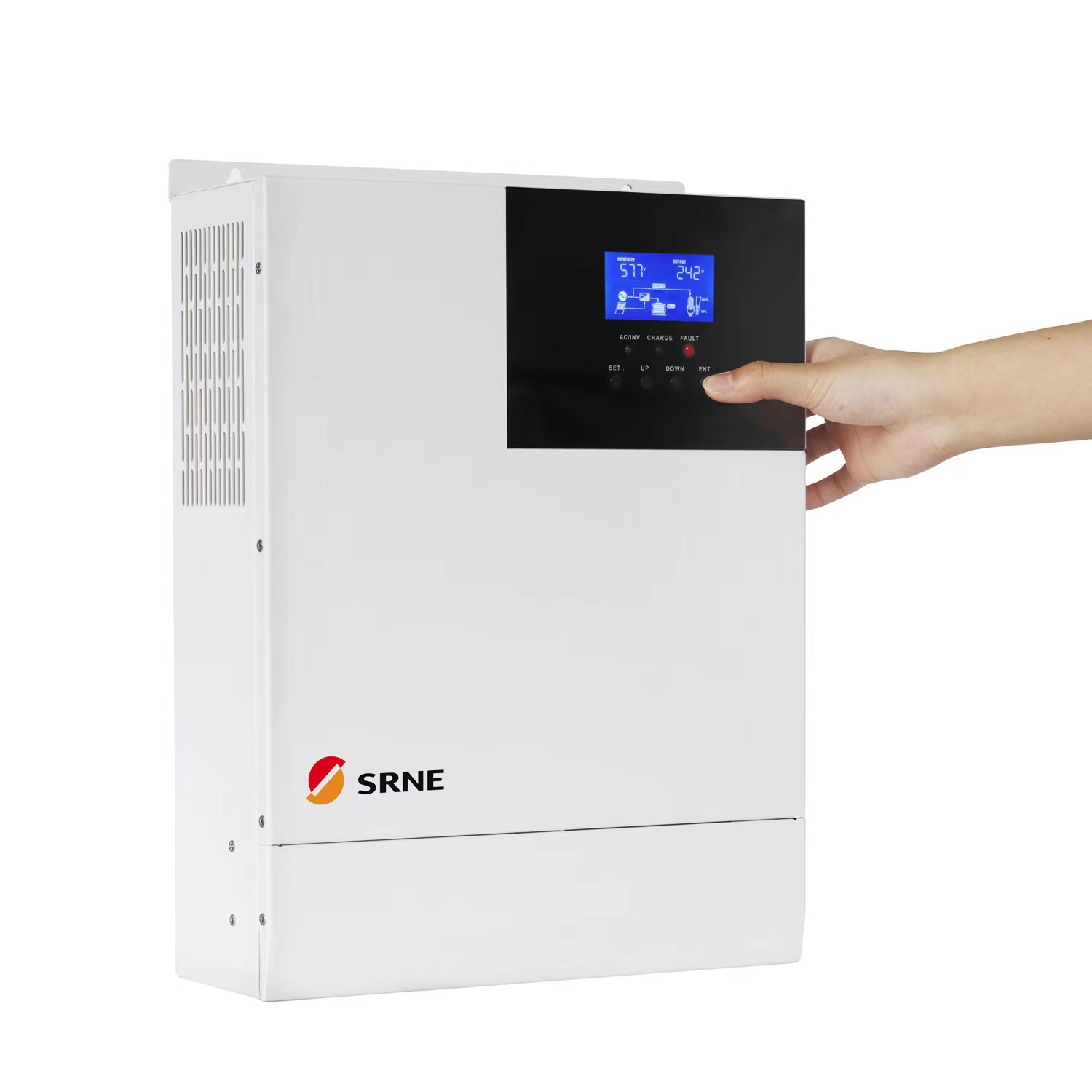
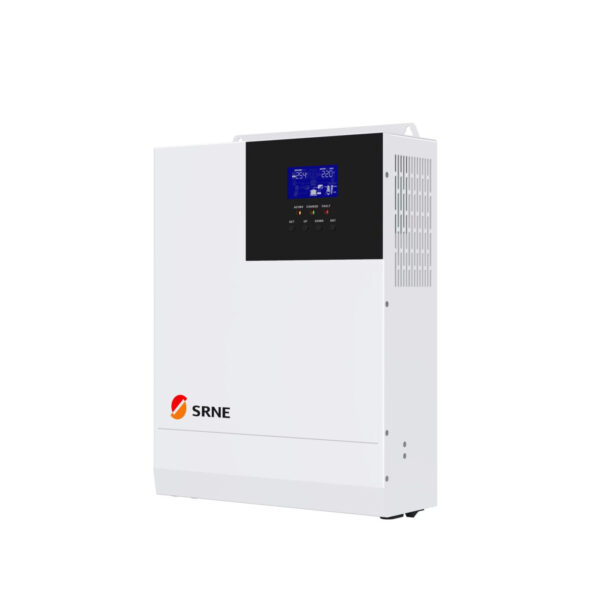
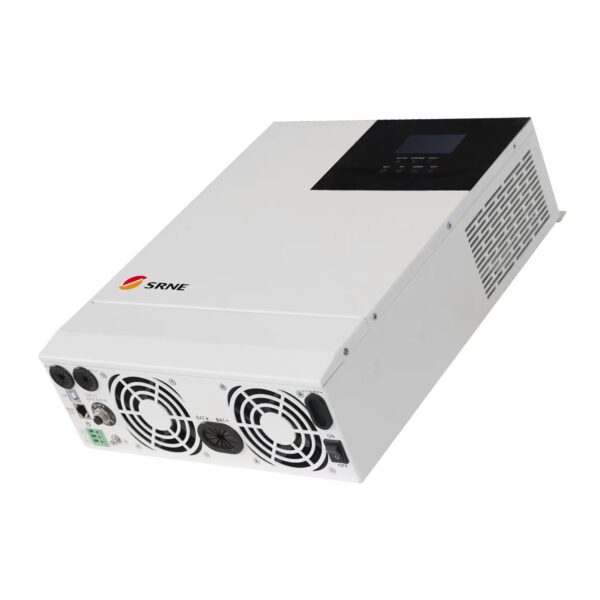
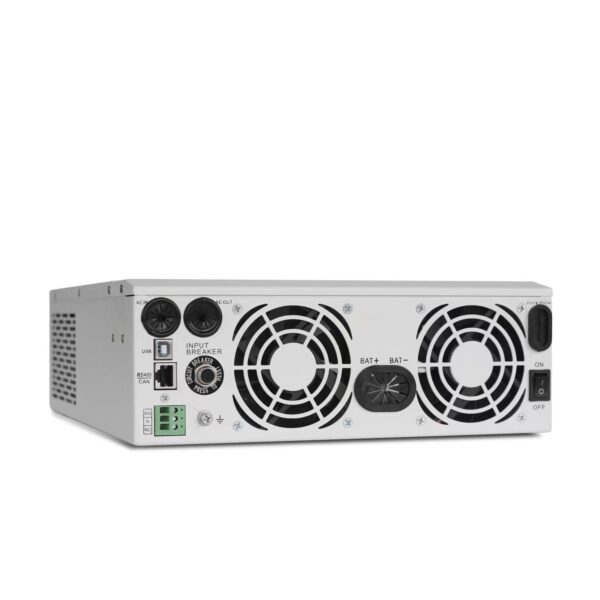
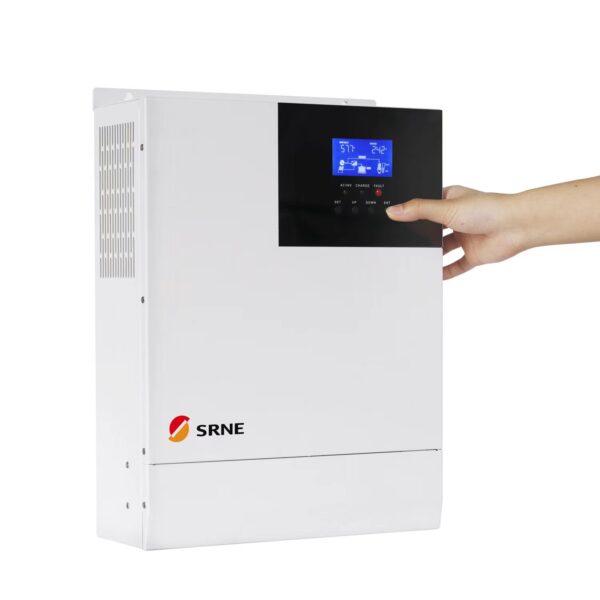
The enclosure and display views help identify the product and locate the connection area. Leave the ventilation and service access required by the manual, especially if the installation is in a confined utility space. Monitoring the system after commissioning can help identify whether backup duration is limited by energy use, charging opportunity or the reserve chosen for the battery.
Specify everything required for the working system
This product is the inverter/charger. Battery storage, panel capacity, installation components and labour should be listed clearly where they are part of the quotation. Keep the full inverter model and battery details with the handover documents so that a future service visit or battery addition can be assessed without guessing from appearance.