SolaX X3 Mega 60kW Three-Phase Grid-Tied Inverter
R60,000.00
The SolaX X3 Mega 60kW is a three-phase grid-tied solar-inverter reference for larger PV installations. It converts solar-array DC power into grid-synchronised AC power for a designed commercial or similar application. Its 60kW output class describes power conversion capability; it does not establish a daily energy yield or provide standalone battery backup during a grid interruption.
SolaX X3 Mega 60kW Three-Phase Grid-Tied Inverter
The SolaX X3 Mega 60kW is a three-phase grid-tied solar-inverter reference for larger PV installations. It converts solar-array DC power into grid-synchronised AC power for a designed commercial or similar application. Its 60kW output class describes power conversion capability; it does not establish a daily energy yield or provide standalone battery backup during a grid interruption.
A commercial-generation role rather than a portable backup role
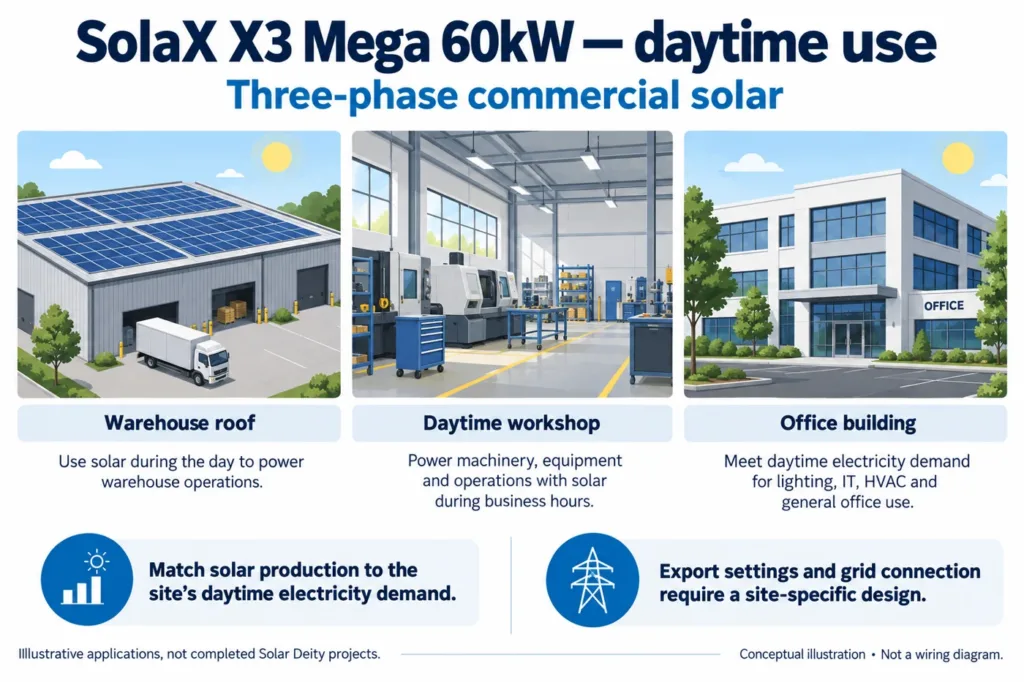
This product belongs in a planned three-phase PV installation. Suitable projects may include warehouses, workshops or other properties with meaningful daytime electricity demand. The illustrations show those application categories rather than completed Solar Deity projects. Selecting a 60kW inverter should follow a review of the site’s electrical supply, usable array area and operating profile, rather than a household backup-duration target.
Grid synchronisation is fundamental to the application
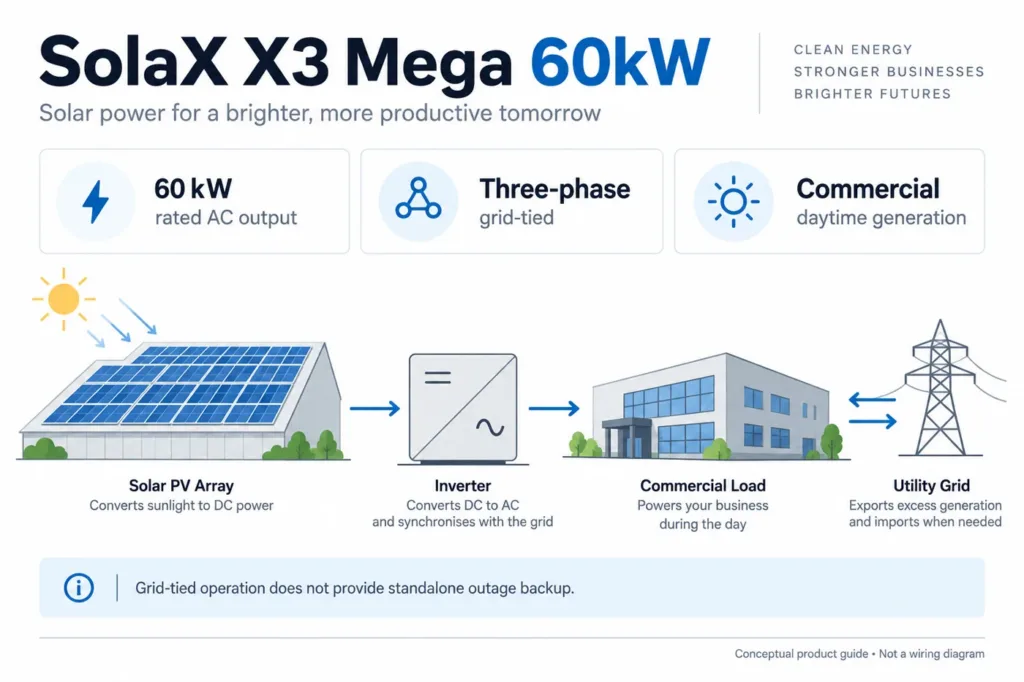
A grid-tied inverter normally works with an appropriate AC grid reference and its required protection functions. Its presence does not mean the building will continue to receive power when the incoming grid is unavailable. A separately designed backup or storage solution would be needed where outage support is required. This distinction is why the new system illustration does not show a battery as an inherent part of the X3 Mega product.
Match generation with the time the business uses energy
A business that consumes substantial electricity during the day may be able to use a portion of PV production directly. The useful comparison is the timing of consumption against expected production, not only the annual bill or roof size. Review operating hours, weekend demand and seasonal changes. Those patterns help explain how much generation may coincide with on-site use and how much might need another permitted operating arrangement.
Sixty kilowatts is not sixty kilowatt-hours per day
Power and energy are different measurements. Producing 30kW for two hours corresponds to 60kWh, but that arithmetic is not a yield forecast for this inverter. Actual generation depends on the installed panels, sunlight, temperature, shading, system losses and any operating restrictions. A site-specific estimate should therefore accompany a large-array proposal rather than assuming that the inverter nameplate determines the daily result.
Select the array using electrical limits as well as roof area
A commercial roof may have several usable sections, different orientations or areas affected by shading. The electrical design must also satisfy the inverter’s PV voltage and current limits. A panel count calculated from roof dimensions does not establish a compliant string arrangement. Provide the proposed module datasheet and array layout when reviewing the inverter so that the physical opportunity and electrical design can be assessed together.
Confirm the full suffix before applying G2 specifications
The linked manufacturer manual covers the X3-MEGA G2 family and several power variants. The complete supplied model must be matched to the appropriate column and revision before using tracker counts, input-current limits or maximum PV voltage. Do not use a smaller member of the family or a newer regional reference as a substitute. This page retains the confirmed 60kW grid-tied identity while leaving unverified generation-specific limits for the stock-label check.
Three-phase site design includes the AC side
The inverter’s output has to be integrated with the building’s three-phase electrical system and the applicable connection arrangement. The point of connection, protection, metering and cable design are part of the project. They cannot be determined from the inverter power alone. The site assessment should identify the existing supply and how the proposed generation will operate alongside the business’s normal equipment.
Export behaviour is an operating requirement to specify
A project may need to manage whether and how excess generation is exported. The permitted arrangement, required controls and metering should be resolved for the specific site and connection. The conceptual grid arrows illustrate energy flow and should not be read as automatic permission to export or a tariff promise. Make the intended export behaviour part of the design brief so that the equipment and commissioning requirements are clear.
Evaluate backup separately if interruptions affect operations
If maintaining production during outages is a primary objective, describe that requirement explicitly before selecting a grid-tied-only solution. Storage, an alternative supply and suitable system controls may be needed in a separately designed arrangement. The X3 Mega nameplate does not by itself establish those functions. Separating daytime-generation objectives from continuity requirements avoids buying the right size of PV inverter for the wrong operating problem.
Product access and maintenance matter at this scale
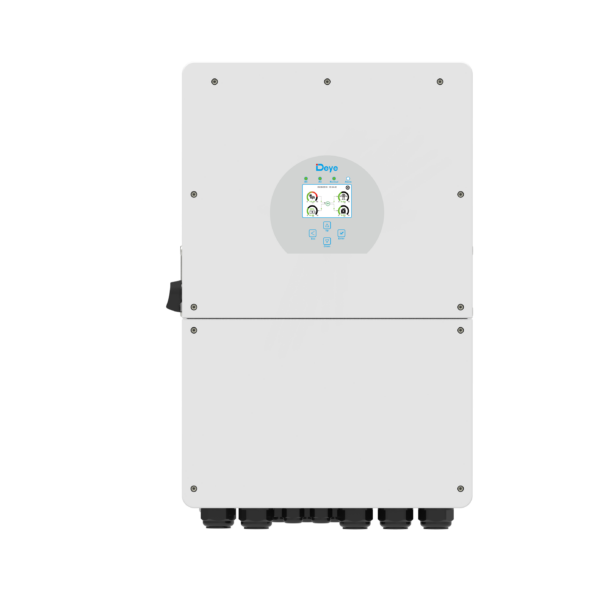
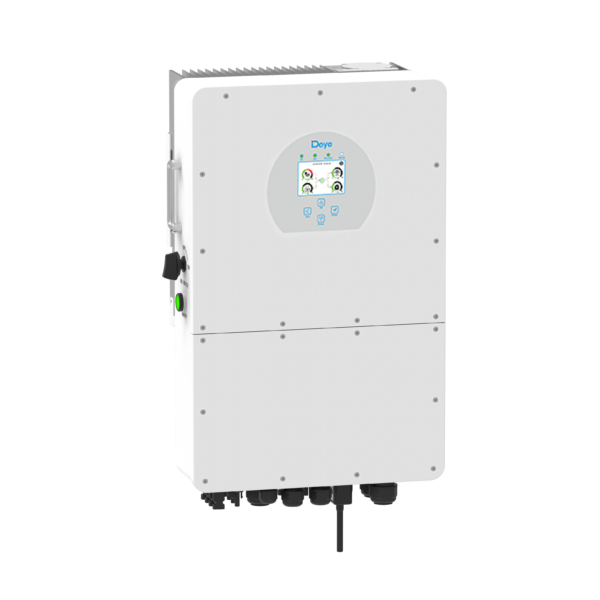
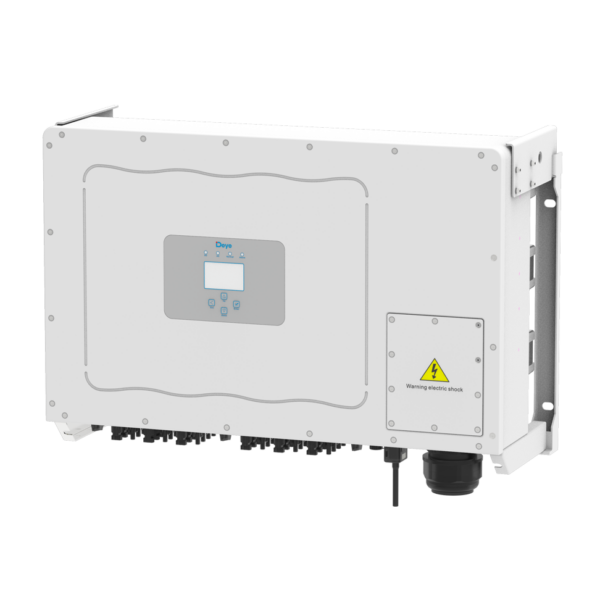
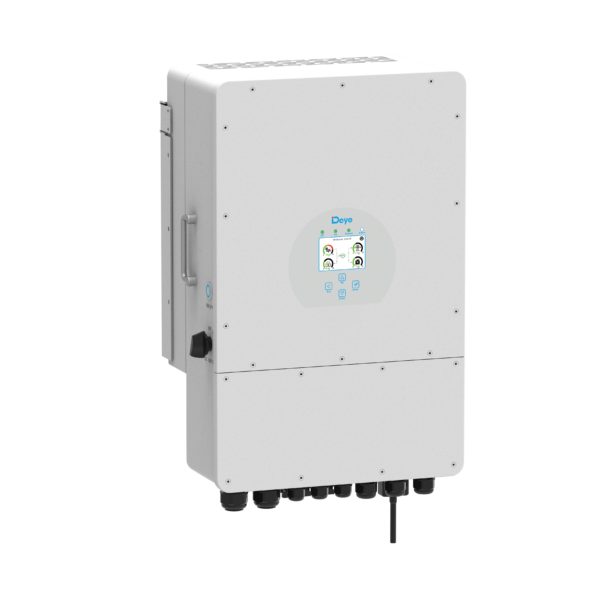
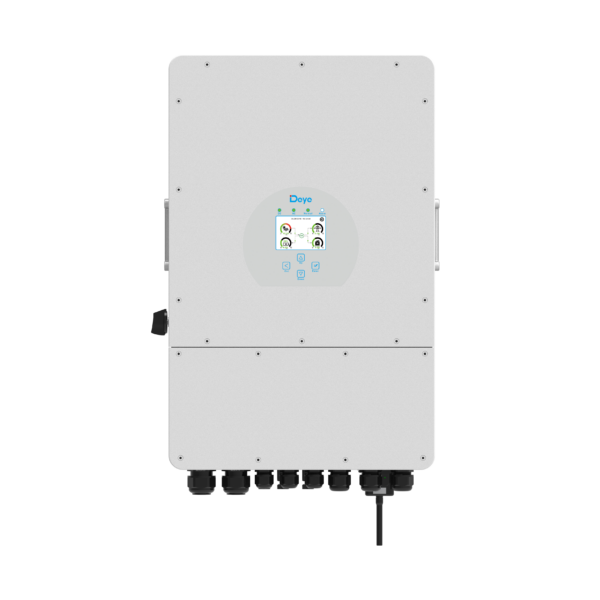
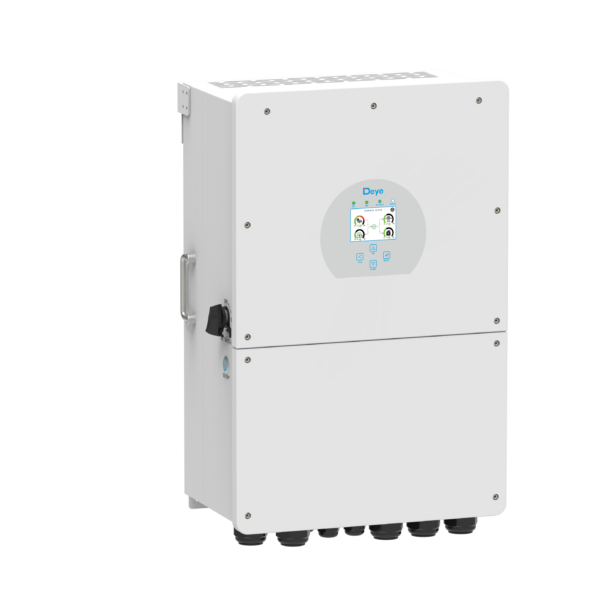
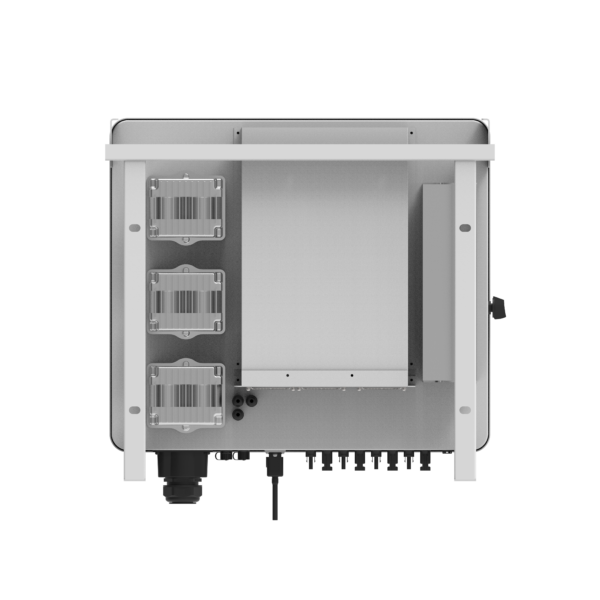
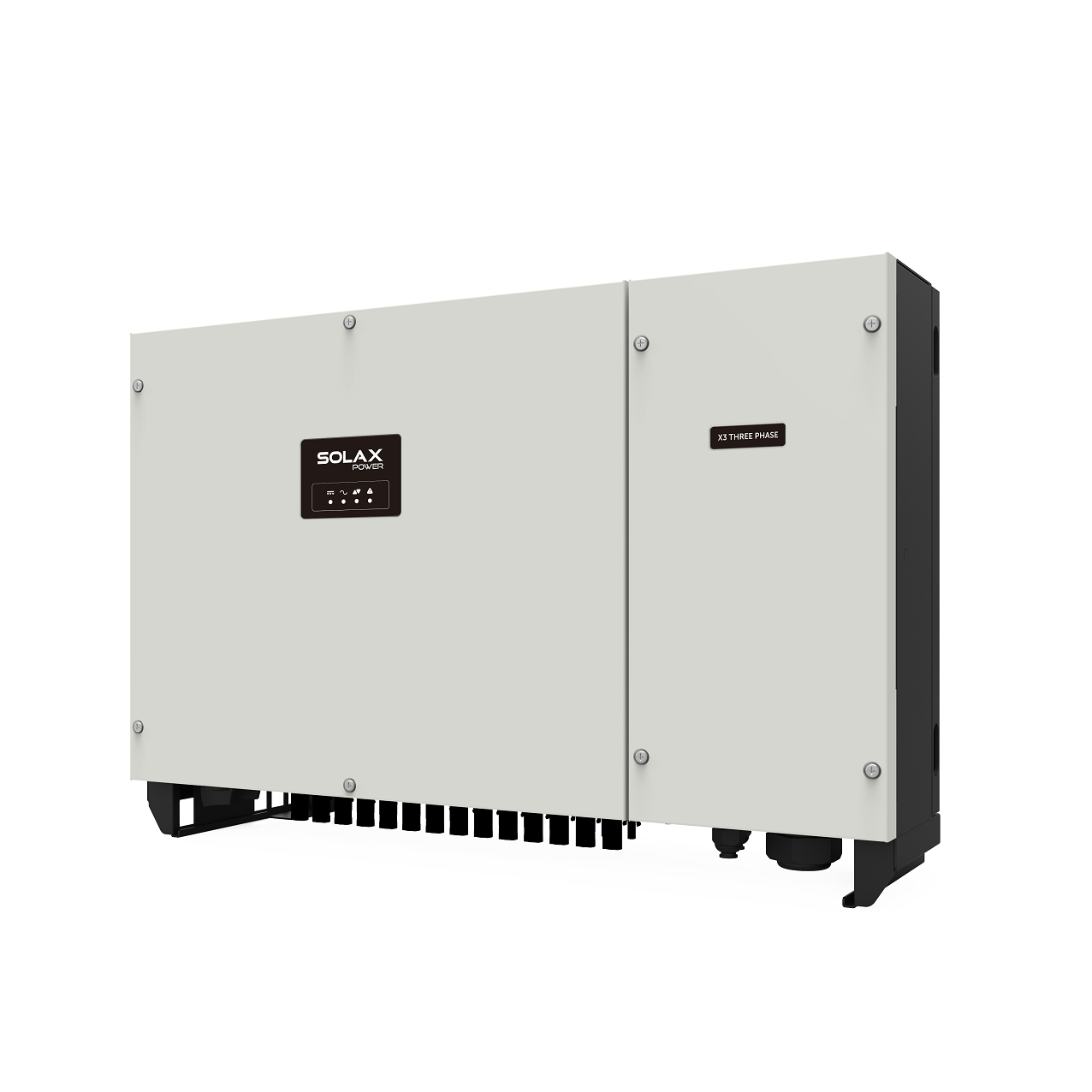
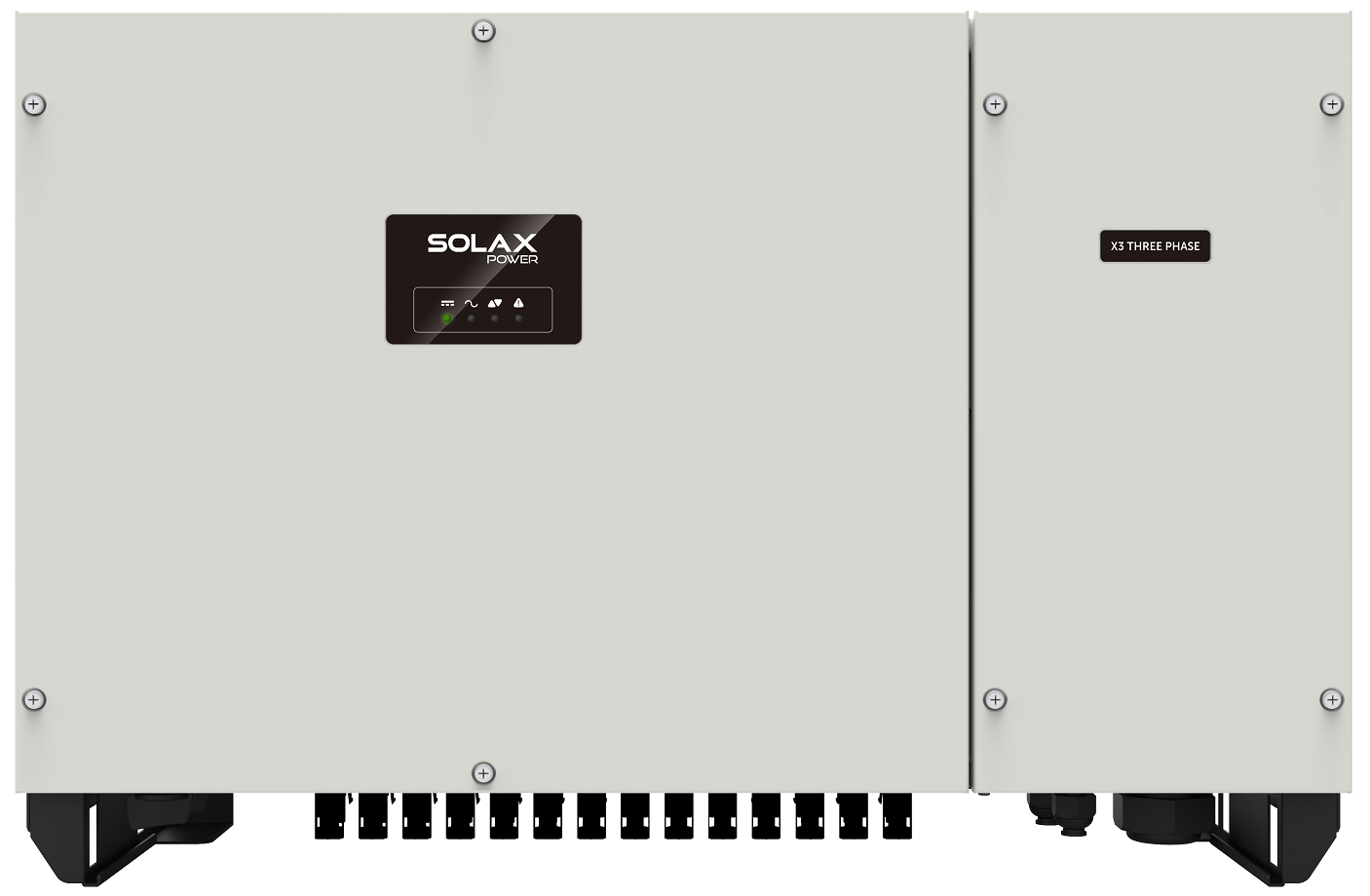
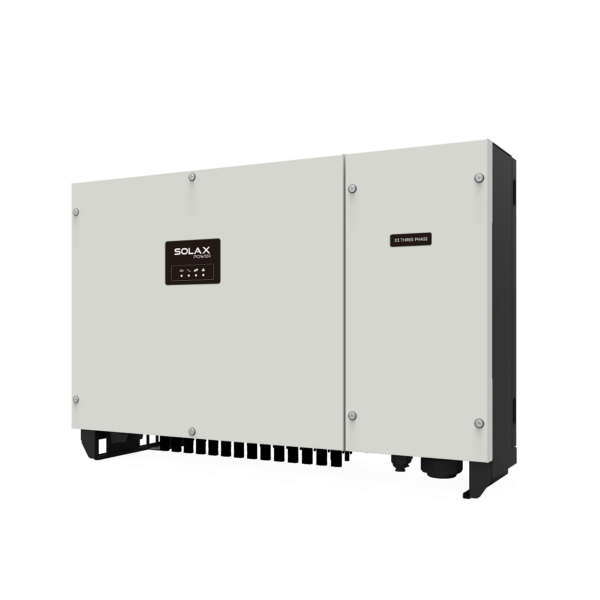
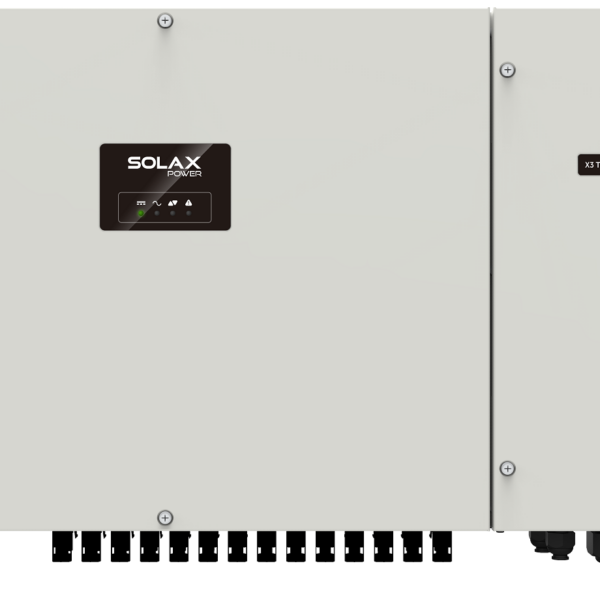
Use the product views to understand the enclosure and connection area, then follow the supplied manual for handling, installation and service clearances. The site should provide suitable access for installation and later maintenance. Monitoring should be configured to help identify generation changes and operating restrictions, while the owner retains the exact model and array records. A front-view image alone is not a dimensional or mounting specification.
Prepare a complete project enquiry
Provide Solar Deity with the site’s supply details, operating schedule, consumption information, roof or array area and any backup or export requirements. Ask for the full inverter suffix, the proposed panel model and the relevant design documents in the quotation. That makes the 60kW inverter part of a defined commercial-generation proposal rather than a standalone promise of savings or uninterrupted power.
Product reference
Manufacturer or product connection reference. The referenced document must be matched to the supplied model and revision before applying additional electrical limits.
Technical specifications
| Parameter | Product detail |
|---|---|
| Listing family | SolaX X3 Mega 60kW |
| Rated AC output class | 60,000 W / 60 kW |
| AC arrangement | Three phase |
| Inverter category | Grid-tied PV conversion |
| Standalone outage backup | Not established by this grid-tied inverter |
| Daily yield | Depends on array, weather, site losses and operating conditions |
| Detailed input reference | Confirm the full model suffix before applying X3-MEGA G2 specifications |