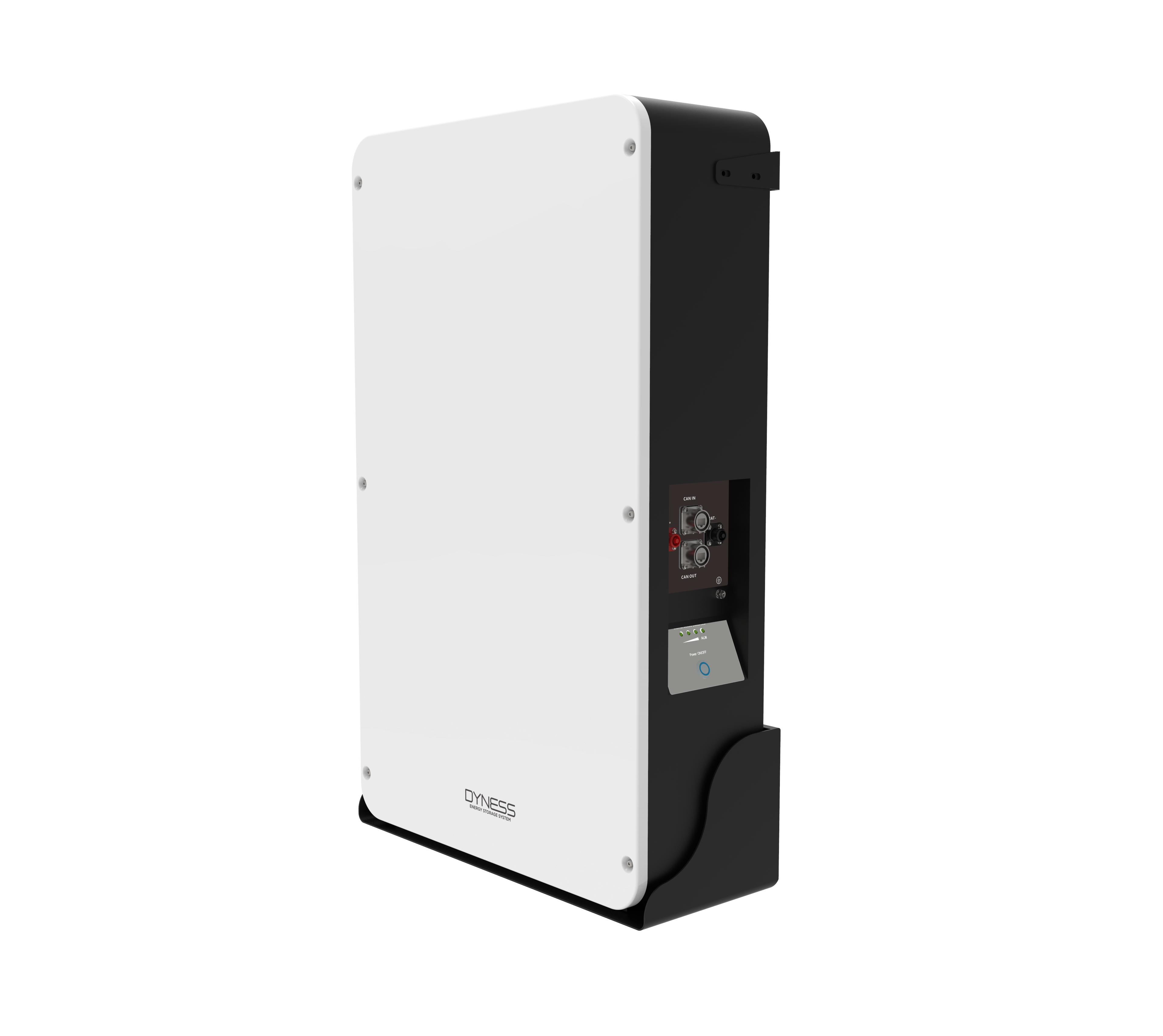

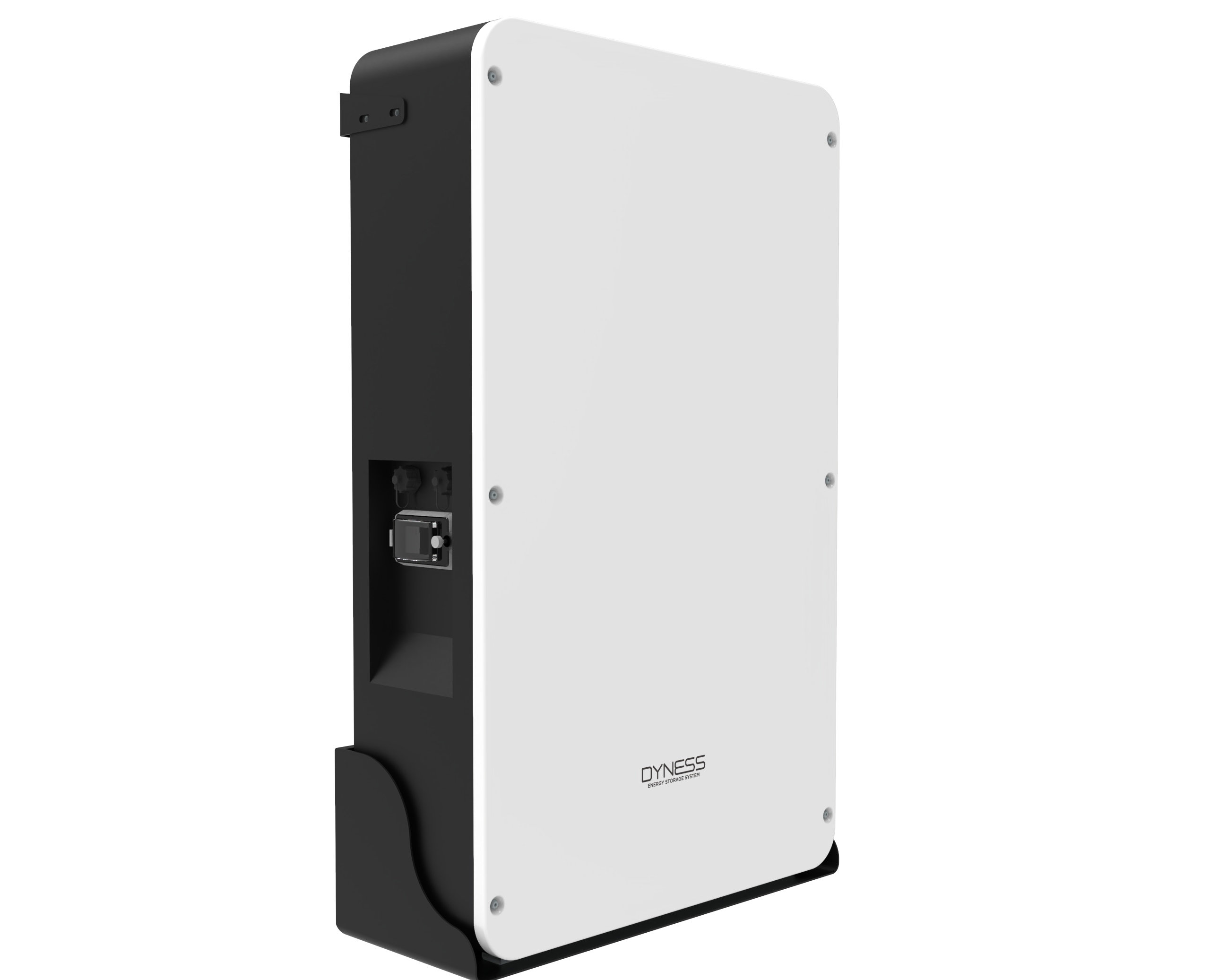
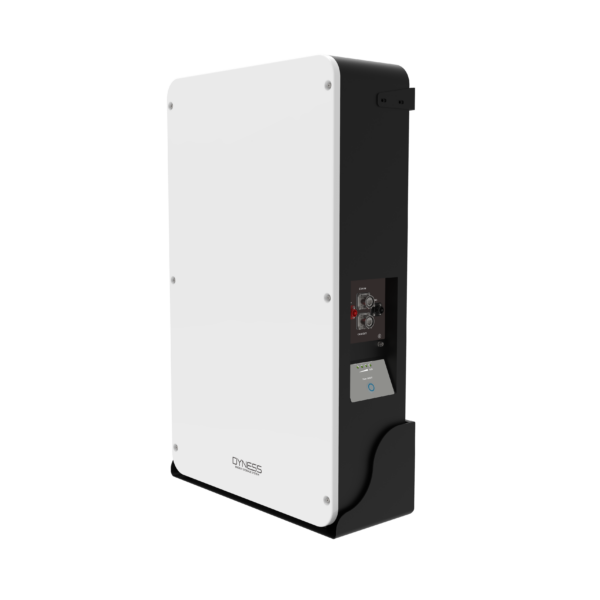
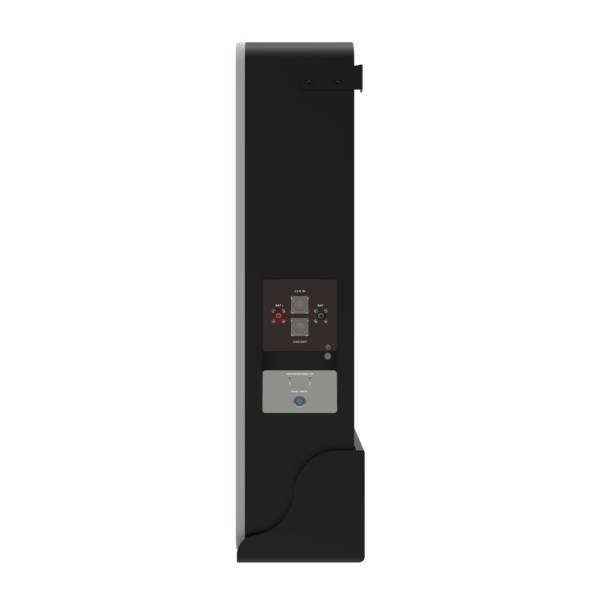
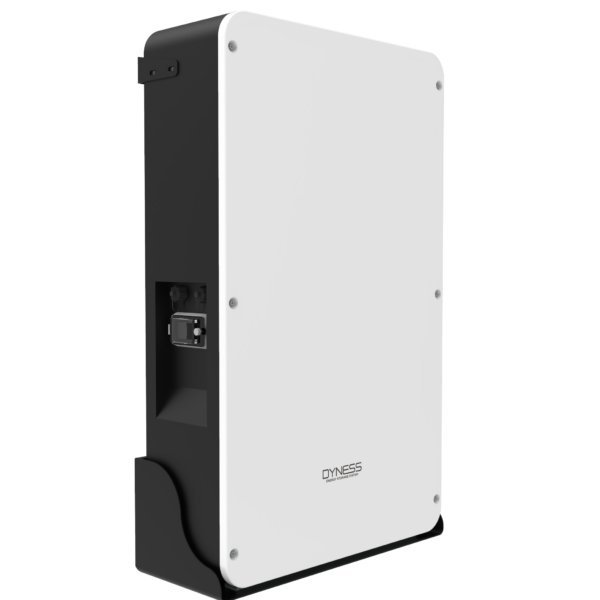
Dyness Powerbox Pro 10.24kWh 51.2V LiFePO4 Battery
Original price was: R49,500.00.R29,500.00Current price is: R29,500.00.
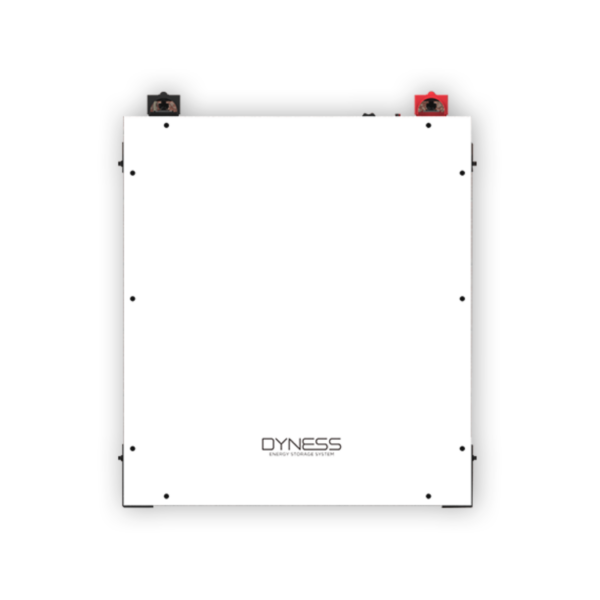
The Dyness Powerbox Pro is a 10.24kWh low-voltage battery for a compatible residential energy-storage system. Its 200Ah capacity at 51.2V provides a larger energy reservoir than a single 100Ah module at the same voltage. This makes it relevant when the main requirement is more stored energy for the evening, rather than selecting a battery purely by the inverter size.
Dyness Powerbox Pro 10.24kWh Battery
The Dyness Powerbox Pro is a 10.24kWh low-voltage battery for a compatible residential energy-storage system. Its 200Ah capacity at 51.2V provides a larger energy reservoir than a single 100Ah module at the same voltage. This makes it relevant when the main requirement is more stored energy for the evening, rather than selecting a battery purely by the inverter size.
Technical specifications
| Chemistry | LiFePO4 |
|---|---|
| Nominal energy | 10.24 kWh |
| Nominal voltage / capacity | 51.2 V / 200 Ah |
| Operating voltage | 44.8–57.6 V |
| Nominal battery power | 5.12 kW |
| Recommended charge/discharge | 100 A (0.5C) |
| Protection rating | IP65 |
More energy does not mean 10kW output
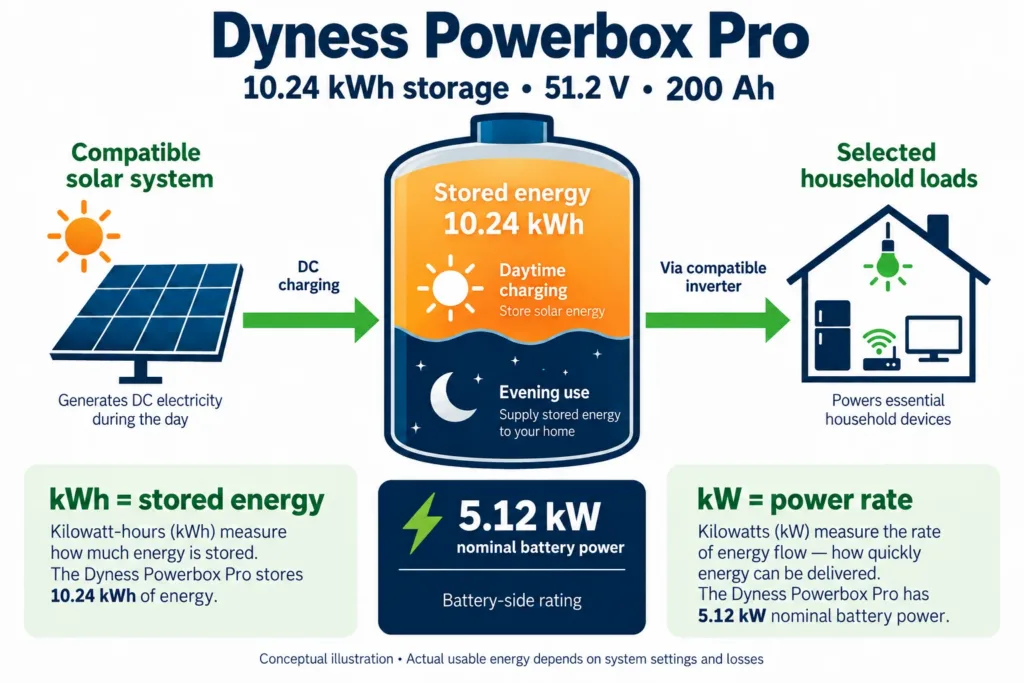
The 10.24kWh capacity and 5.12kW nominal battery power describe different things. The first is stored energy; the second is a power rate. A household can use energy slowly over a longer period or quickly over a shorter one, subject to system limits. Selecting this battery therefore requires both an energy budget and a check of the loads that may run simultaneously.
A practical evening-storage application
A larger reservoir can be useful when solar generation occurs while the home is lightly occupied but electricity use rises after sunset. Compare that evening demand with the surplus available to charge the battery. If daytime loads already consume most of the solar output, extra storage alone will not create the missing energy. The panel array and charging arrangement should support the intended operating pattern.
Set a deliberate backup reserve
Some owners prioritise using stored solar every evening; others retain more energy for interruptions. A reserve setting changes how much of the nominal capacity is available for routine cycling. Do not treat the advertised capacity as a guaranteed amount delivered to household appliances, because the operating window and conversion losses also matter. The chosen reserve should reflect which circuits must remain available.
Match the complete low-voltage system
Powerbox Pro should be paired with an inverter configuration supported for the actual battery revision. Confirm battery communication and the recommended operating settings at commissioning. A larger inverter can still be constrained by battery power, while a smaller inverter can limit the loads even when substantial energy remains in storage. The complete combination is more informative than either product name alone.
Allow for equipment access
The battery location should accommodate the enclosure, service access and installation conditions specified by Dyness. IP65 describes an ingress-protection rating; it is not a reason to ignore placement instructions or expose equipment to unsuitable conditions. Review the intended mounting arrangement and installation components before finalising the system layout.
Keep revision-specific claims separate
Powerbox Pro documentation has changed over time, including expansion and usable-energy statements. The table here uses the core electrical ratings for the linked model documentation instead of assuming the latest expansion claim applies to every older unit. For an addition to an existing installation, provide the installed battery label and inverter model so that the intended configuration can be checked accurately.
| Dimensions | 55.5 × 21 × 92.8 cm |
|---|