
Sungrow 10kW Hybrid Inverter & 9.6kWh SBR Battery Package
Original price was: R89,999.00.R69,999.00Current price is: R69,999.00.
This Sungrow package combines a listed 10kW hybrid-inverter class with a 9.6kWh SBR096 battery arrangement. The battery reference uses three 3.2kWh modules and has its own power limit, separate from the inverter headline. It is a package to assess against both your simultaneous electricity demand and the energy you want available later. The full inverter code and phase arrangement must be confirmed on the quotation before final system design.
Sungrow 10kW Hybrid Inverter & 9.6kWh SBR Battery Package
This Sungrow package combines a listed 10kW hybrid-inverter class with a 9.6kWh SBR096 battery arrangement. The battery reference uses three 3.2kWh modules and has its own power limit, separate from the inverter headline. It is a package to assess against both your simultaneous electricity demand and the energy you want available later. The full inverter code and phase arrangement must be confirmed on the quotation before final system design.
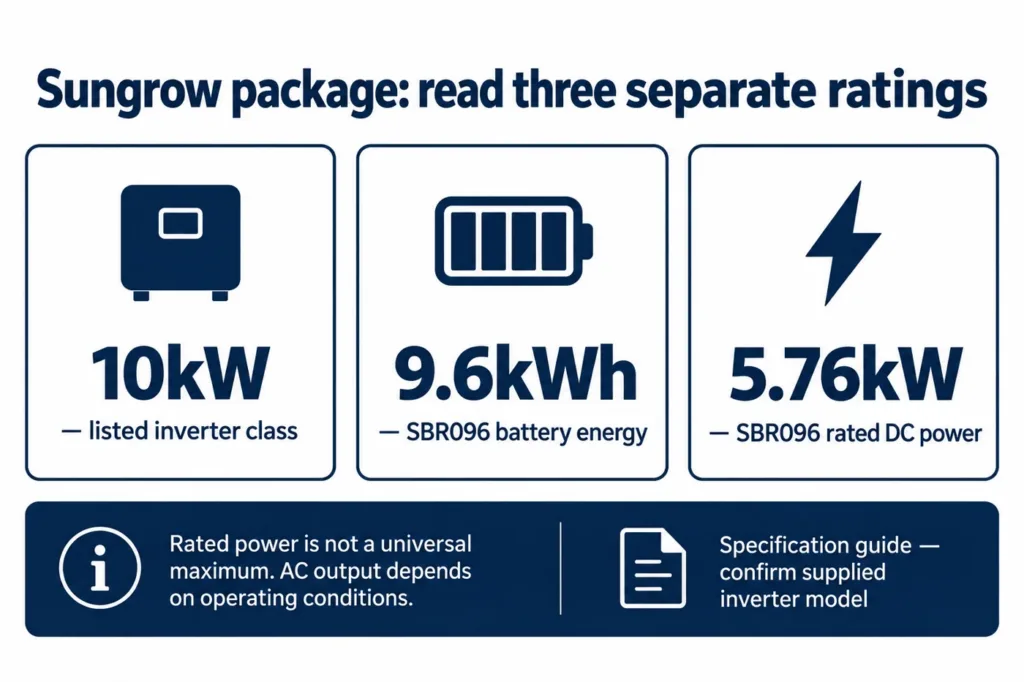
Two package ratings describe different capabilities
Ten kilowatts describes an inverter power class; 9.6kWh describes the battery’s energy reference. Neither number can replace the other. A larger inverter can help address higher power requirements within the complete system’s limits, but it does not make a fixed battery bank last longer at the same demand. Compare the package against the appliances that operate together and the hours for which they are needed.
The SBR096 is a three-module battery arrangement
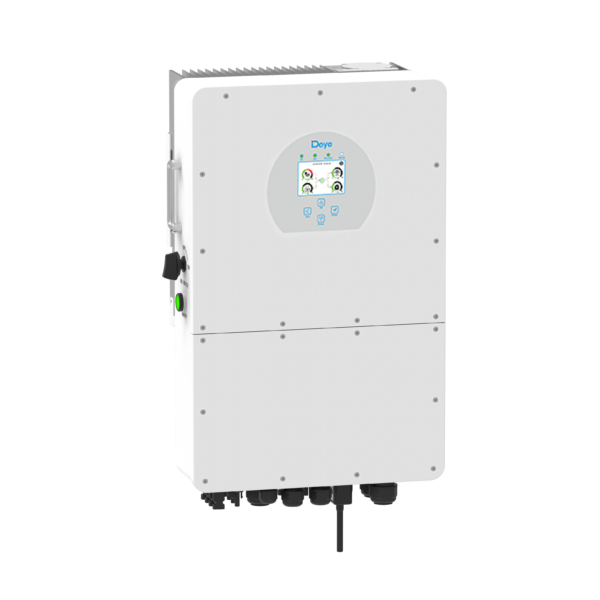
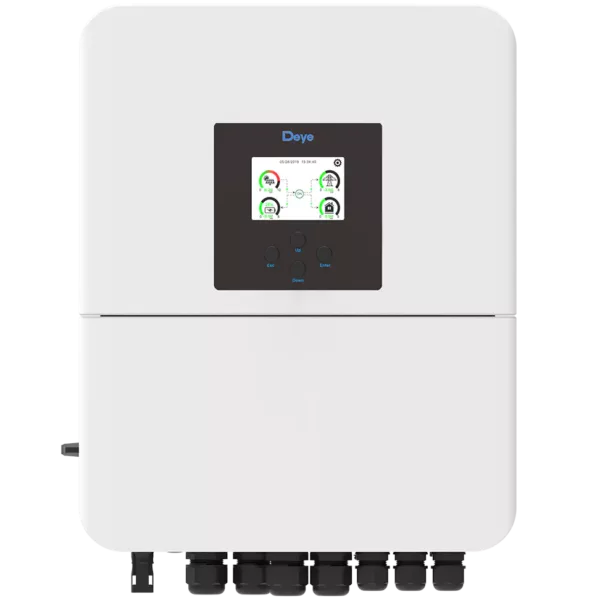
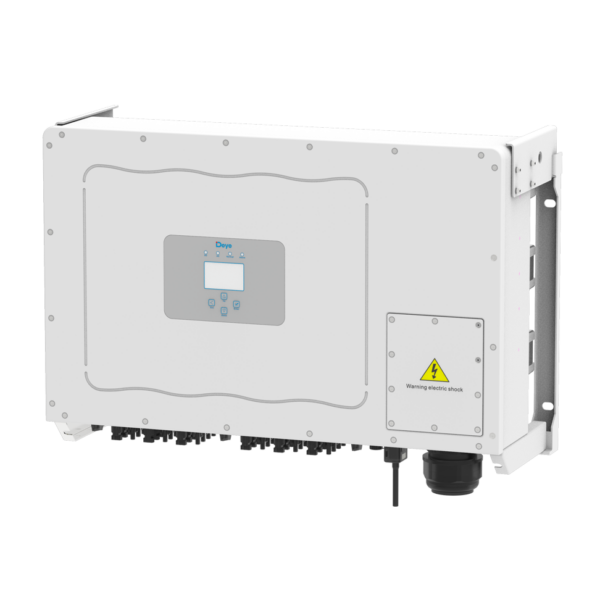
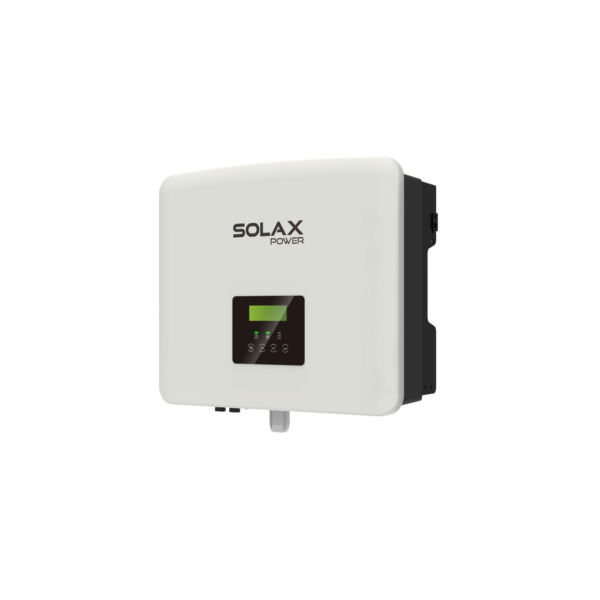
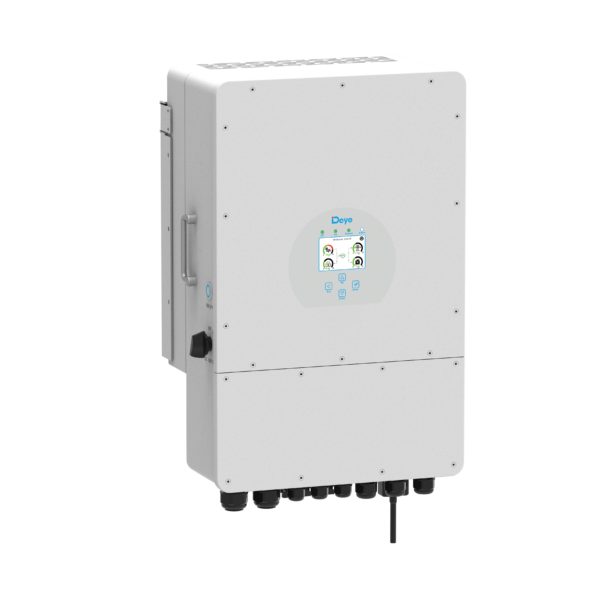
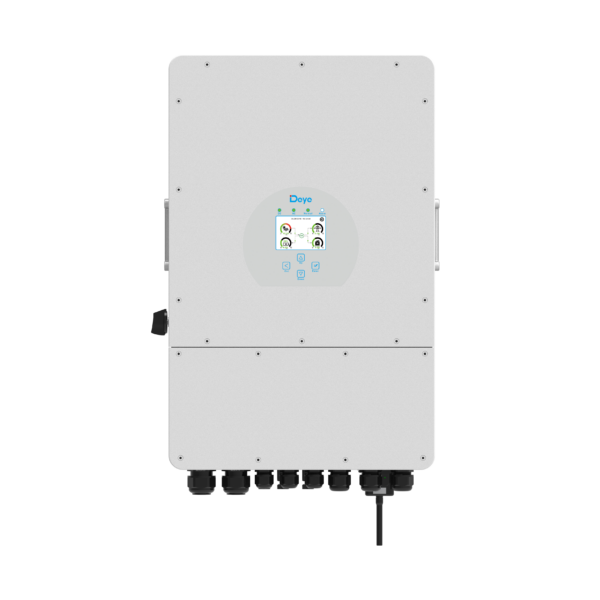
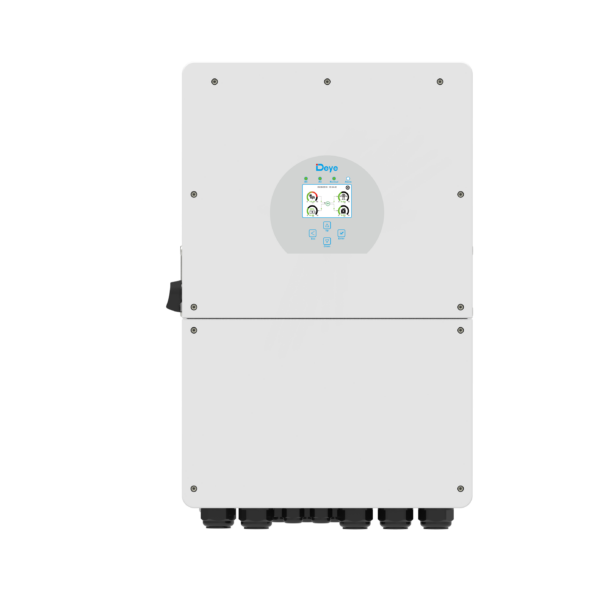
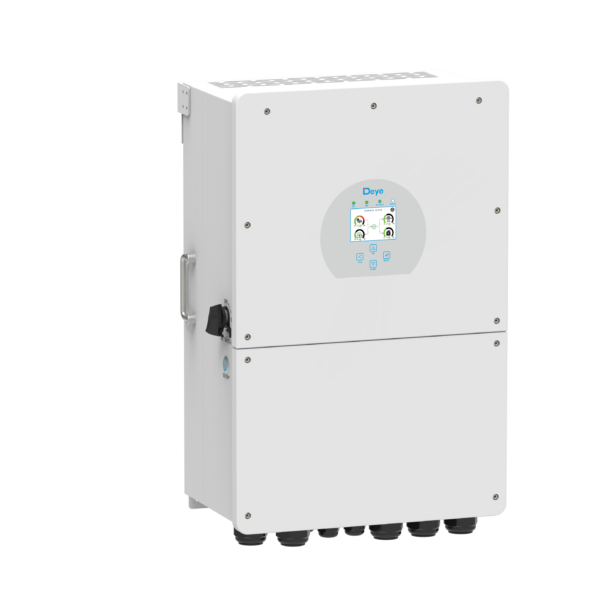
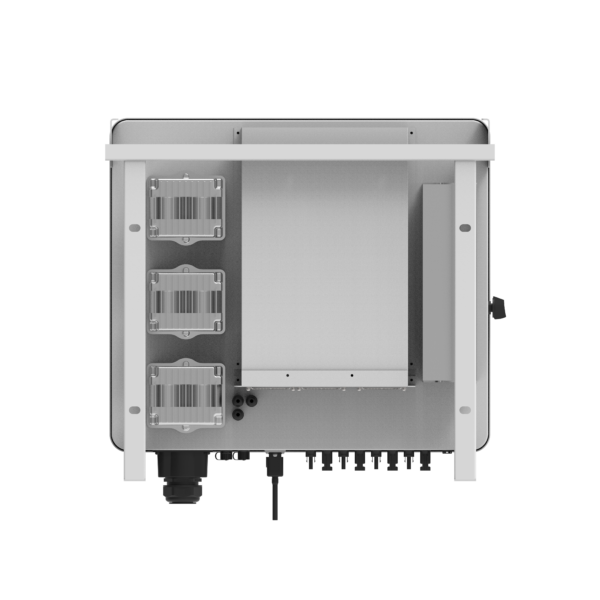
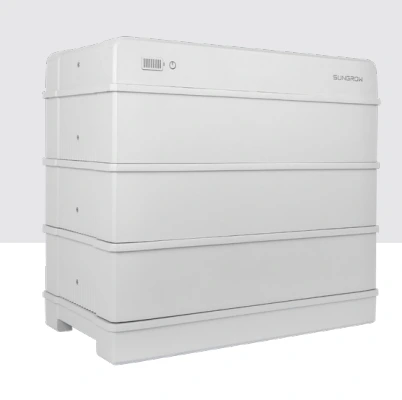
The linked Sungrow reference identifies three 3.2kWh battery modules for SBR096. Their energy adds to 9.6kWh. The quoted supply should identify the required supporting battery components as well as the modules themselves. The package image is a visual reference, while the written schedule establishes the actual inverter and battery equipment. This matters when comparing an assembled system offer with a modules-only price.
Do not assume ten kilowatts of battery-only output
The referenced SBR096 has 5.76kW rated DC power at its 192V nominal voltage, with a 30A continuous-current specification. That battery rating is distinct from the 10kW inverter class. Available AC power also depends on conversion and operating conditions. Ask the designer to state the sustained output available during an interruption from this specific battery arrangement rather than treating the inverter nameplate as a battery-only guarantee.
Keep a usable-energy estimate tied to its conditions
Sungrow’s energy reference has stated test conditions. Household operation can involve different demand, temperatures and reserve settings, and the inverter introduces conversion losses. A steady 1kW load needs 1kWh each hour; at 2kW it needs 2kWh each hour. These relationships help build an energy budget, but dividing 9.6 by a load value without allowances is not a reliable promise of backup duration.
Select the circuits that need continuity
List the equipment you want available during an interruption and distinguish everyday running demand from larger or intermittent loads. A home office, lighting and refrigeration have a different demand pattern from cooking or water heating. The agreed circuit arrangement should reflect the combined battery and inverter limits. The package is more useful when its role is defined than when every household load is assumed to be supported without restriction.

Plan solar use and charging across the day
Some PV production may be used while it is generated, with the remainder available for storage when the system permits. Evening-heavy consumption can place a different requirement on the battery from a home occupied throughout the day. Consider seasonal production, weather and the energy removed during an earlier interruption. The new time-of-use illustration describes this sequence without promising that the battery will recharge fully in a fixed number of hours.
Confirm the inverter identity before selecting panels
The catalogue does not reliably establish the complete 10kW inverter code. MPPT count, solar input limits, phase arrangement and backup behaviour therefore need the exact inverter datasheet. The SBR096 document validates battery references, not the inverter’s PV specification. Include the full inverter designation in the quotation and use it when checking the proposed panel model, string arrangement and connection requirements.
Reserve space for the complete battery assembly
The referenced SBR096 assembly measures 625 × 545 × 330mm and weighs 114kg. These are battery-assembly figures, not combined-package dimensions or the weight of one module. Plan delivery and handling accordingly, and allow the clearances required by the matching manual. The inverter needs its own mounting and access assessment. A tidy staged product picture does not show every clearance, protection component or installation condition.
Use the right revision for operating limits
The battery table identifies the linked 2022 V13 reference so its figures are not confused with later manuals. The delivered product documentation remains the installation reference, especially where an operating range changes between revisions. Keep the battery serial and inverter identity with the commissioning record. This makes any later support or expansion assessment more precise than relying on the general description of a Sungrow ten-kilowatt package.
Make the quotation a complete comparison
Ask the offer to identify the inverter code, SBR096 arrangement, included base and control equipment, required protection and communication components, and whether installation is included. Provide your supply details, essential demand and intended solar array. The practical comparison is the documented system and its intended operation. A lower headline price alone does not show whether two packages contain the same equipment or meet the same backup requirement.
Check the handover against the intended use
At handover, review which circuits are supported, how reserve settings work and where the owner can see the system status. Retain the final component schedule and commissioning documents for future changes. If consumption later increases, reassess both energy and power before adding appliances to the backup supply. This keeps the 10kW inverter class and three-module SBR096 bank aligned with the job for which they were selected.
Manufacturer reference
Product family documentation. Match the supplied model and revision before applying installation limits.