Jinko 555W Monocrystalline Solar Panel
R12,650.00
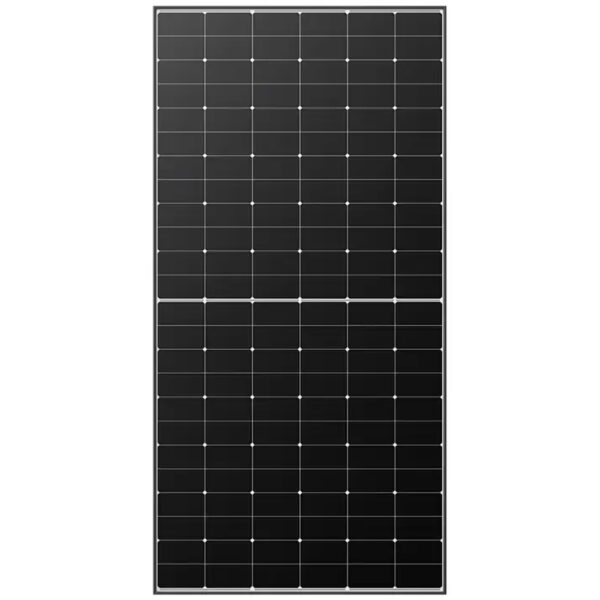
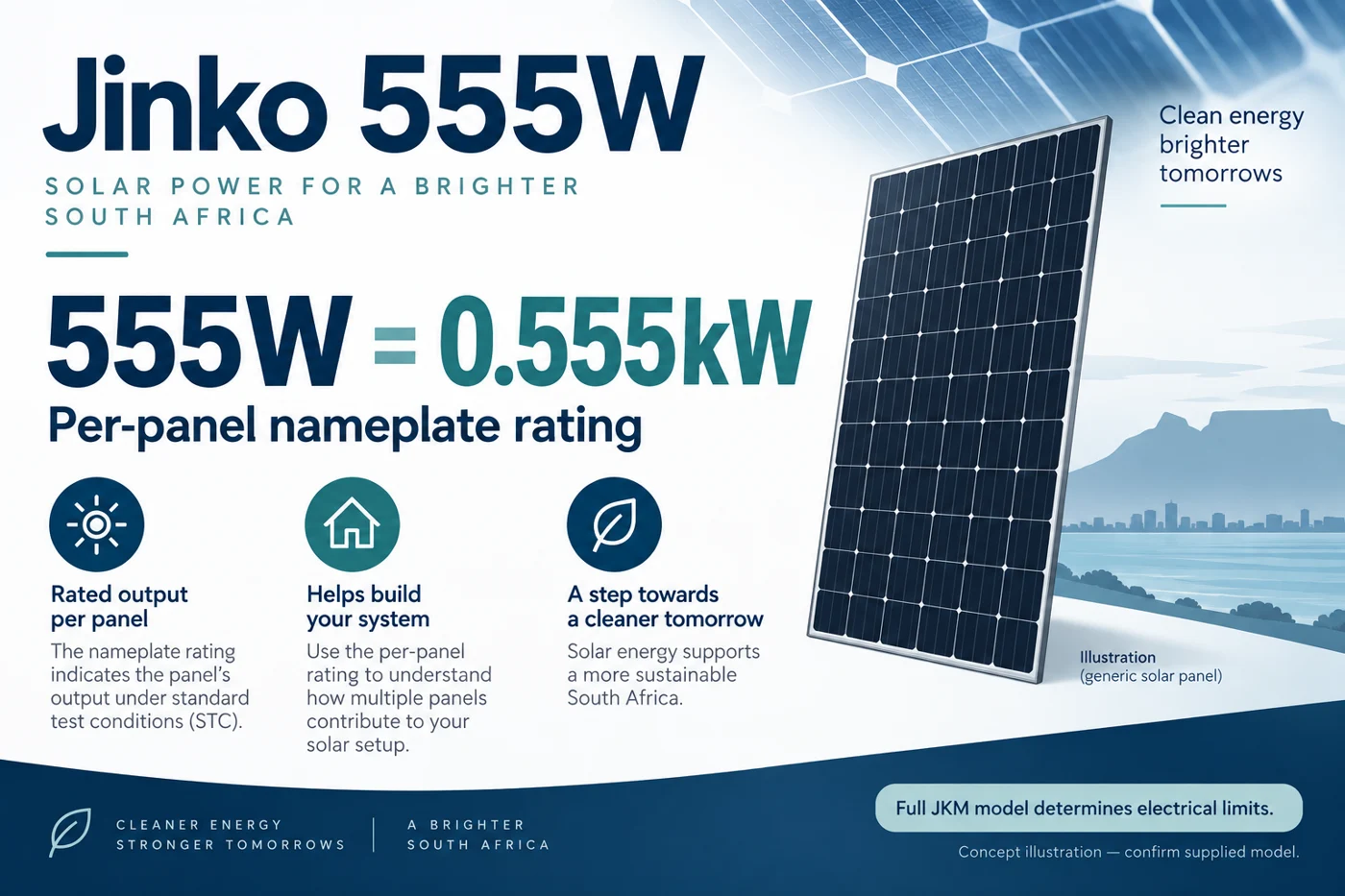
This Jinko 555W monocrystalline solar-panel listing is a starting point for selecting a module for a new array, replacement or extension. The stated power is 555W per panel, equivalent to 0.555kW at its rating conditions. Selecting the correct module also requires the complete JKM designation. The labelled family reference and specification illustrations explain the product category without substituting for the supplied panel’s exact model documentation.
Jinko 555W Monocrystalline Solar Panel
This Jinko 555W monocrystalline solar-panel listing is a starting point for selecting a module for a new array, replacement or extension. The stated power is 555W per panel, equivalent to 0.555kW at its rating conditions. Selecting the correct module also requires the complete JKM designation. The labelled family reference and specification illustrations explain the product category without substituting for the supplied panel’s exact model documentation.
Start with the full code when replacing a panel
A replacement purchase has a different starting point from a new system: the existing module and installation already impose constraints. Record the full model printed on the existing label, not just Jinko and 555W. Include electrical ratings, dimensions and connector details when asking for a replacement. Another panel with the same headline wattage may belong to a different family and should not automatically be treated as an interchangeable part.
Read the product imagery correctly
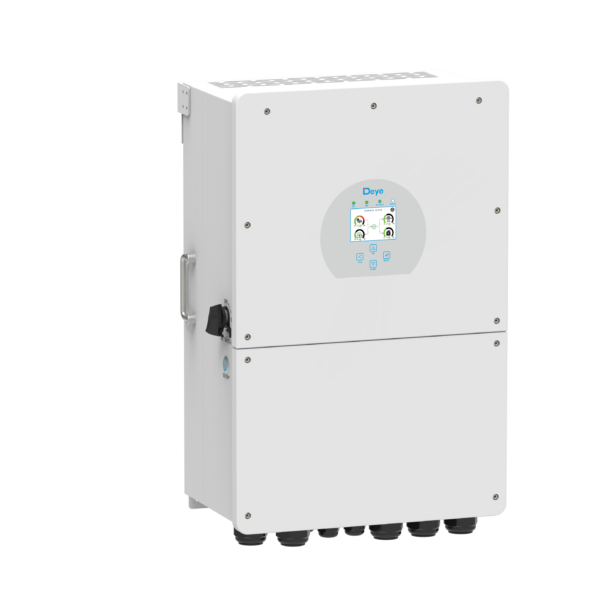
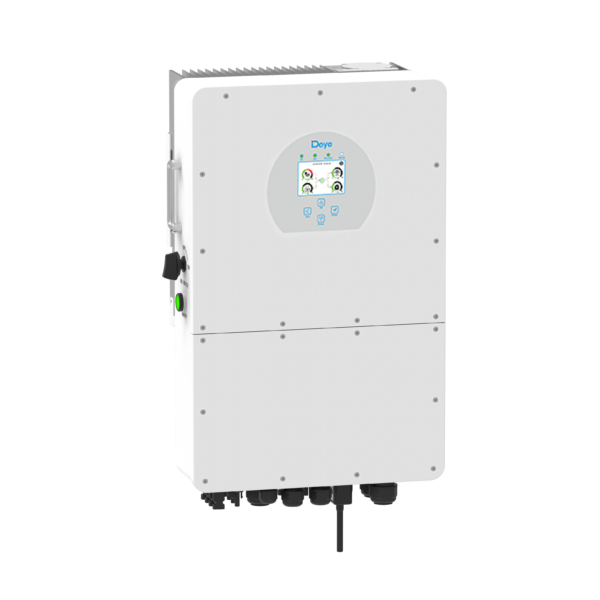
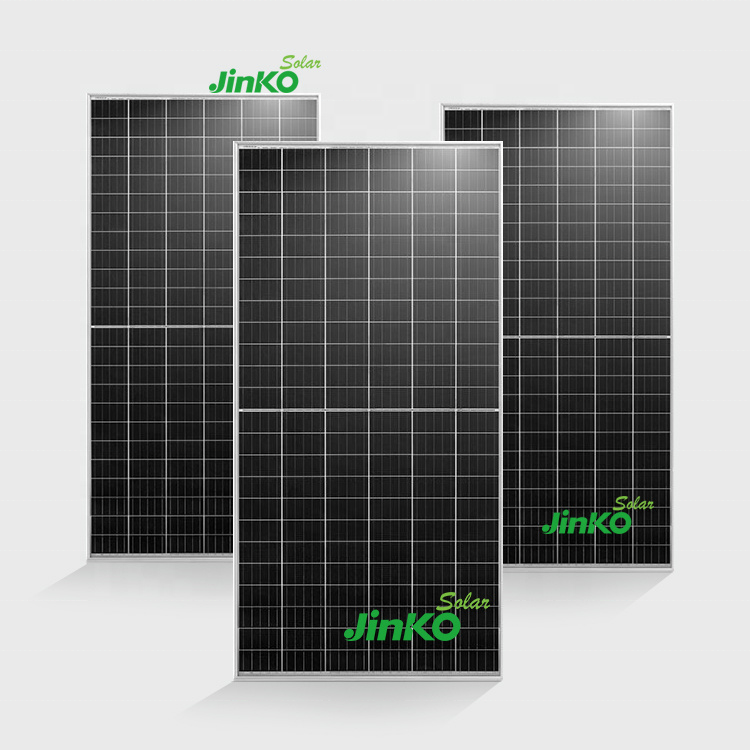
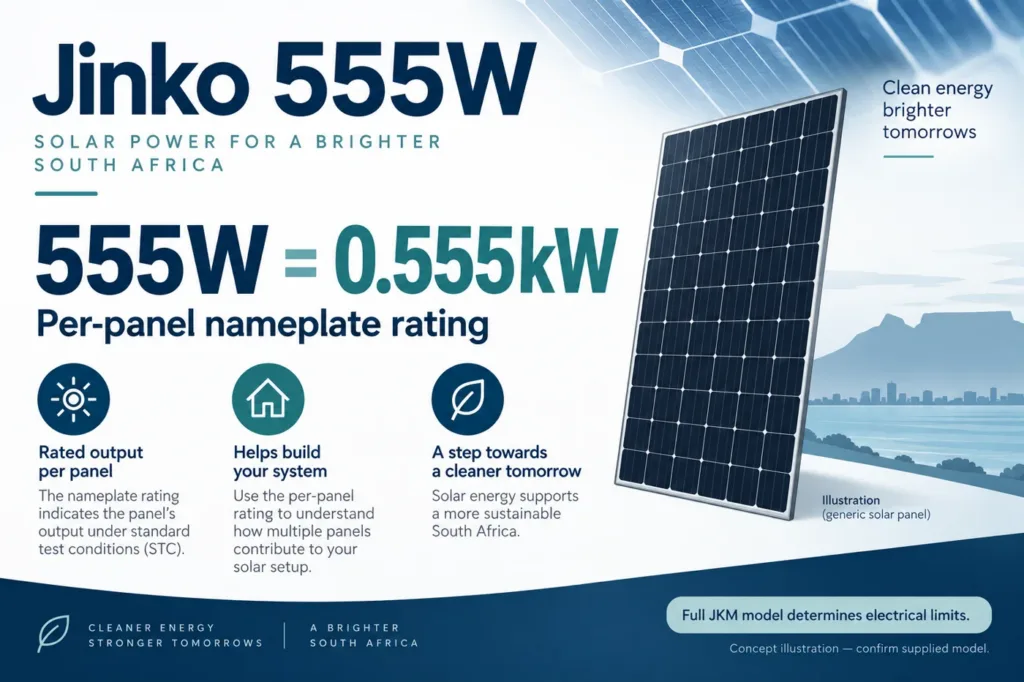
The main specification illustration identifies the 555W power class without pretending to show a verified physical model. The Jinko family reference shows brand context, not the exact cell arrangement or dimensions of the supplied panel. Before purchase, ask for a current product-label reference. This separates useful visual explanation from the evidence needed to confirm the actual module being delivered.
Understand what 555 watts tells you
The wattage is a power rating, not a daily energy quantity. If a source delivers an average of 400W for two hours, it contributes 800Wh over that period; that arithmetic is not a forecast for this panel. Irradiance, cell temperature, orientation, shade and system losses affect real generation. Use a site-specific estimate when assessing daily energy, rather than assuming a 555W module continuously produces its nameplate value.
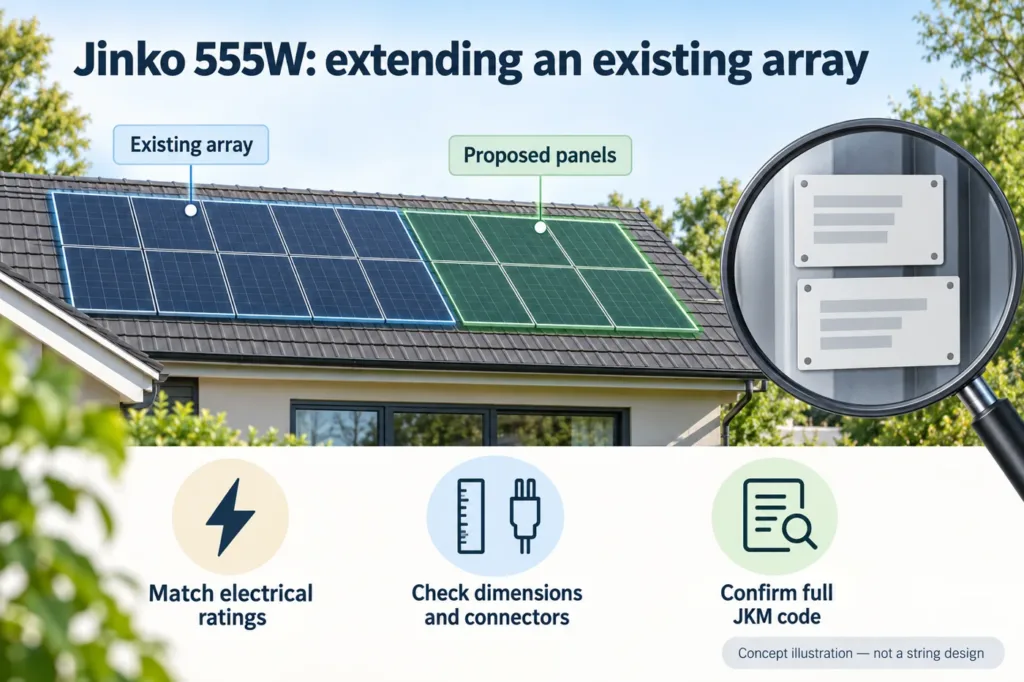
Check the inverter input before extending an array
An inverter or charge controller has voltage and current limits that must be matched to the proposed modules and their connection arrangement. Adding one more panel can change those conditions. The installer needs the panel’s full datasheet and the inverter code to assess the extension. A simple sum of panel watts cannot confirm that a string or parallel arrangement is acceptable.
Do not equate matching wattage with matching behaviour
Two modules rated at 555W can reach that figure with different operating voltages and currents. Their physical dimensions and connector details can also differ. These differences matter in an existing array, especially when a single panel is being replaced among older modules. Have the proposed replacement assessed as part of that array instead of choosing solely by the largest matching number on the product title.
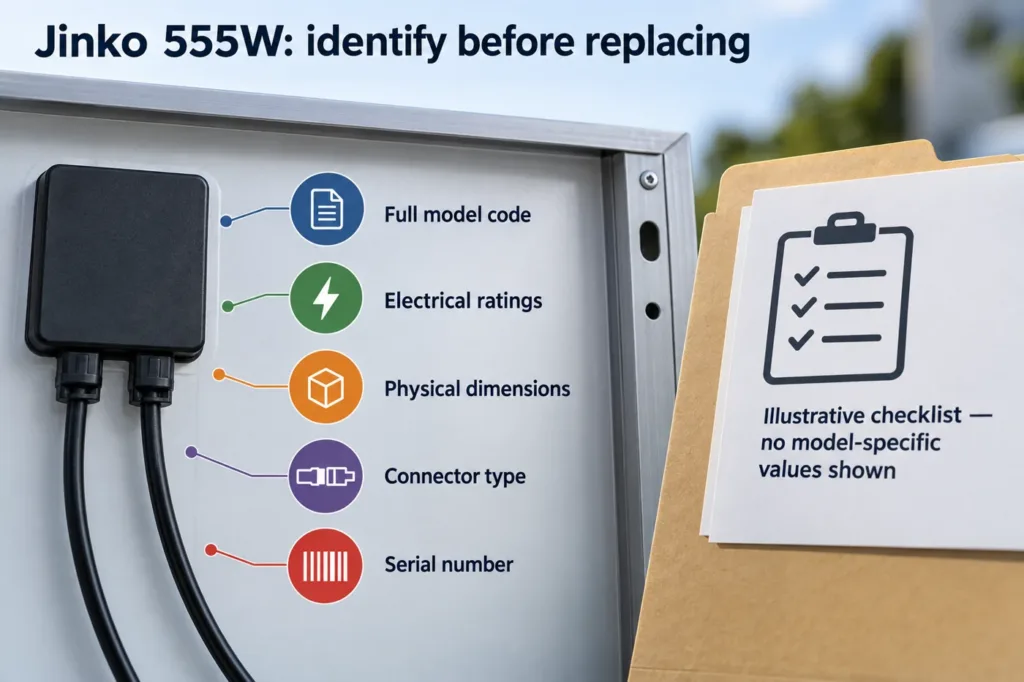
Account for the mounting position
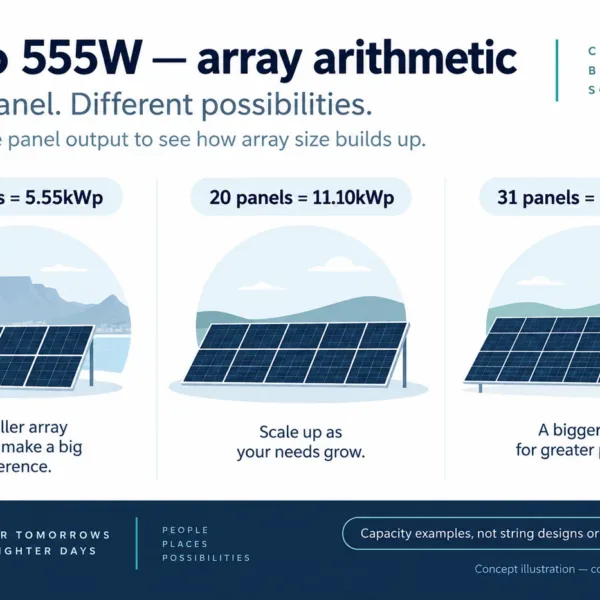
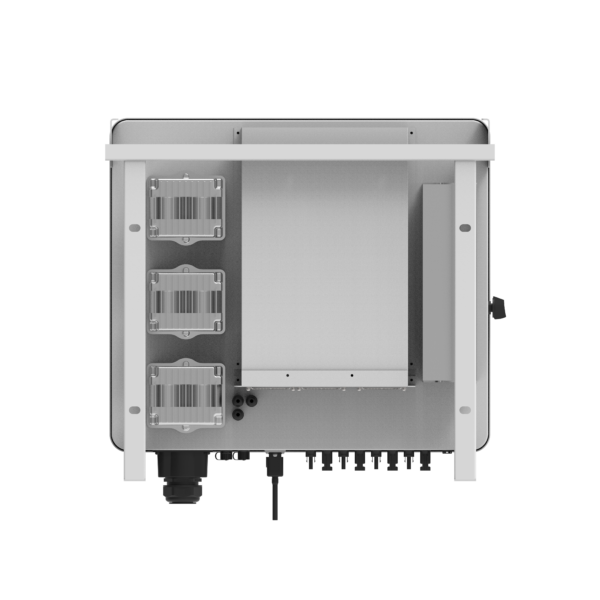
A spare space on the roof is not automatically a suitable position for an additional module. The mounting design, usable dimensions, shade pattern and access all need review. Provide the roof layout or the relevant existing mounting details with your enquiry. The retrofit illustration highlights those questions; it does not specify clamp positions, mounting spans or an approved arrangement for an unknown JKM revision.
Separate a panel purchase from a battery decision
A panel generates DC electricity when illuminated. It does not store energy for an evening interruption, and its wattage cannot establish battery capacity. If the reason for extending an array is faster recovery of stored energy, review the charger and battery limits as well as the PV opportunity. A larger array may serve a different purpose from adding storage, depending on when the household needs electricity.
Keep the model and serial reference available
The manufacturer’s installation information distinguishes a model nameplate from the serial identification. Both are useful records for the installation. The nameplate supports equipment matching; serial information helps identify the individual module. Retain these records with the quotation and commissioning information. Avoid relying on a stock photograph as proof of a specific product revision or an individual panel’s identity.
Review condition and supplied quantity on arrival
Confirm that the delivered modules match the written order and arrange an appropriate receipt inspection before installation. A family image showing several panels is not a statement of the quantity included in a unit purchase. If the order is for a replacement, compare its label to the agreed specification before it is installed. Handling and storage should follow the supplied module instructions so the product is not damaged before use.
Prepare a useful 555W enquiry
Tell Solar Deity whether this is a new-array purchase, a single-panel replacement or an extension. Provide the existing JKM code where relevant, the inverter model and the quantity you need. Ask the quotation to identify the complete supplied panel designation. That information allows this 555W option to be evaluated against your installation, with exact electrical and physical values taken from the matching datasheet rather than guessed from the power class.
Manufacturer reference
Product family documentation. Match the supplied model and revision before applying installation limits.
Technical specifications
| Parameter | Product detail |
|---|---|
| Brand | Jinko Solar |
| Catalogue technology | Monocrystalline photovoltaic module |
| Per-panel power class | 555 W |
| Power conversion | 0.555 kW per panel |
| Ten-panel rated total | 5.55 kWp; arithmetic example |
| Output role | DC generation for a matched solar system |
| Complete manufacturer designation | Confirm full JKM555 model and suffix |
| Detailed electrical and physical ratings | Match the supplied label and manufacturer datasheet |