Dyness HV51100 5.12kWh High-Voltage Rack Battery Module
Original price was: R25,850.00.R16,500.00Current price is: R16,500.00.
The Dyness HV51100 is a 5.12kWh LiFePO4 battery module used within a supported PowerRack high-voltage storage system. One module has a nominal voltage of 51.2V and a capacity of 100Ah. Multiple matched modules form a higher-voltage series arrangement under the appropriate battery-system control equipment. This listing identifies the individual rack module, with manufacturer illustrations that distinguish it from a complete battery cabinet.
Dyness HV51100 5.12kWh High-Voltage Rack Battery Module
The Dyness HV51100 is a 5.12kWh LiFePO4 battery module used within a supported PowerRack high-voltage storage system. One module has a nominal voltage of 51.2V and a capacity of 100Ah. Multiple matched modules form a higher-voltage series arrangement under the appropriate battery-system control equipment. This listing identifies the individual rack module, with manufacturer illustrations that distinguish it from a complete battery cabinet.
One module is only part of the complete storage system
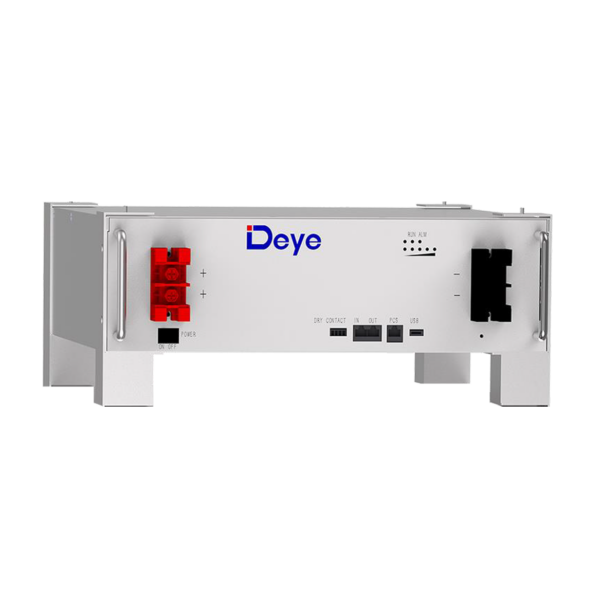
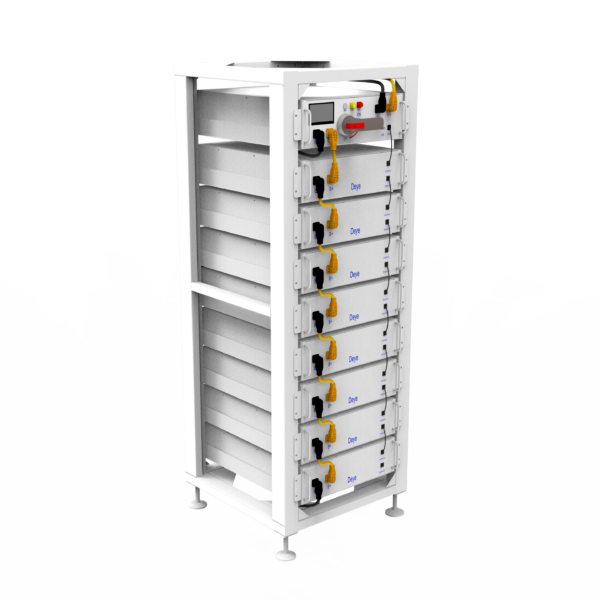
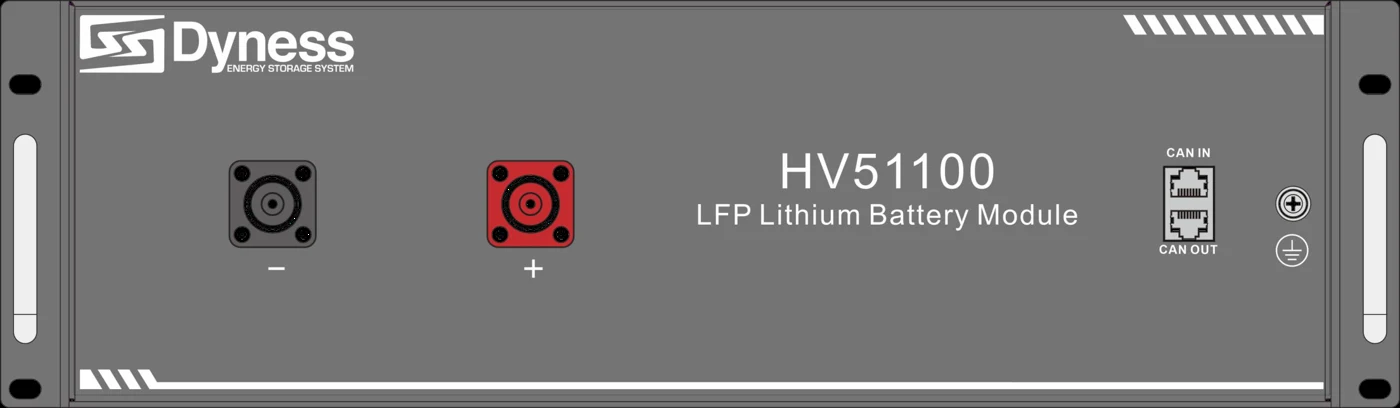
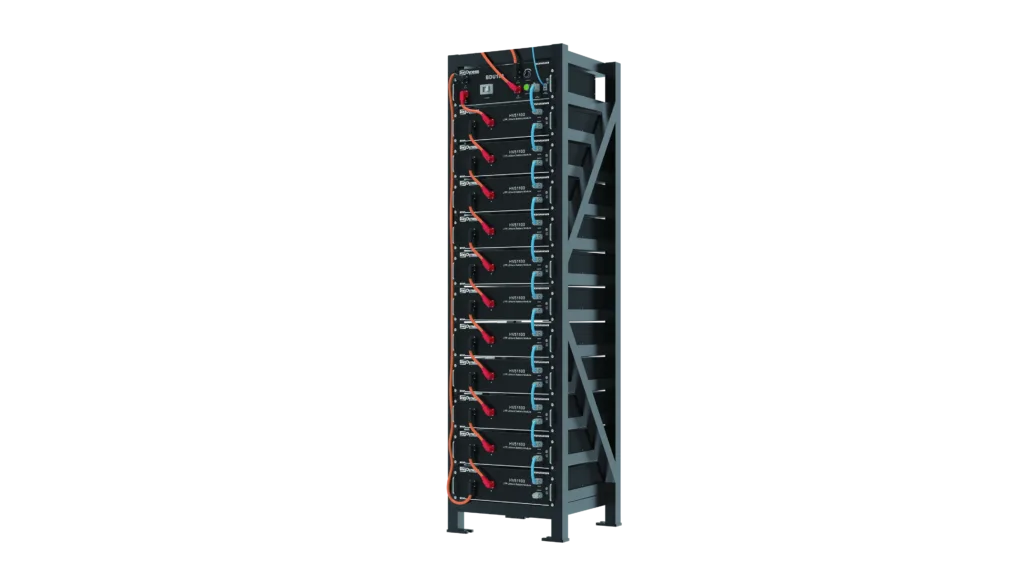
This listing identifies the HV51100 module. A working high-voltage battery system also needs the specified control or disconnect unit, rack arrangement, interconnections and a compatible inverter. Those components should be identified in the quotation rather than assumed to accompany one module. The module-front illustration below shows the correct equipment, while the full-rack image is labelled as a larger system example to distinguish the product from a complete cabinet.

Why a 51.2V module belongs in a high-voltage product family
The module’s own voltage does not describe the assembled rack voltage. In the supported series arrangement, the voltages of the modules add together. The 51.2V figure must therefore not be used as evidence that this product is a drop-in substitute for a standalone 48V residential battery. The HV51100 depends on its intended system architecture and control equipment, even though its individual nominal voltage resembles that of some low-voltage products.
A seven-module example explains the difference
A seven-module reference arrangement contains seven times 5.12kWh, giving 35.84kWh of nominal energy, and seven times 51.2V, giving 358.4V nominal voltage. The series capacity remains 100Ah; it does not become 700Ah. This example explains the manufacturer’s rack ratings and is not an instruction to assemble an arbitrary battery string. Supported module counts and the corresponding control equipment must be checked for the exact system revision.
Keep module ratings and cabinet ratings in separate columns
The module measures 481 × 535 × 140mm and weighs 43.5kg in the referenced documentation. A completed rack is much larger and heavier because it contains several modules, supporting structure and control equipment. Likewise, a full-system power rating must not be copied into the single-module description. Separating these figures is especially helpful when purchasing a replacement module, extending a supported installation or comparing quotations with different module quantities.
Normal current is different from total stored energy
The user manual gives a normal module charge and discharge current of 50A. Current capability and 5.12kWh energy capacity describe different limits. Energy influences the possible operating duration, while system voltage and permitted current influence power. The actual inverter output also depends on conversion losses and control limits. A larger rack may offer more total energy and a different nominal voltage without making every operating condition unrestricted.
The control unit coordinates the high-voltage arrangement
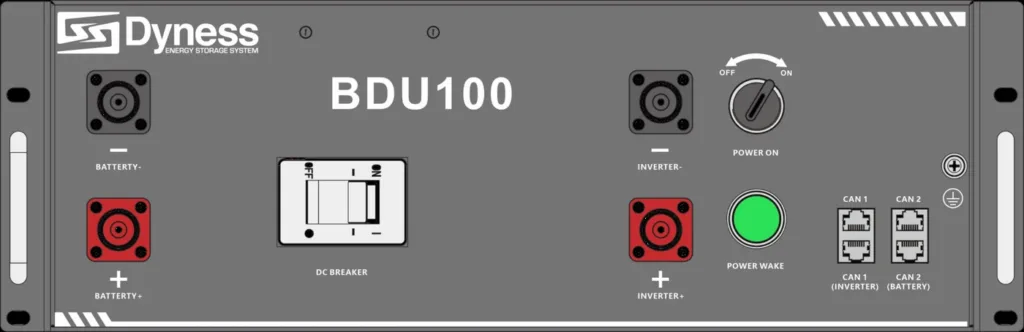
The referenced system documentation includes the BDU100 control/distribution unit and identifies communication interfaces between the battery modules and system equipment. The correct control unit is part of the compatibility assessment. Its presence should be verified on a complete-system quotation, including the supported firmware and inverter relationship. The separate BDU image is shown to explain the architecture; it is not an additional battery module or an item automatically included with this listing.
LiFePO4 chemistry with battery-management supervision
The HV51100 uses lithium iron phosphate cells and forms part of a system that monitors operating conditions and provides protections such as voltage, current and temperature supervision. Those functions support normal system operation within the specified limits. They do not make incompatible equipment acceptable or remove the need for the correct enclosure, interconnections and commissioning. Preserve the exact model and revision details when planning service or replacement components.
Plan an indoor equipment location
The stated IP20 protection rating means the module should be used within the appropriate protected equipment environment, rather than exposed directly to rain or outdoor water ingress. Space planning should account for the complete rack, service access and the supporting floor, not only the dimensions of one module. At 43.5kg per module, a multi-module installation also has meaningful handling and delivery requirements that should be resolved before equipment arrives.
Match the inverter to the completed voltage range
High-voltage inverters have defined battery voltage ranges and supported communication protocols. The complete rack’s nominal and operating voltages must fit those requirements. A match based only on the word high-voltage is insufficient. Provide the intended module count, PowerRack version and control-unit details when checking compatibility so that the assessment concerns the actual assembled battery system rather than the voltage printed on an individual module.
Use the load profile to choose rack capacity
Commercial and larger residential storage projects can have very different demand patterns. A site with steady overnight consumption needs a different energy budget from one with short high-power events. Record both the expected energy use and the simultaneous load demand before selecting the rack configuration. The 5.12kWh module size provides a useful building block for comparison, but the supported configuration and required reserve determine how much of the assembled system is available for the intended task.
Expansion requires a supported configuration
Adding modules changes more than the headline kWh total in a series system. It can alter the operating voltage and the requirements of the battery control arrangement. Review expansion against the applicable Dyness documentation and the installed inverter before ordering extra modules. Do not assume that different module revisions or unrelated Dyness battery families can be mixed simply because they share a manufacturer or similar nominal capacity.
Order the module with its intended role clearly stated
Specify whether the HV51100 is required for a new supported rack, an approved expansion or a like-for-like service replacement. Include the existing system identifiers where applicable. This lets the quotation distinguish the individual battery module from a complete PowerRack solution and avoids using a cabinet photograph as an implied packing list. The parameter table and manufacturer module illustration provide a precise starting point for that discussion.