Jinko 475W Monocrystalline Solar Panel
R505.00
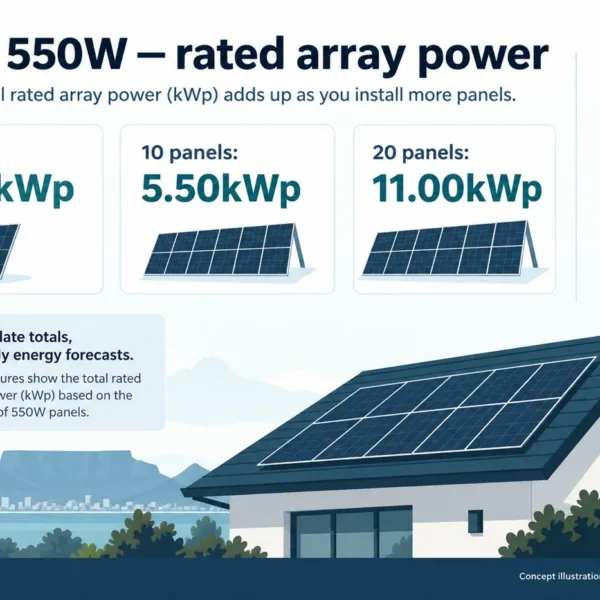
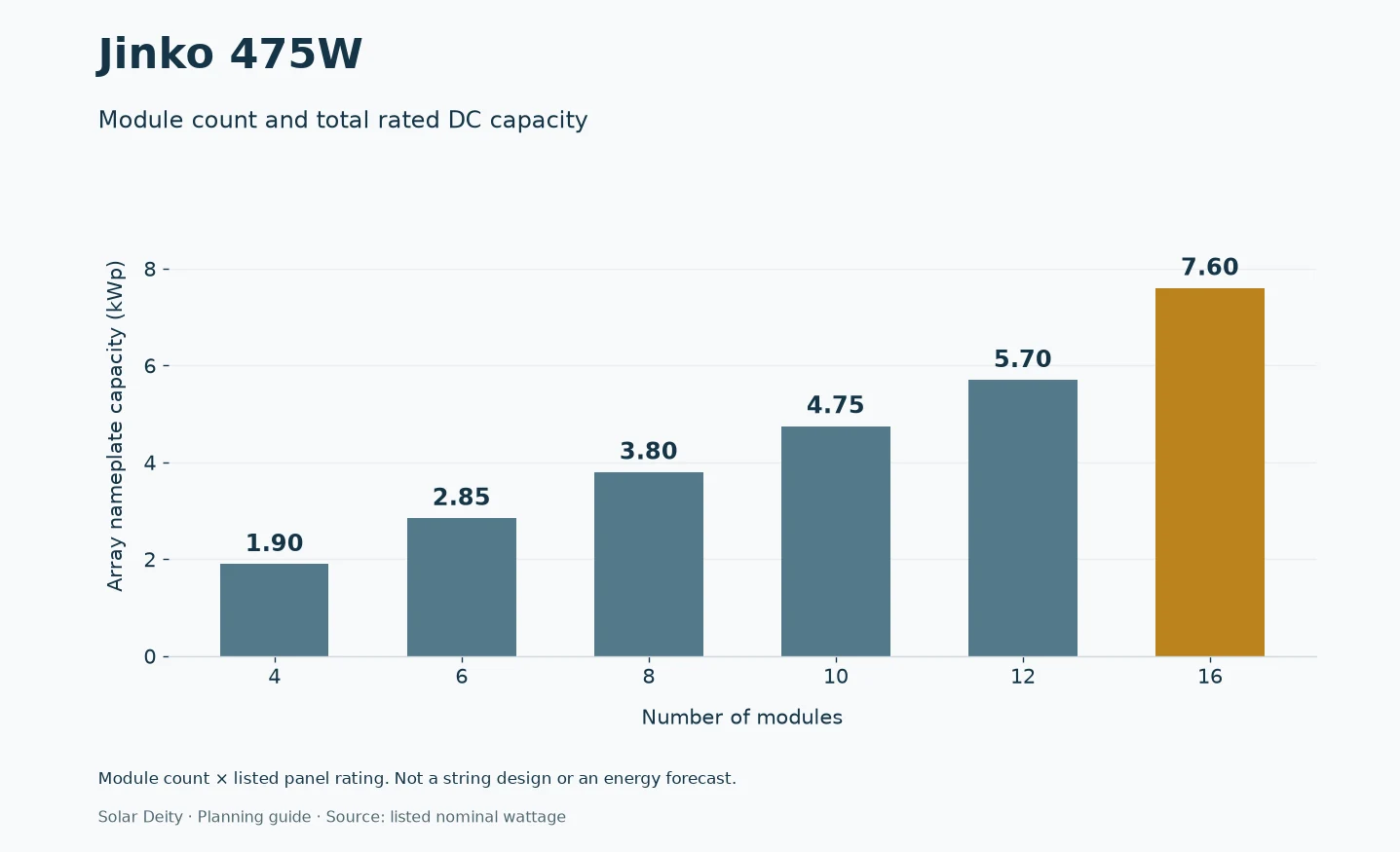
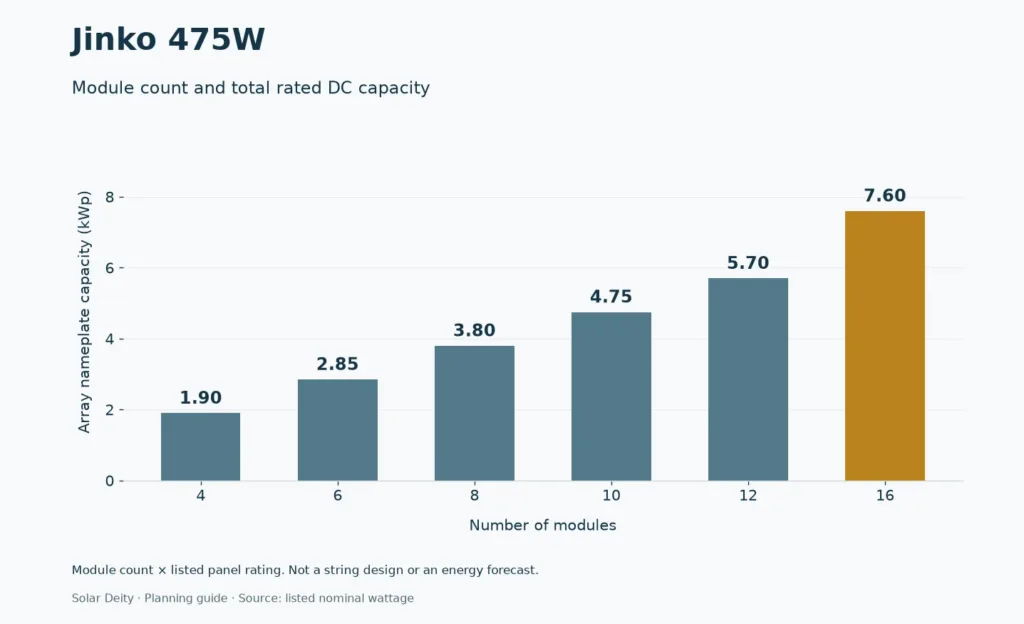
The Jinko 475W Monocrystalline Solar Panel contributes 0.475kWp of nameplate capacity per module. An eight-panel array totals 3.80kWp, while twelve modules total 5.70kWp. This product page is intended to help you compare quantities and prepare a roof-specific quotation.
Jinko 475W Monocrystalline Solar Panel
The Jinko 475W Monocrystalline Solar Panel contributes 0.475kWp of nameplate capacity per module. An eight-panel array totals 3.80kWp, while twelve modules total 5.70kWp. This product page is intended to help you compare quantities and prepare a roof-specific quotation. The 475W power class alone does not identify the complete Jinko model, its size or its voltage characteristics. Until the full JKM suffix is confirmed, those details remain open rather than being copied from another Jinko panel.
Choosing a quantity for the available roof
With this power class, six modules total 2.85kWp, eight total 3.80kWp, ten total 4.75kWp and twelve total 5.70kWp. Those options give you a starting point for comparing different equipment schedules. They are not finished roof layouts. Chimneys, roof edges, access routes and shaded areas can reduce the usable space, and the exact module dimensions are still required. Start with a measured roof rather than assuming that a certain panel count will fit because the total wattage looks appropriate.
Why shaded obstacles deserve attention
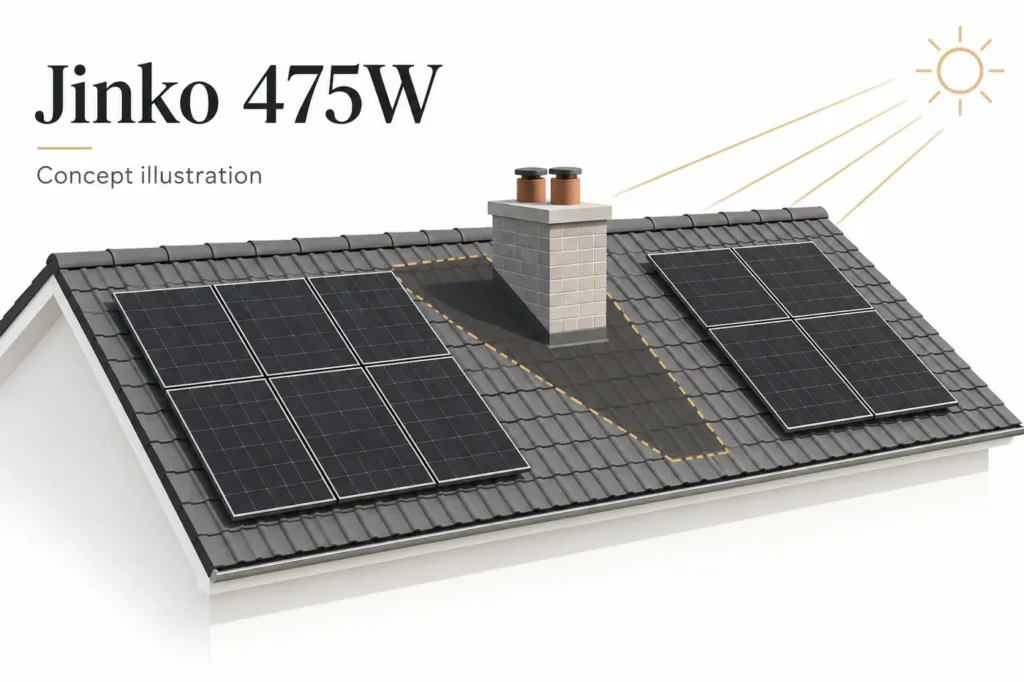
A chimney or nearby tree can cast a moving shadow across only part of the roof. That makes a clear overhead layout more informative than a single photograph taken at midday. Identify the likely shaded areas across the day and season, then let the installer assess the proposed module arrangement. The concept illustration highlights this issue without claiming a specific shading loss. We do not attribute a particular shade-tolerance feature to this 475W listing without its exact model documentation.
475W compared with 415W at equal quantities
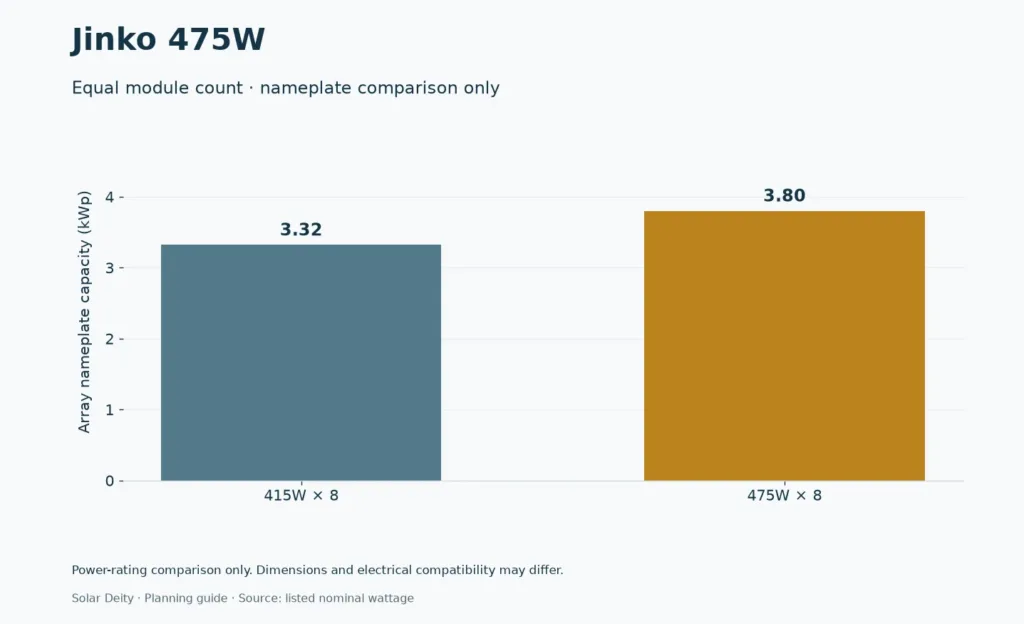
Eight 475W modules have a 3.80kWp nameplate total, compared with 3.32kWp for eight 415W modules. The difference is 0.48kWp, about 14.46% relative to the 415W array. This is an arithmetic comparison of rated power only. Module dimensions, price, roof fit and electrical specifications may differ. A higher total on paper does not justify mixing the two power classes in an existing string, and it does not predict the same percentage increase in annual energy production.
Matching the array to household use
For a household, daytime demand from working at home or other regular activities can influence the value of solar production. An electricity bill provides a useful starting point, but the timing of consumption matters as well as the total. Identify which loads operate when the sun is available and which occur mainly in the evening. The panel count describes the generation equipment. Evening operation and outage support require the appropriate inverter and, where applicable, separately sized energy storage.
Separating rated power from daily energy
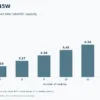
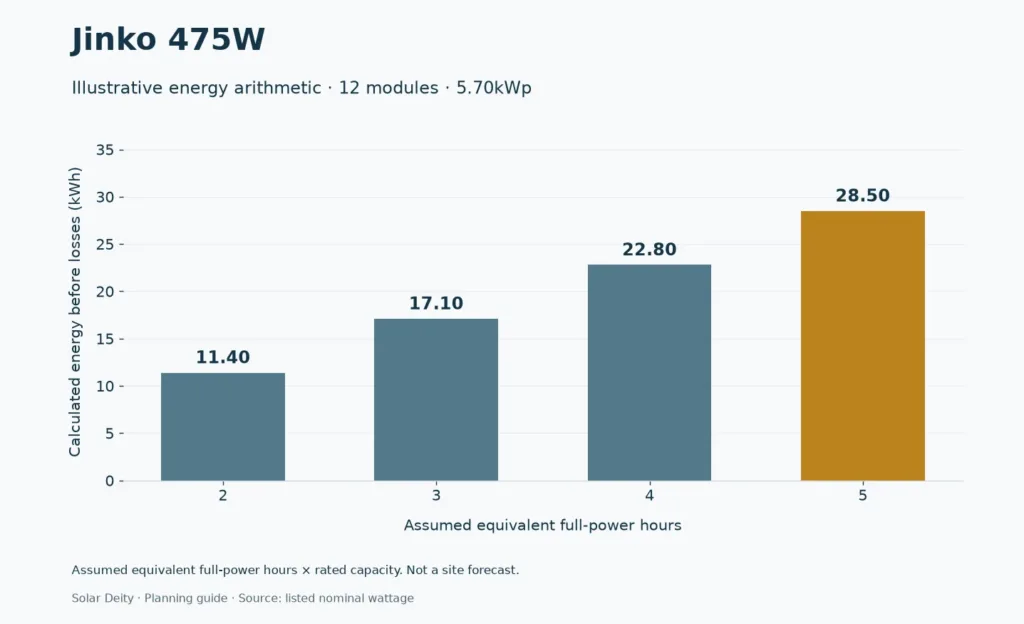
Twelve panels are rated at 5.70kWp under standard test conditions. Multiplying that rating by an assumed four equivalent full-power hours gives 22.80kWh before any losses, solely as an arithmetic illustration. Actual production needs a site assessment and can be substantially different. The accompanying chart includes other assumed hours so the relationship is visible. It is not an estimate for your address, a savings guarantee or a claim that the array will run at its nameplate rating for four consecutive hours.
The JKM suffix is essential for electrical design
Jinko produces multiple module families, and a wattage label is not enough to select a datasheet reliably. Obtain the complete model from the offered unit or supplier documentation, then match its voltage and current ratings to the inverter. The correct data are also needed for the temperature assessment and proposed string arrangement. We have intentionally left these electrical entries pending rather than borrowing the values of a 470W, 480W or newer 475W module that may have a different construction.
Planning future additions
If you expect to extend the installation later, record the exact module model and the original array design now. Future availability of a matching panel is not guaranteed. A later extension may need a different arrangement following an installer assessment rather than simply adding another nominally 475W module. Keep the original invoice, datasheet and module identification with your system documents. That record makes later compatibility checks more useful than relying on a product photograph or remembering only the brand.
What the photographs and diagrams represent
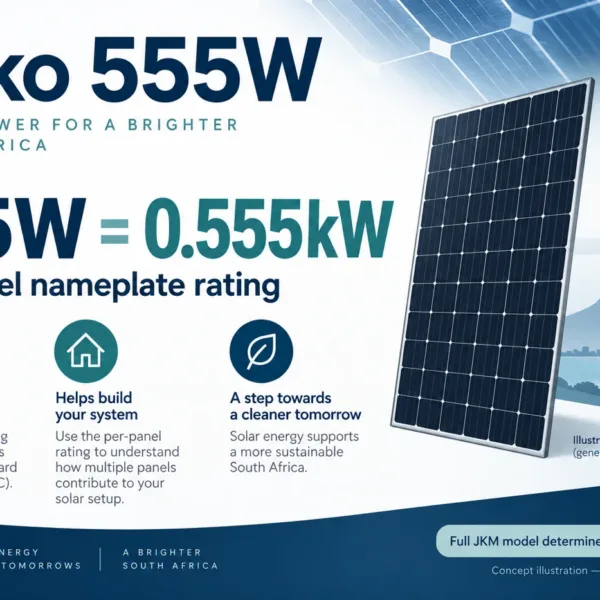
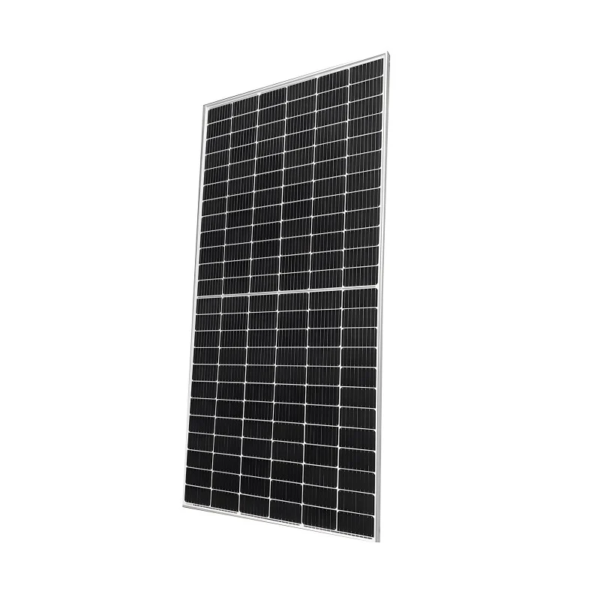
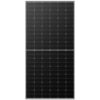
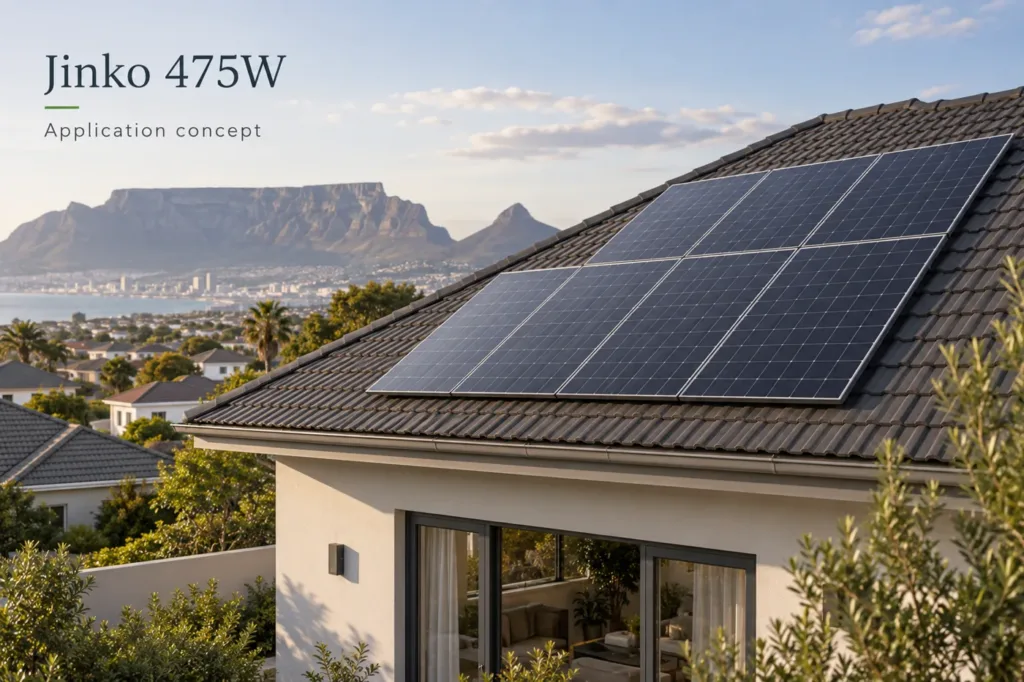
The earlier shared Jinko family graphic has been replaced by page-specific planning illustrations. The rooftop image and obstacle illustration are generated concepts designed to explain use and layout considerations, not to show the exact supplied module. The numerical charts are calculated from the 475W listing rating with their assumptions stated. This distinction lets you use the page for planning while reserving physical appearance, connector details and dimensional approval for the model-matched product documentation.
Quotation details for a residential project
Include your delivery area, preferred module count and complete inverter model when enquiring. If the roof has several orientations, identify them separately and include any known obstructions. For an existing installation, provide the model codes of its modules and the original configuration if available. Solar Deity can then respond to a defined equipment request. Confirm the offered JKM code and supporting datasheet in the quotation before treating this page as the final specification for a particular batch of stock.
Supply scope and documentation
A solar module order should not be assumed to include an inverter, batteries, mounting hardware, cabling or installation. Ask for those items to be listed separately when a complete solution is required. Confirm the applicable manufacturer warranty documentation and delivery arrangements for the offered model. The unresolved specifications in the table are deliberate: dimensions, weight, efficiency, electrical limits and warranty duration cannot safely be inferred from 475W. Updating those entries requires the exact model evidence, not a longer generic sales claim.
Product documentation
Technical specifications
| Parameter | Value / verification status |
|---|---|
| Brand | Jinko |
| Listed nominal maximum power | 475W (listing rating; exact model pending) |
| Listed module type | Monocrystalline solar module |
| Rated capacity per module | 0.475kWp (calculated) |
| 8-module array rating | 3.80kWp (calculated; not a string recommendation) |
| 10-module array rating | 4.75kWp (calculated) |
| 12-module array rating | 5.70kWp (calculated) |
| Full manufacturer model | Pending confirmation from the offered module label |
| Vmp / Imp / Voc / Isc | Pending exact model datasheet; not inferred from wattage |
| Efficiency / dimensions / weight | Pending exact model datasheet |
| Maximum system voltage / temperature coefficients | Pending exact model datasheet |
| Warranty terms | Confirm the applicable document for the supplied model |