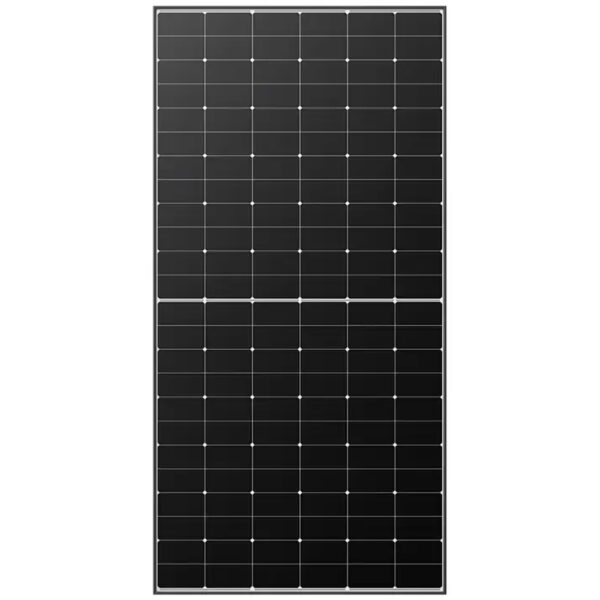
Jinko 550W Monocrystalline Solar Panel
R510.00
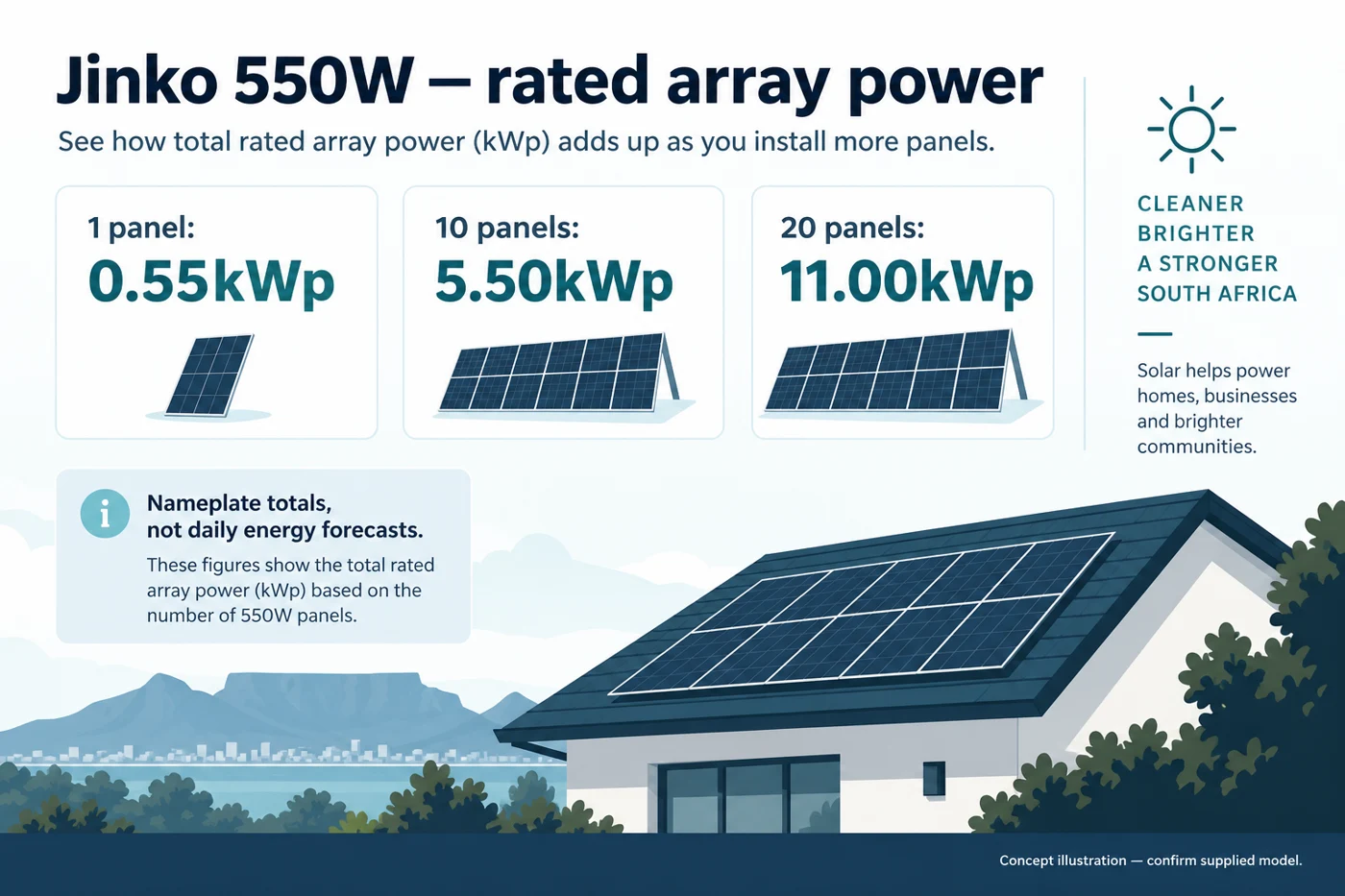
A Jinko 550W monocrystalline panel contributes 0.55kWp to the rated capacity of a solar array. This listing is useful when comparing a 550W option with neighbouring power classes and deciding how the module fits a particular roof and inverter. The discussion below keeps that comparison tied to actual panel count and project requirements. The complete JKM designation remains necessary for electrical ratings, dimensions and other model-specific details.
Jinko 550W Monocrystalline Solar Panel
A Jinko 550W monocrystalline panel contributes 0.55kWp to the rated capacity of a solar array. This listing is useful when comparing a 550W option with neighbouring power classes and deciding how the module fits a particular roof and inverter. The discussion below keeps that comparison tied to actual panel count and project requirements. The complete JKM designation remains necessary for electrical ratings, dimensions and other model-specific details.
Put the five-watt difference in context
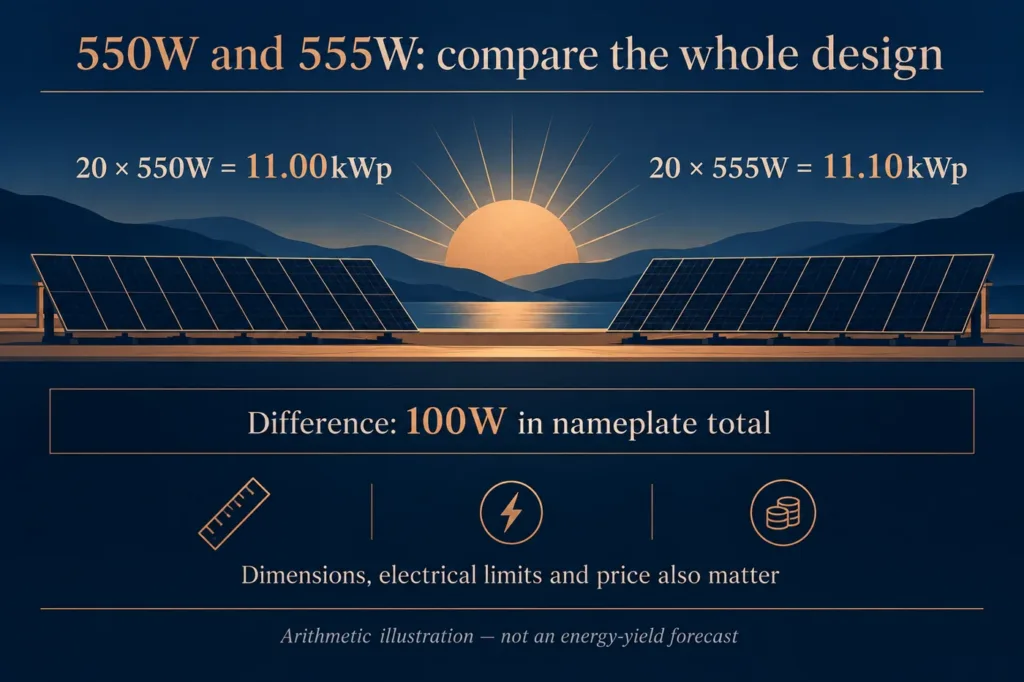
A 555W panel has a nameplate rating 5W above a 550W panel. Across twenty modules, that becomes 100W: 11.10kWp compared with 11.00kWp. This arithmetic does not establish which complete project is better. Panel dimensions, electrical compatibility, the available roof, product revision and quoted price can matter alongside the small change in rated watts. Compare the full design rather than choosing from the last digit alone.
Use a clear total for the proposed panel count
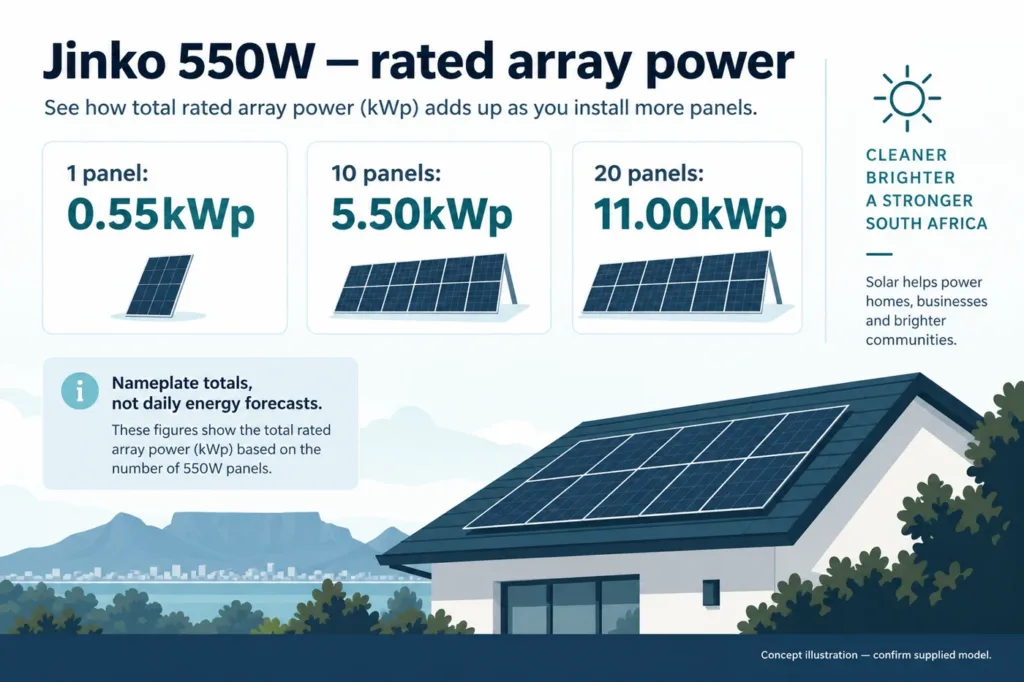
Ten modules at 550W give 5.50kWp; twenty give 11.00kWp. These values help describe the array on a quotation. They do not determine the inverter size, the number of modules per string or the daily energy that will be available. Ask the installer to show both the panel schedule and the electrical arrangement so the total capacity is supported by a complete design.
A power rating is not a daily production promise
Daily energy depends on how output changes through the day. A panel’s 550W nameplate does not mean it produces 550Wh in every hour of daylight. Weather, shade, orientation, temperature and conversion losses affect the result. Use the relevant site information for an energy estimate. This distinction is especially useful when comparing a panel purchase with an expected electricity saving or a target amount of battery charging.
Consider when a small business uses power
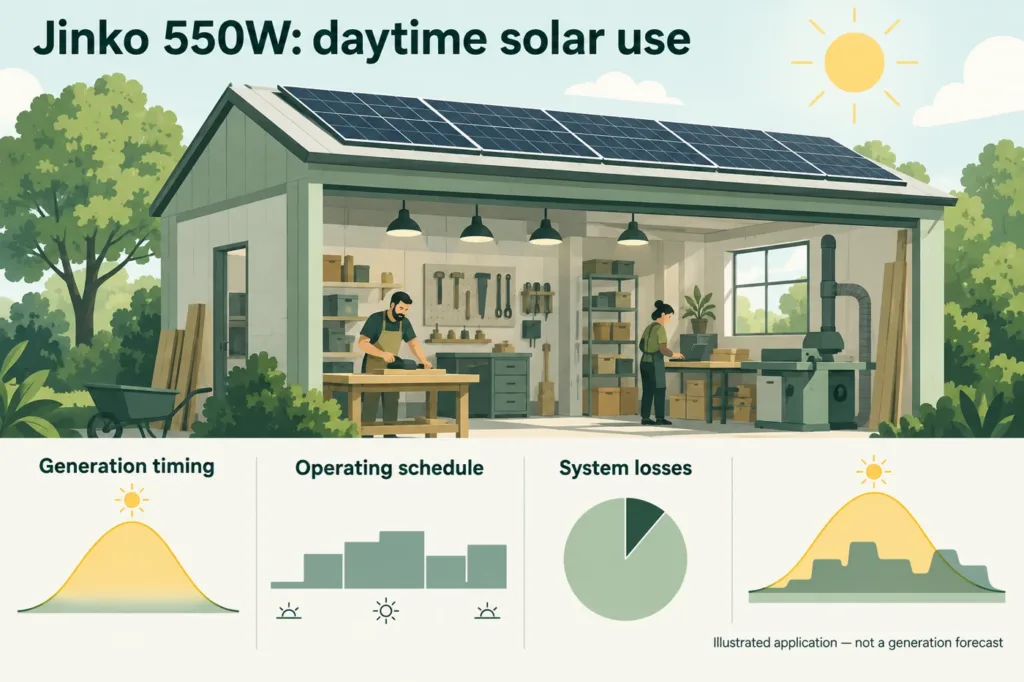
The workshop illustration highlights daytime demand without claiming a specific completed installation. If operations coincide with solar production, some energy may be used directly by the site. A business with evening-heavy activity may need a different storage or operating plan. Explain the normal working hours and larger loads when requesting an array proposal so the 550W modules are evaluated as part of a useful energy system.
Check roof fit with the actual module dimensions
Wattage is not a measurement of panel length or width. Two options close in rated power can require different layouts, so the physical design needs the exact module datasheet. Allow the mounting designer to account for obstructions, access and applicable installation requirements. A product-family image can explain the general appearance of a solar module, but it cannot establish that a specific panel will fit an available roof section.
Match the inverter to the complete panel data
The inverter or controller must accept the electrical conditions created by the proposed arrangement. The JKM550 suffix identifies which panel information should be used for that check. Current and voltage values cannot be recovered reliably from 550W alone because different combinations can produce the same power rating. Have the designer use the matched documents rather than copying a layout from a different panel installation.
Treat an existing array as a compatibility constraint
If you are adding to older panels, provide their labels and the present inverter details. The proposal needs to consider the existing arrangement as well as the new modules. Matching brand and approximate watts is only a preliminary comparison. An extension may require a different design from a new all-matching array, so explain the purpose of the purchase before choosing the quantity.
Keep storage capacity separate from panel capacity
An 11.00kWp nameplate array does not imply an 11kWh battery, nor does it establish how quickly a particular battery will charge. Charging depends on available solar power, simultaneous consumption, charger limits and battery conditions. If backup is the main objective, assess the energy needed during interruptions separately. The array can then be evaluated for its role in supplying daytime loads and replenishing the selected storage.
Confirm the purchase quantity and product reference
Ask the quotation to state the full panel model, the number of modules and the delivery arrangement. A brand-family photograph may show several panels for illustration and should not define what is included in one order. Confirm the delivered labels against that written reference before installation. Keep the serial and product information with the completed system documents so future support can identify the actual equipment.
Compare the complete 550W proposal
Send Solar Deity the intended quantity, inverter code, installation location and whether this is a new array or an expansion. If comparing the 550W and 555W offers, request the full model specifications and prices on the same quantity basis. The useful decision combines rated output with fit, compatibility and the site’s needs. That provides a more reliable comparison than assuming the higher number is automatically the better choice for every project.
Manufacturer reference
Product family documentation. Match the supplied model and revision before applying installation limits.
Technical specifications
| Parameter | Product detail |
|---|---|
| Brand | Jinko Solar |
| Listed technology | Monocrystalline photovoltaic panel |
| Rated power class per panel | 550 W |
| Equivalent rated capacity | 0.55 kWp per panel |
| Ten-panel calculation | 5.50 kWp |
| Twenty-panel calculation | 11.00 kWp |
| Twenty-panel comparison with 555W | 100 W difference in total nameplate power |
| Manufacturer designation | Confirm full JKM550 model and suffix |